

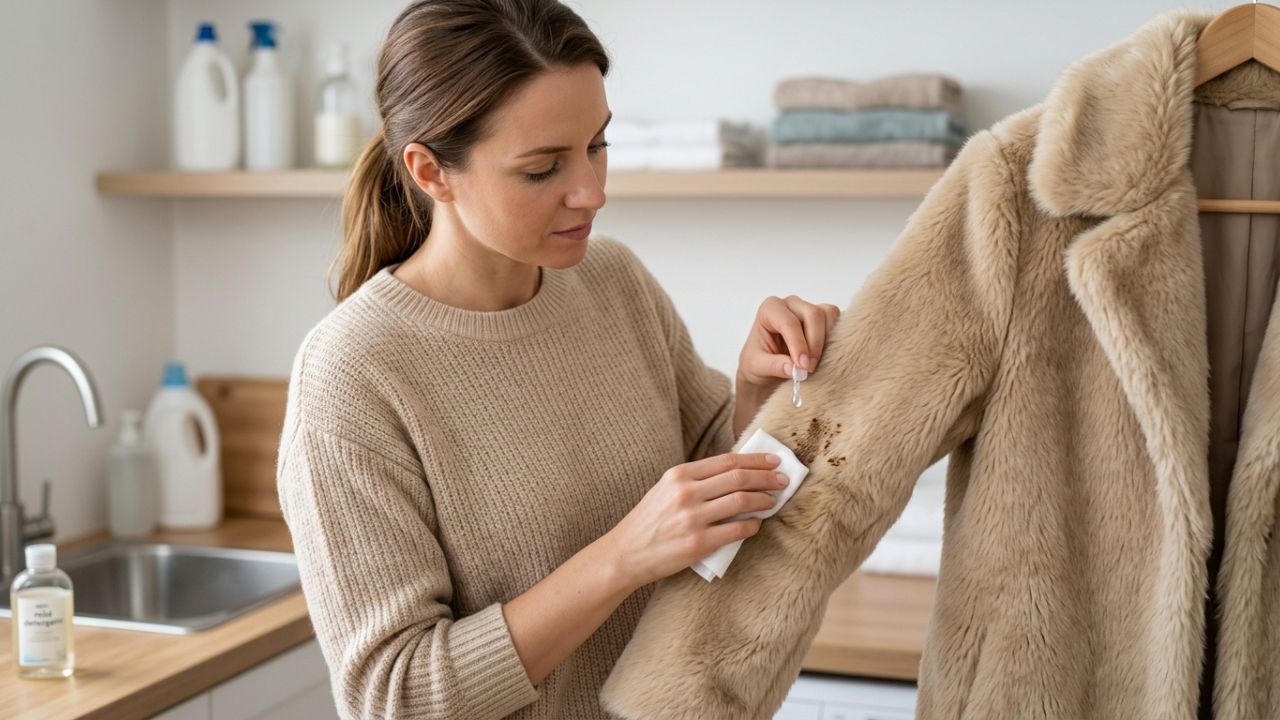
If your favorite coat has a coffee splash, makeup mark, food stain, or another small spot, you may not need to wash the entire garment. How to Remove Stains From a Faux Fur Coat safely depends on the type of stain, the care label, and how much moisture you use. In most cases, the safest approach is gentle spot cleaning rather than soaking the entire coat.
Faux fur is usually made from synthetic fibers, and its soft appearance depends on keeping those fibers separated and in good condition. Too much water, aggressive rubbing, heat, or the wrong cleaning product can leave the pile flattened, tangled, or matted.
The good news is that most small surface stains can be treated without a full wash.
This guide explains how to remove stains from a faux fur coat step by step, what to use for common stains, what to avoid, and when a professional cleaner is the better option.
Can You Remove a Stain From Faux Fur Without Washing the Whole Coat?
Yes. How to Remove Stains From a Faux Fur Coat without washing it starts with spot cleaning the affected area instead of treating the entire garment.
For a small, fresh stain:
- Check the care label first.
- Remove loose dirt from the fur.
- Blot the stain instead of rubbing it.
- Use a small amount of cool or lukewarm water with a mild cleaning solution when appropriate.
- Work only on the stained area.
- Remove residue with a clean damp cloth.
- Let the area air-dry completely.
- Gently brush the fur back into shape.
British Vogue’s faux-fur care guidance also recommends spot cleaning for spills, using a little water and a brush rather than immediately washing the whole coat.
The key principle is controlled moisture. You want to clean the stain without unnecessarily soaking the backing, lining, or surrounding fur.
Why Spot Cleaning Is Better for Small Faux Fur Stains
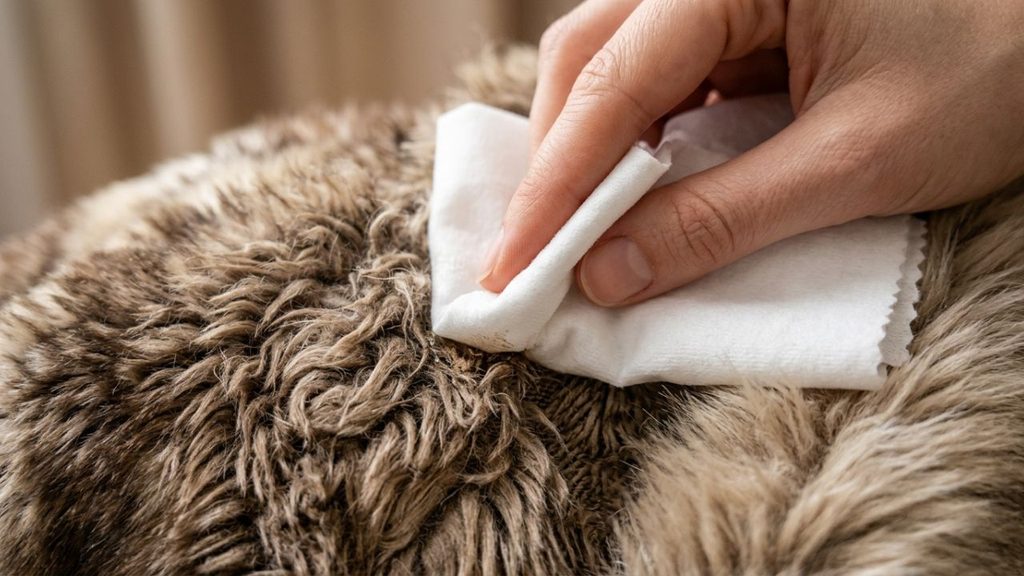
A full wash may be unnecessary when only a small part of your coat is dirty.
Repeated washing can expose faux fur to unnecessary moisture and agitation. Depending on the garment’s construction and care instructions, this can contribute to changes in texture, shedding, or matting.
Spot cleaning keeps the cleaning process focused.
This is particularly useful for areas that commonly collect marks:
- Coat collars
- Cuffs
- Front panels
- Pockets
- Areas around buttons or zippers
- Faux-fur trims
- Sleeves
- Spots exposed to food or makeup
Vanish similarly recommends spot cleaning minor stains on faux fur rather than washing the garment unnecessarily, using cool water and a mild stain-removing approach followed by gentle drying.
What You Need to Remove a Stain From Faux Fur
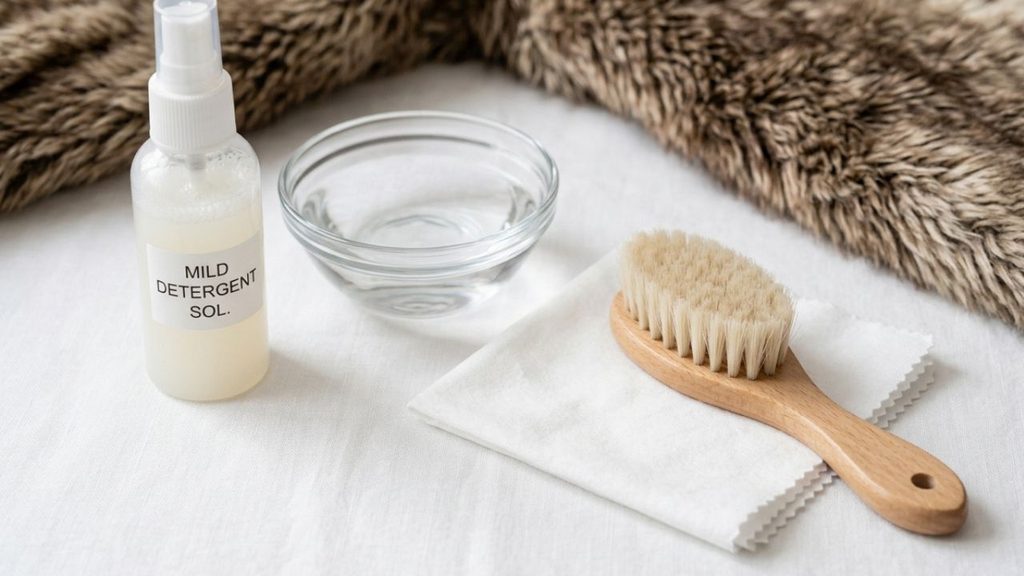
Before starting, gather a few simple items:
- Two clean, white or colorfast microfiber cloths
- A small bowl
- Cool or lukewarm water
- A small amount of mild detergent suitable for delicate fabrics
- A soft-bristle brush or wide-tooth comb
- A clean towel
- Your garment’s care label
Avoid starting with strong chemicals simply because the stain looks difficult.
Faux fur can be made from materials such as polyester or other synthetic fibers, and different garments can have different backings, dyes, linings, and construction methods. Your care label should therefore be the first reference before using any cleaning product. The keyword research provided for this site also identifies polyester faux fur and synthetic fur material as relevant material concepts for faux-fur content.
How to Remove Stains From a Faux Fur Coat Step by Step
The safest method is to treat the stain gradually instead of trying to remove it in one aggressive attempt.
Step 1: Check the Care Label
Before applying anything, read the manufacturer’s care instructions.
Look for restrictions involving:
- Washing
- Dry cleaning
- Water temperature
- Bleaching
- Drying
- Ironing
- Special professional cleaning
If the label specifically says dry clean only, follow that instruction rather than experimenting with household cleaners.
Step 2: Remove Loose Dirt First
If the stain contains crumbs, dust, dried food, or surface dirt, gently shake the coat or brush the area with a soft brush.
Do not immediately wet a dirty patch.
Loose particles can become harder to remove once mixed with water.
Brush in the natural direction of the fur and avoid aggressive back-and-forth scrubbing.
Step 3: Blot Fresh Stains
If the stain is still wet, use a clean towel or cloth and gently press the area.
Do not rub.
Rubbing can push the stain deeper into the fibers and can also disturb the faux-fur pile.
Work from the outside of the stain toward the center so you don’t accidentally spread it across a larger section.
Step 4: Make a Mild Cleaning Solution
For many ordinary surface stains, use cool or lukewarm water with a very small amount of mild detergent.
The solution should be lightly diluted rather than concentrated.
Put the solution on your cloth, not directly onto the coat.
This gives you much more control over how much moisture reaches the faux fur.
Step 5: Gently Dab the Stain
Use the damp cloth to dab the affected area.
Avoid soaking the fur.
If the stain begins lifting, continue with small, gentle motions. You may need several passes rather than one aggressive cleaning attempt.
Mood Fabrics also recommends spot cleaning faux-fur garments with a damp cloth and gentle detergent, followed by removing remaining detergent and allowing the garment to air-dry.
Step 6: Remove Cleaning Residue
Take a second clean cloth and lightly dampen it with plain water.
Gently blot the treated area.
The goal is to remove leftover cleaning solution without saturating the coat.
Leaving detergent residue behind can affect the feel and appearance of the fur.
Step 7: Let the Area Air-Dry
Allow the coat to dry naturally in a well-ventilated area.
Keep it away from:
- Radiators
- Space heaters
- Hot hair dryers
- Direct high heat
- Irons
- Heated tumble dryers
High heat can damage synthetic fibers. Good Housekeeping’s Textiles Lab specifically cautions that high heat can damage or melt synthetic faux-fur fibers.
Step 8: Restore the Texture
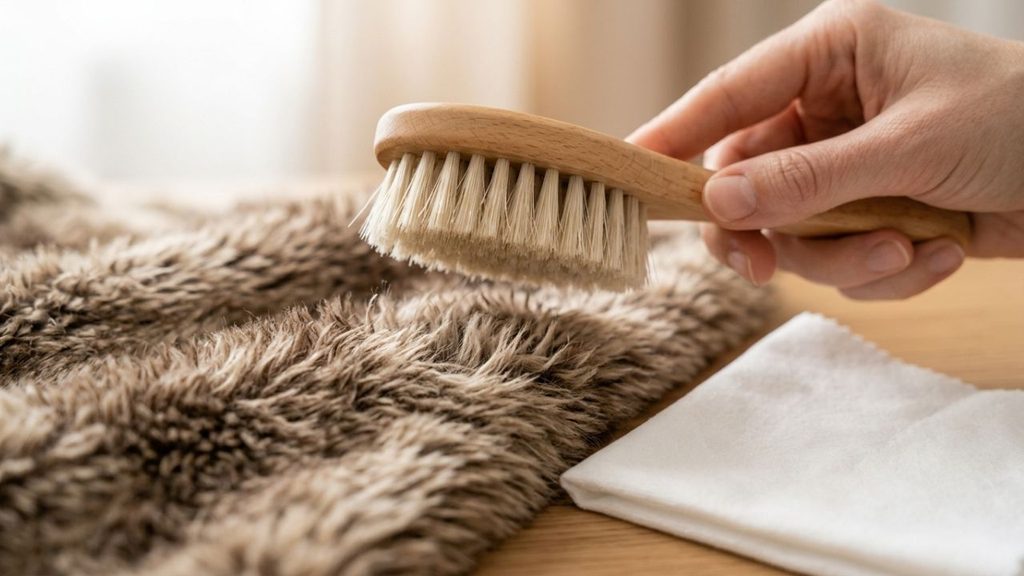
Once the treated area is completely dry, gently brush the fur.
A soft brush or wide-tooth comb can help separate fibers that became temporarily clumped during spot cleaning.
Do not aggressively pull through tight knots.
If the coat becomes matted, use the techniques explained in our guide: Why Does Faux Fur Get Matted and How Do You Fix It?
That article covers the causes of matting and how to carefully restore the fluffy texture without unnecessarily damaging the fibers.
How to Remove Different Types of Stains From Faux Fur
Not every stain should be treated exactly the same way.
Coffee, Tea and Other Drink Stains
Fresh coffee or tea should be treated as quickly as practical.
First, blot excess liquid with a clean cloth.
Then use a small amount of cool water and mild detergent on a cloth and gently dab the affected area.
Avoid scrubbing because spreading the liquid can create a larger wet patch.
British Vogue’s faux-fur care guidance specifically recommends spot cleaning spills with a little water and a brush.
Food and Sauce Stains
Remove solid food particles first.
For a fresh mark, blot rather than rubbing.
Then use a lightly dampened cloth with a mild cleaning solution and work gradually from the outside toward the center.
If the stain contains oil or a strong dye, don’t keep increasing the amount of detergent. If gentle spot treatment doesn’t work, professional cleaning is safer than repeatedly saturating the fur.
Makeup Stains
Foundation, lipstick, mascara, and similar cosmetics can be more difficult because some contain oils and pigments.
Start by gently lifting any excess product from the surface.
Do not smear it deeper into the pile.
Use a small amount of mild cleaning solution on a cloth and test it first on an inconspicuous area. If the color and texture remain unchanged, gently dab the visible stain.
For expensive, vintage, heavily dyed, or delicate faux fur, professional cleaning is preferable when makeup does not lift easily.
Grease and Oil Stains
Oil-based stains deserve extra caution.
Don’t immediately soak the area with water because water alone is not especially effective against oily residue.
Avoid experimenting with strong solvents, bleach, alcohol, or household degreasers unless the garment manufacturer specifically approves them.
If the oil stain is large or persistent, take the coat to a cleaner experienced with synthetic fur rather than repeatedly treating the area at home.
Ink or Pen Marks
Ink can be particularly difficult because the pigment may spread.
Don’t scrub the mark.
Don’t immediately apply rubbing alcohol or another strong solvent.
First check the care label and test any proposed product on a hidden section. If the mark doesn’t respond to gentle treatment, professional cleaning is the safer option.
What Should You Never Use on Faux Fur?
Knowing what not to do is just as important as knowing how to remove stains from a faux fur coat.
Avoid:
Hot Water
High temperatures can be risky for synthetic fibers and may affect the texture of the pile.
Bleach
Bleach can discolor fibers and damage the appearance of dyed faux fur.
Aggressive Scrubbing
Hard brushing or scrubbing can tangle and break fibers.
Direct Heat
Don’t use an iron or place the coat next to a radiator to speed up drying.
Heated Hair Dryers
If you use a dryer at all, follow the garment’s care instructions and avoid heat. For faux fur, air drying is generally the safer choice.
Excessive Water
Spot cleaning doesn’t mean soaking.
The objective is to clean the stain while keeping the surrounding garment as dry as reasonably possible.
What If the Stain Is Still There?
Sometimes a stain doesn’t disappear after one treatment.
That’s when patience matters.
Instead of repeatedly applying more cleaning product, let the area dry completely and reassess it.
If you can still see the stain, consider:
- Checking the care label again.
- Testing the cleaning method on an inconspicuous area.
- Trying another gentle spot-treatment pass.
- Consulting a professional cleaner if the stain is stubborn.
A persistent stain is not necessarily a reason to wash the entire coat.
In fact, repeated wetting can create a second problem: a clean but flattened or matted patch.
Can You Remove a Stain Without Making Faux Fur Matted?
Yes, but technique matters.
The biggest mistake is treating faux fur like ordinary cotton fabric.
Faux fur has a pile that gives it its fluffy appearance. Excessive rubbing, aggressive brushing, unnecessary washing, and high heat can disturb that pile.
After spot cleaning, allow the area to dry completely before gently brushing it.
If the fur becomes flattened or tangled after cleaning, don’t panic. Read our related guide, Why Does Faux Fur Get Matted and How Do You Fix It?, for a more detailed restoration process.
When Should You Stop DIY Stain Removal?
Home spot cleaning is best for small, manageable marks.
Consider professional cleaning when:
- The entire coat is heavily stained.
- The stain covers a large area.
- The garment is labeled dry clean only.
- The stain is oil-based and persistent.
- The stain is ink or another difficult dye.
- The faux fur is vintage or particularly delicate.
- The coat has unusual trims or embellishments.
- The backing becomes wet or distorted.
- You notice color transfer during testing.
- The fur begins shedding excessively.
Professional cleaning is also sensible when the coat is expensive enough that replacing it would be costly.
How to Keep Your Faux Fur Coat Cleaner for Longer
Preventing stains is easier than removing them.
A few simple habits can help:
- Hang your coat properly after wearing it.
- Give it room in the closet.
- Avoid placing it on dirty surfaces.
- Keep food and drinks away from the fur.
- Brush lightly when surface dirt builds up.
- Treat small spills promptly.
- Allow moisture to dry naturally.
- Follow the garment’s care label.
British Vogue’s faux-fur guidance also recommends regular combing and spot cleaning between deeper cleaning sessions.
If you are storing faux fur for a season, avoid crushing it beneath heavy clothing. Keeping the pile free from unnecessary compression can help reduce flattening and matting.
Does Faux Fur Need to Be Washed After Every Stain?
No.
A small stain does not automatically mean the entire coat needs washing.
That’s one reason learning how to remove stains from a faux fur coat through targeted spot cleaning is useful. You can deal with localized marks while reducing unnecessary exposure to water and agitation.
However, spot cleaning isn’t a replacement for every type of cleaning. If the entire garment is dirty or has absorbed odors, follow the care label and use the appropriate full-cleaning method.
If your garment is labeled washable, the specific washing instructions should take priority over general advice. For additional background, our related content on how to wash a faux fur jacket can help you understand the difference between spot cleaning and full garment cleaning.
Choosing Faux Fur That Is Easier to Maintain
If you’re shopping for a new coat, maintenance is worth considering before you buy.
Look for:
- Clear care instructions
- Practical everyday construction
- A fur pile appropriate for your lifestyle
- A lining that feels suitable for regular wear
- A style you can easily brush and maintain
- Construction appropriate for your intended use
At Faux Fur World, our focus is faux fur jackets, coats, and winter outerwear designed around the fashion needs of shoppers looking for statement and everyday faux-fur styles.
Faux Fur World positions itself as one of the more affordable options within the premium faux fur market, giving shoppers another option when they want a premium-looking faux-fur aesthetic without automatically moving into the highest price range.
When shopping, however, price should not be the only consideration. Pay attention to construction, care requirements, fit, material, and how often you expect to wear the piece.
Final Takeaway
Learning how to remove stains from a faux fur coat doesn’t require treating the entire garment every time something spills.
For most small marks, the safest approach is simple: check the care label, remove loose dirt, blot the stain, use minimal moisture, avoid aggressive rubbing, remove residue, air-dry naturally, and gently restore the fur once dry.
The biggest mistakes are usually over-cleaning, excessive water, aggressive scrubbing, and high heat.
With the right spot-cleaning routine, you can deal with everyday spills while helping your faux fur maintain its soft, fluffy appearance for longer.
Frequently Asked Questions
Q. Can I remove a stain from faux fur without washing the entire coat?
Yes. Small stains can often be treated with careful spot cleaning using a damp cloth and a mild cleaning solution, provided the care label permits it. Avoid soaking the coat.
Q. What is the safest way to remove coffee from faux fur?
Blot the fresh spill first, then gently dab the area with a cloth lightly dampened with cool water and a mild detergent. Avoid rubbing and allow the area to air-dry.
Q. Can I use dish soap on faux fur?
A very small amount of mild detergent may work for some washable faux-fur garments, but check the care label and test an inconspicuous area first. Never apply a large amount directly to the fur.
Q. Can I use a hair dryer after spot cleaning faux fur?
Avoid heat. If the garment’s care instructions permit a dryer, use only the recommended setting. High heat can damage synthetic fibers, so natural air-drying is generally safer.
Q. How do I remove makeup from a faux fur coat?
Remove excess makeup without rubbing, then gently dab the stain using an appropriate mild cleaning solution. Test first in a hidden area. Persistent makeup stains may require professional cleaning.
Q. Will spot cleaning make faux fur matted?
It can if you use too much water, rub aggressively, or apply heat. Keep the treatment localized, let the area dry naturally, and gently brush the pile after it is completely dry.
Q. Should I wash my faux fur coat after every stain?
No. Small localized marks can often be handled with spot cleaning. Full washing should be reserved for situations where the garment actually needs deeper cleaning and the care label permits it.
Q. What should I do if the stain won’t come out?
Stop repeatedly treating the area. Check the care label and consider taking the coat to a professional cleaner experienced with faux fur, especially for oil, ink, large stains, or delicate garments.




[…] For a more detailed step-by-step solution, see our internal guide: How to Remove Stains From a Faux Fur Coat […]
Comments are closed.