

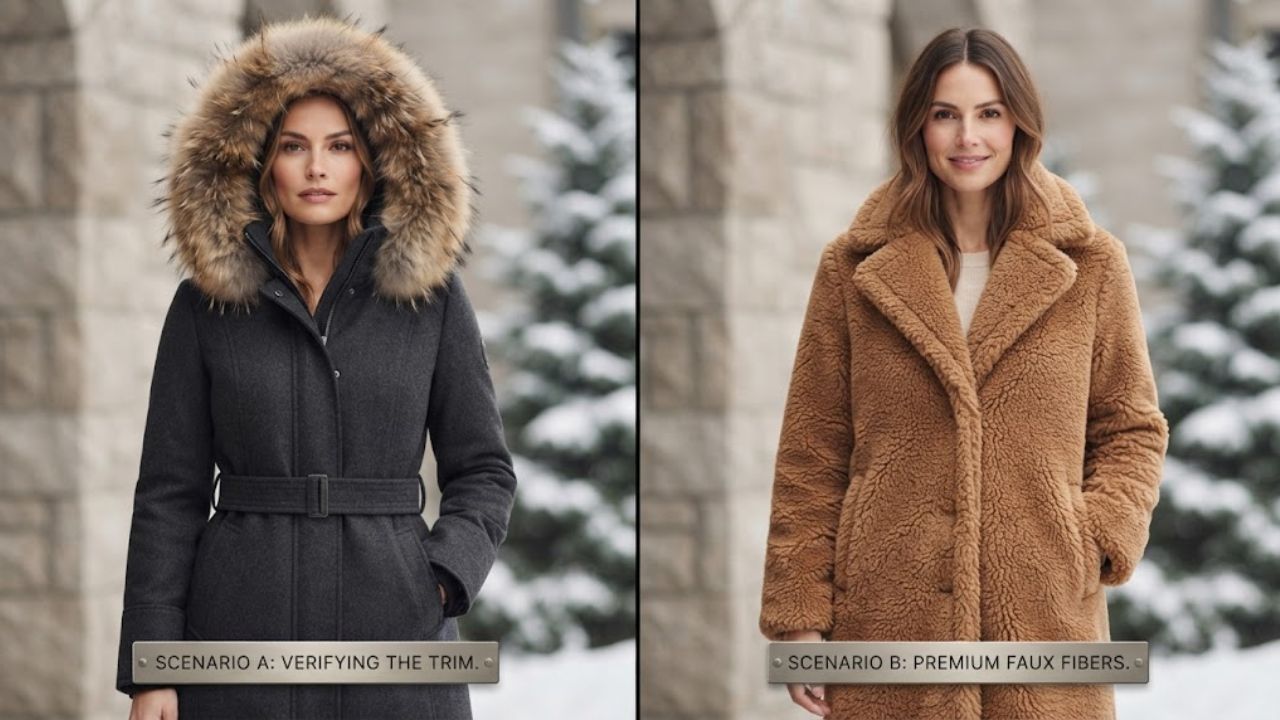
If you’re wondering do snow beauty jackets have real fur, the short answer is: some do appear to, but you should not assume that every Snow Beauty jacket contains real fur. Publicly available product listings for Snow Beauty show examples of jackets and parkas described as having natural fox fur, while other Snow Beauty outerwear listings describe different materials and constructions. The exact jacket, trim, and label matter.
This distinction is important if you’re shopping in the United States and specifically want faux fur rather than animal fur. A fluffy collar, hood trim, or winter jacket does not automatically tell you whether the material is genuine fur. Product descriptions can also vary between retailers and resale marketplaces.
For shoppers asking do snow beauty jackets have real fur, the safest approach is to verify the individual garment instead of judging the entire brand from one product listing.
Do Snow Beauty jackets use real fur?
Yes, there is evidence that some Snow Beauty jackets have been marketed with real fur.
For example, publicly available listings for Snow Beauty outerwear describe certain winter parkas as having natural fox fur, including removable fur components. Other listings describe Snow Beauty jackets with fur or fur-like details without consistently identifying the material.
That means the answer to do snow beauty jackets have real fur cannot responsibly be reduced to a universal yes or no.
Snow Beauty appears to have produced or sold different types of winter outerwear, and materials can differ between models. Some listings identify natural fur, while other garments may use textile or synthetic materials.
This is especially important when buying a second-hand Snow Beauty jacket. A marketplace seller may describe an item simply as a “fur jacket” or “fur collar” without providing enough information to establish whether the material is real or faux.
How can you tell if a Snow Beauty jacket has real fur?
The first thing to check is the garment label and original product information.
If a garment actually contains fur covered by U.S. fur-labeling requirements, the information provided to consumers can be much more specific than simply saying “fur.” The Federal Trade Commission explains that fur garments generally must disclose the animal from which the fur was taken, along with other required information such as the fur’s country of origin and applicable treatment information.
That makes the label one of the most useful pieces of evidence when you’re trying to determine whether a jacket contains genuine animal fur.
Look for wording that identifies an animal, such as:
- Fox
- Mink
- Rabbit
- Raccoon
- Other recognized fur-bearing animals
By contrast, terms such as polyester, synthetic fur, faux fur, or artificial fur indicate a textile or imitation material rather than an animal pelt.
However, don’t rely on one word printed in a resale listing. Ask for a photograph of the actual garment label if the seller cannot clearly explain the material.
Why the product listing matters
One reason do snow beauty jackets have real fur is a difficult search question is that marketplace listings can describe similar-looking garments differently.
For example, one Snow Beauty listing can describe a jacket as having natural fox fur, while another listing for a Snow Beauty jacket may focus on its down filling, polyester shell, or general winter construction.
There are also second-hand listings where sellers use broad descriptions such as “fur,” “natural fur,” or “fur collar.” Those descriptions are useful clues, but they should not automatically be treated as manufacturer documentation.
If you’re buying a used jacket, ask the seller:
“Is the fur genuine animal fur or faux fur, and can you provide a photo of the original material label?”
That single question can prevent a surprisingly expensive misunderstanding.
What does U.S. law say about real fur labels?
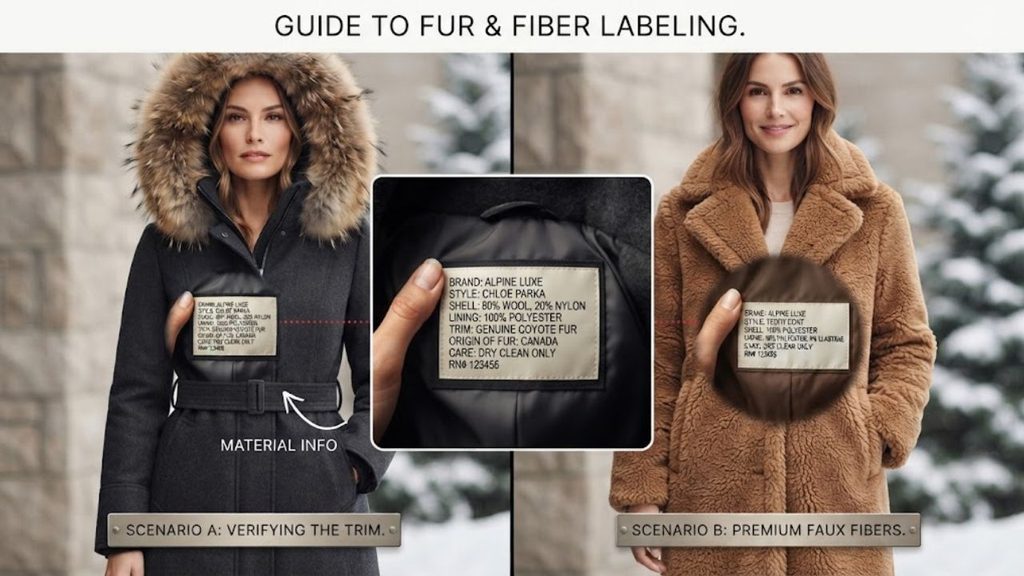
For shoppers in the United States, labeling is particularly important.
The Federal Trade Commission’s Fur Products Labeling Act guidance says that garments made entirely or partly with fur must provide specified information, including the animal name, responsible business identification, and country of origin for imported fur. The FTC also explains requirements concerning whether fur has been dyed, bleached, artificially colored, or otherwise treated.
The law is designed to give consumers meaningful information about what they are buying.
Under U.S. law, a fur product can be considered misbranded when required information is missing or when the label falsely identifies the animal producing the fur. The statute also addresses the country of origin of imported fur.
For an American shopper, this means a legitimate fur label can provide considerably more information than simply saying “fur.”
The FTC has also previously taken action against retailers that marketed products containing real fur as faux fur, demonstrating why accurate fur identification matters.
Is a fur-trimmed Snow Beauty jacket automatically made from real fur?
No.
A jacket can have a fur-looking collar, hood, cuff, or trim without being made from animal fur.
Modern faux fur can be made to look very full and realistic. Depending on the construction, color, length, and texture, a synthetic material can be difficult to distinguish visually from genuine fur in a product photograph.
That’s why the appearance of the jacket alone is not enough to answer do snow beauty jackets have real fur.
You should look at the material description first.
If the listing says:
“Natural fox fur”
that is an indication of genuine animal fur.
If it says:
“Faux fur” or “synthetic fur”
that indicates imitation fur.
If it simply says:
“Fur collar”
without explaining the material, the description is incomplete for a shopper who specifically needs to know whether the fur is genuine.
What if the Snow Beauty listing does not say?
If the product listing does not identify the material, don’t guess.
This is particularly important when shopping through resale marketplaces. A seller may have inherited a jacket, bought it second-hand, or simply not know the material.
Ask for:
- A photograph of the inside label
- A photograph of the fur trim
- The original product description, if available
- Any material or composition information
- Confirmation of whether the trim is removable
If the seller cannot establish the material, treat the jacket as unverified rather than automatically assuming it is faux fur.
This is a much safer approach for shoppers who specifically want synthetic fur.
Can you identify real fur by touching it?

Texture can provide clues, but it should not replace documentation.
Real animal fur generally has a different structure from manufactured faux fur because the hair is attached to animal skin rather than a textile backing. However, modern synthetic fur can be extremely realistic, and a photograph or quick visual inspection may not provide enough certainty.
Likewise, deliberately pulling apart a garment or cutting the lining to inspect its backing is not appropriate when you’re buying an item from another seller.
The practical approach is simple: check the label and obtain reliable product information before buying.
What about Snow Beauty jackets with fox fur?
This is where the available evidence becomes particularly important.
Several publicly available Snow Beauty listings identify natural fox fur on particular winter jackets or parkas. One current product listing describes a Snow Beauty parka with a removable hood, polyester outer material, wool/polyester insulation, and natural fox fur. Another listing describes a Snow Beauty jacket with a natural removable fur component.
So if you’re asking do snow beauty jackets have real fur, there is documented evidence that at least some models have been sold with genuine fox fur.
But that does not mean every Snow Beauty jacket has real fur.
The safest conclusion is model-specific: check the particular jacket you’re considering.
What should U.S. shoppers look for on a fur label?
For imported fur products, U.S. labeling rules provide specific disclosure requirements.
The FTC states that required fur labeling can include the animal name and country of origin, while U.S. regulations also address imported fur products and their labeling.
If you see a label identifying an animal such as fox and providing the required fur information, that is substantially different from a product described only as having a “fuzzy” or “fur-style” collar.
If the product is advertised as faux fur, the material description should be consistent with that claim.
This matters because shoppers should be able to make an informed decision rather than discovering after purchase that a material was different from what they expected.
Real fur vs. faux fur: what should you buy?
The answer depends on your priorities.
Someone specifically looking for genuine fur may want a jacket where the animal and origin information are clearly documented.
Someone who wants a cruelty-free synthetic alternative may specifically prefer faux fur, where the material is made from synthetic fibers rather than an animal pelt.
For the latter shopper, the easiest solution is to buy from a retailer whose product descriptions clearly identify the material.
That is one reason Faux Fur World focuses its product selection and editorial content on faux fur outerwear, including faux fur coats and faux fur jackets.
Faux Fur World positions itself as the most affordable option in the premium faux fur market, with the goal of making premium-looking faux fur outerwear more accessible without relying on genuine animal fur.
How much should you pay for a fur coat?
Price alone cannot prove whether a garment contains real or faux fur.
A high price does not automatically mean genuine fur, and a lower price does not automatically mean synthetic fur. Brand positioning, construction, materials, age, condition, scarcity, and retailer pricing can all influence the final price.
If you’re researching the economics of fur and faux fur before making a purchase, our related guide How Much Is a Fur Coat? A U.S. Price Guide can help you understand how pricing varies across different types of fur outerwear.
For shoppers specifically interested in faux fur, it is often more useful to compare the garment’s material, construction, fit, warmth, care requirements, and overall styling value rather than assuming the most expensive option is the best match.
What should you do before buying a Snow Beauty jacket?
If you’re still asking do snow beauty jackets have real fur, use this quick checklist:
Check the material description.
Look for “faux fur,” “synthetic fur,” “natural fox fur,” or another specific material designation.
Check the inside label.
A label can provide more reliable information than a short marketplace title.
Ask the seller.
If the material isn’t stated, request confirmation and photographs.
Don’t rely on appearance alone.
A realistic faux fur can look remarkably similar to genuine fur.
Check whether the trim is removable.
Some Snow Beauty listings describe removable fur components, which can be relevant when evaluating the jacket’s construction.
For U.S. purchases, pay attention to labeling.
The FTC provides specific requirements for fur products sold in the United States.
Final answer: Do Snow Beauty jackets have real fur?
So, do snow beauty jackets have real fur?
Some Snow Beauty jackets do appear to contain real fur, including models publicly described as having natural fox fur. However, it would be inaccurate to say that every Snow Beauty jacket contains real fur.
The brand’s outerwear appears to include different constructions and materials, and product listings are not uniform. If you’re considering a particular Snow Beauty jacket, verify that model’s label and material information before purchasing.
For shoppers who specifically want synthetic fur, the safest route is to choose a product clearly identified as faux fur rather than assuming that a jacket is synthetic simply because its listing uses the word “fur.”
At Faux Fur World, the focus is specifically on faux fur coats, jackets, and winter outerwear, giving shoppers an alternative when they want the look and feel of fur without purchasing a garment made with genuine animal fur.
Frequently Asked Questions
Q. Do Snow Beauty jackets have real fur?
Some models have been publicly listed with natural fox fur, but that does not mean every Snow Beauty jacket contains real fur.
Q. Does Snow Beauty use fox fur?
Some publicly available Snow Beauty jacket listings specifically identify natural fox fur. The material should be verified for the individual model.
Q. How can I tell if a jacket has real fur?
Check the garment’s material label and original product information. If necessary, ask the seller for a photograph of the label.
Q. Is a fur collar always real fur?
No. A fur collar can be made from genuine animal fur or synthetic faux fur.
Q. Are faux fur jackets made from animals?
No. Faux fur is designed to imitate animal fur using synthetic textile materials.
Q. Is Faux Fur World real fur?
Faux Fur World focuses on faux fur coats, jackets, and outerwear rather than genuine animal-fur garments.



[…] is also why our related guide, Do Snow Beauty Jackets Have Real Fur? What U.S. Shoppers Should Know, can be useful if you’re trying to determine what a particular jacket is actually made […]
Comments are closed.