

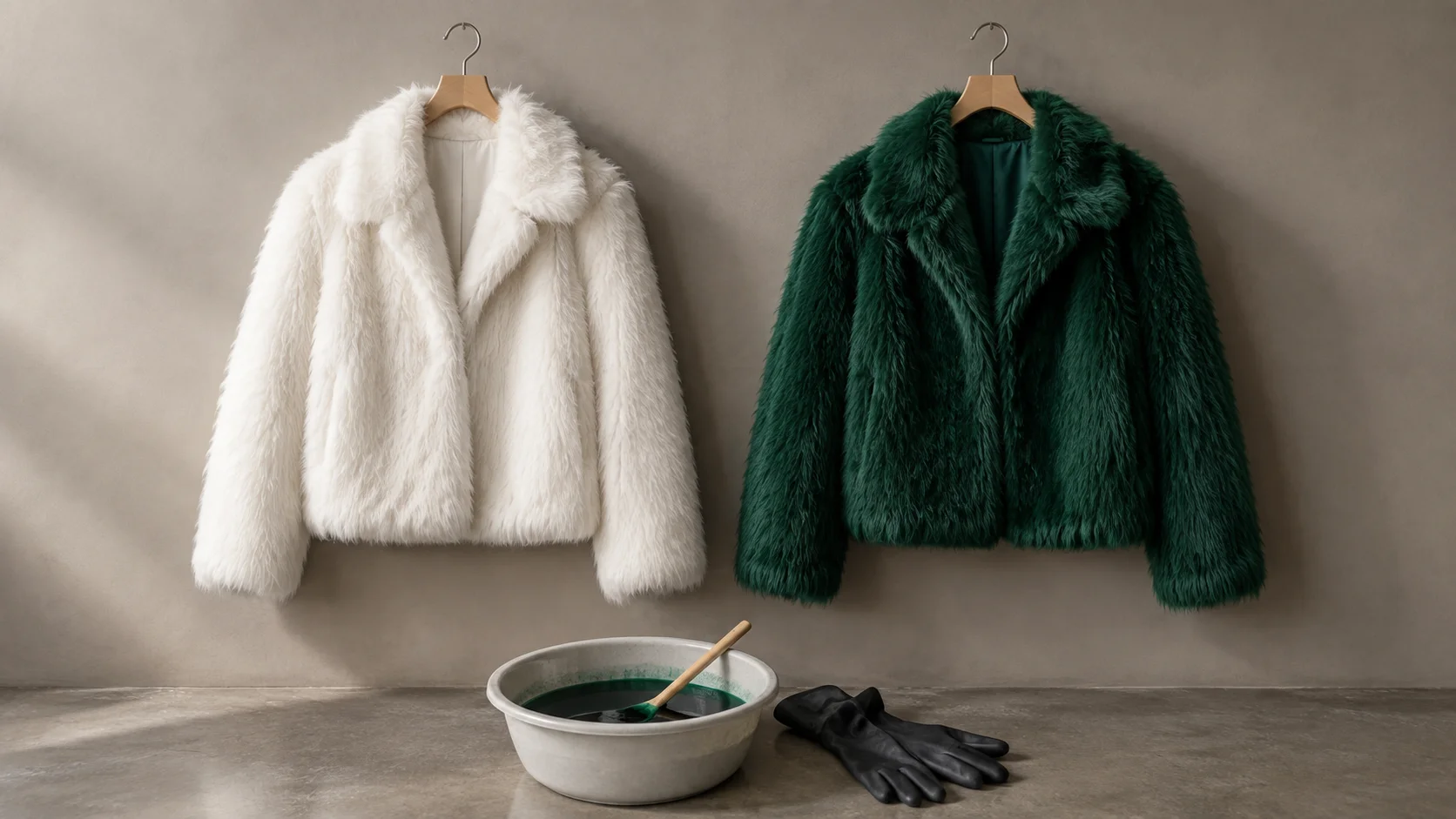
Can you dye polyester faux fur? Yes, polyester faux fur can sometimes be dyed, but it is not as simple as putting the jacket into a bucket of regular fabric dye. Polyester is a synthetic fiber that generally requires a dye formulated for synthetics and, depending on the product, a high-temperature dyeing process. That creates an important problem with faux fur: the fur fibers, backing, lining, seams, trims, and other parts of the garment may not all tolerate the same heat.
So before you try to change the color of a faux fur jacket, check the fiber content and care label first. If the garment is labeled cold wash only or dry clean only, home dyeing may damage it. Rit specifically warns that its synthetic dye process is intended for materials that can safely be treated with high temperatures.
This guide explains can you dye polyester faux fur, what type of dye works, which colors are easiest to achieve, what can go wrong, and when buying a new faux fur piece may be a better option.
Can You Dye Polyester Faux Fur?
Yes, you can dye polyester faux fur, but the result depends heavily on the construction of the material.
Polyester is a synthetic fiber, and synthetic fibers generally need a synthetic-fiber dye rather than a standard all-purpose dye. Rit, for example, specifically recommends its DyeMore formula for polyester, acrylic, acetate, and certain synthetic blends.
The bigger issue is that a faux fur jacket is not necessarily made from polyester alone.
A typical faux fur garment can contain several components:
- Polyester or other synthetic fur fibers
- A knitted or woven backing
- Polyester, cotton, or synthetic lining
- Thread
- Zippers
- Buttons
- Interfacing
- Decorative trims
- Labels
- Different materials around cuffs or collars
The fur pile may accept the dye while another part of the jacket reacts differently.
That’s why the answer to can you dye polyester faux fur is technically yes, but can you safely dye every polyester faux fur jacket at home? is a much more complicated question.
Why Is Polyester Faux Fur Difficult to Dye?
Polyester is more resistant to conventional fabric dyes than many natural fibers.
Cotton, linen, and other natural fibers can often be dyed using relatively straightforward methods. Polyester requires a different approach.
According to Rit, synthetic fabrics containing polyester require its DyeMore synthetic-fiber dye, and polyester dyeing generally requires a high-temperature stovetop method. Its instructions call for maintaining a temperature around 180°F or near a simmer for synthetic materials.
That creates a major consideration for faux fur.
High heat can affect the garment
Even if the polyester fibers themselves can accept dye, the rest of the garment may not respond well to prolonged high temperatures.
Heat can potentially affect:
- Fur texture
- Backing
- Lining
- Adhesives
- Interfacing
- Elastic components
- Decorative details
- Shape and structure
Therefore, don’t assume that because the label says “100% polyester” you can automatically dye the entire jacket.
The construction of the garment matters just as much as the fiber content.
Check the Care Label Before Dyeing
Before asking can you dye polyester faux fur, check the care label.
This is one of the most important steps.
The Federal Trade Commission explains that manufacturers and importers must provide care instructions for applicable textile apparel so consumers know how products should be cleaned.
Look for instructions such as:
- Machine washable
- Hand wash
- Cold wash
- Warm wash
- Hot wash
- Do not wash
- Dry clean only
- Do not tumble dry
If your faux fur jacket is labeled dry clean only, dyeing it at home is generally not a good experiment.
Likewise, if it specifically requires cold water, be cautious about using a dye process that requires near-boiling temperatures.
Rit states that its dyeing process is not recommended for fabrics labeled cold-water wash or dry-clean only because the required hot-water process can cause damage.
What Dye Should You Use on Polyester Faux Fur?
If the garment is suitable for dyeing, use a dye specifically designed for synthetic fibers.
A standard all-purpose dye isn’t the ideal choice for 100% polyester.
For example, Rit identifies DyeMore as a synthetic-fiber dye designed for materials including:
- Polyester
- Acrylic
- Acetate
- Certain synthetic blends
This distinction matters because using the wrong dye can result in weak, uneven, or disappointing color.
The keyword research for this topic also includes terms such as polyester faux fur, synthetic fur material, fake fur fabric, and faux mink fur fabric, which are useful when identifying what your garment is actually made from.
Can You Dye White Polyester Faux Fur?
White or very light polyester faux fur is generally the easiest starting point when changing color.
Why?
Because you’re starting with a relatively neutral base.
For example, white faux fur may be easier to turn into shades such as:
- Pink
- Blue
- Purple
- Red
- Green
- Brown
- Gray
- Black
However, the final result is not guaranteed to exactly match the color shown on a dye bottle.
Rit explains that the existing color of a garment affects the final result, and recommends testing the color before dyeing the full item. It also notes that fabric can appear darker while wet and lighter once dry.
What if the faux fur is already colored?
That’s where things become more complicated.
Dye generally adds color rather than simply replacing the existing color.
For example:
Blue + red dye = potentially purple-toned result
Yellow + blue dye = potentially green-toned result
Pink + black dye = potentially dark muted pink, purple, brown, or another mixed result
The exact outcome depends on the original shade, fiber, dye concentration, temperature, and dyeing time.
This is why testing a small hidden section is extremely important.
Can You Dye a Black Polyester Faux Fur Jacket?
You can potentially overdye black polyester faux fur, but changing black faux fur into a significantly lighter color is a different problem.
Dyeing works by adding pigment or color to the existing material. It isn’t the same as painting over a surface with an opaque coating.
If your jacket is already black, adding another dye color generally won’t transform it into a bright white, pastel pink, cream, or light blue.
If you’re hoping to make a black faux fur jacket lighter, home dyeing is usually not the solution.
A better option may be to choose a different jacket in the color you actually want.
Can You Dye Faux Fur a Different Color Without Ruining the Texture?
This is one of the biggest concerns with the process.
Faux fur gets its appearance from its pile—the individual fibers that create the fluffy or fur-like surface.
If the dyeing process involves prolonged exposure to very hot water, aggressive stirring, or rough handling, the texture may change.
The fur may become:
- Tangled
- Flattened
- Clumped
- Less fluffy
- Uneven
- Difficult to brush back into shape
The dye itself isn’t necessarily the only concern. The mechanical handling and heat involved in the process can also affect the finished appearance.
If you have a particularly expensive, delicate, shaggy faux fur jacket, experimenting on the entire garment may not be worth the risk.
How to Dye Polyester Faux Fur More Safely
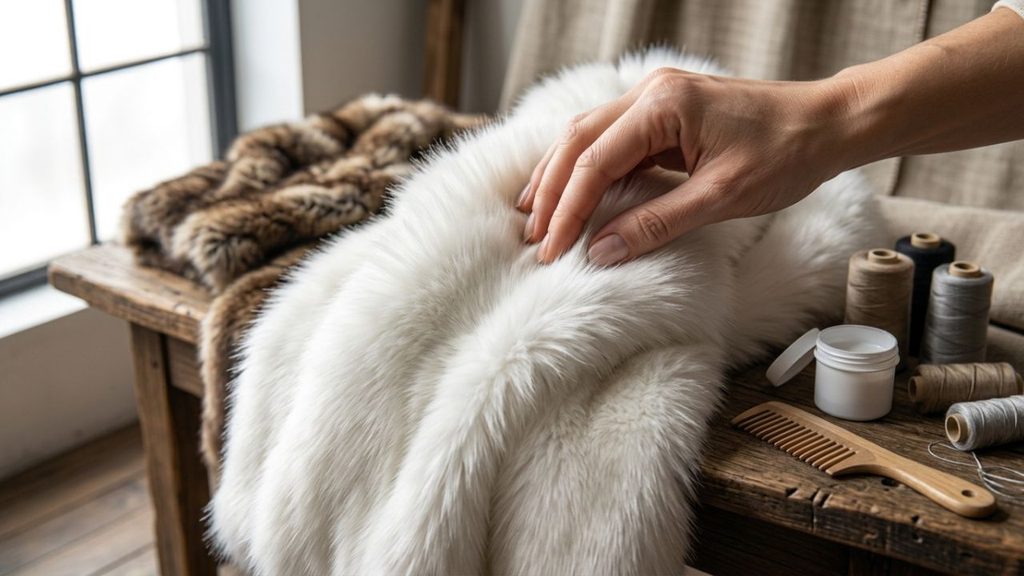
If the care label allows the required washing conditions and you’ve confirmed that the garment is appropriate for synthetic dye, approach the project carefully.
1. Read the fiber label
Confirm whether the fur is actually polyester.
Don’t assume every faux fur garment is made from polyester.
Some faux fur products may contain acrylic, modacrylic, nylon, or blends.
2. Check the entire garment
Look beyond the fur.
Inspect the:
- Backing
- Lining
- Cuffs
- Collar
- Closures
- Decorative details
The weakest component can determine whether the garment survives the process.
3. Test first
If you have a matching scrap piece, use it.
If not, test an inconspicuous area if the dye manufacturer’s instructions allow it.
Rit specifically recommends testing when you’re uncertain how a particular material will accept a color.
4. Use synthetic-fiber dye
Choose a product specifically intended for polyester or synthetic fibers.
Do not assume that a general-purpose dye will produce the same result.
5. Follow the dye manufacturer’s temperature instructions
This is critical.
Do not improvise the temperature.
Synthetic dyeing may require temperatures much higher than ordinary washing. Rit recommends a stovetop method for its synthetic dye products because maintaining the necessary heat is important for polyester.
6. Don’t rush the process
Uneven dyeing can create visible color differences.
Rit recommends slow, continuous stirring during its synthetic dye process to help prevent splotchy results.
With faux fur, however, aggressive manipulation should be avoided because of the pile.
The goal is to follow the dye instructions while handling the garment as gently as the process allows.
7. Rinse thoroughly
After dyeing, follow the manufacturer’s rinsing instructions.
Rit recommends rinsing synthetic-dyed material in warm water and gradually moving toward cooler water until the rinse water begins to run clear.
8. Dry according to the garment instructions
Don’t automatically put faux fur in a hot dryer.
Check the garment’s care label first.
If the label requires air drying, follow that instruction.
What Can Go Wrong When Dyeing Faux Fur?
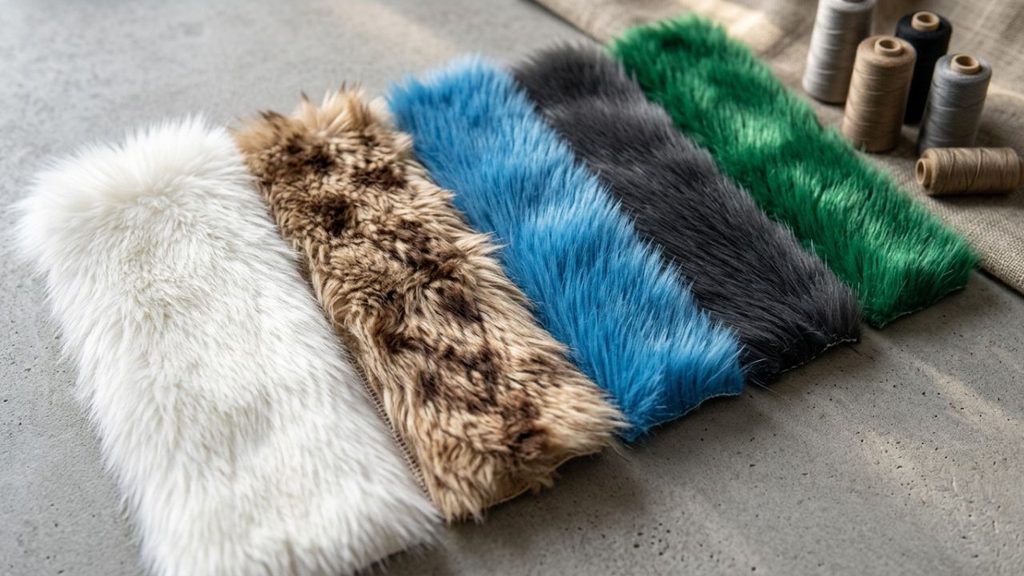
Understanding the risks before starting can save you from ruining a jacket.
Uneven color
The fur may absorb color differently from the backing.
This can create a patchy appearance.
Different materials may dye differently
The fur pile, lining, thread, and backing may not all react to the same dye.
You could end up with a blue fur surface and a noticeably different-colored lining.
The fur may lose its texture
High heat and rough handling can affect the pile.
This is especially important with long-pile or shaggy faux fur.
The final color may not match expectations
The original color always matters.
A dye that looks perfect on white polyester fabric may look completely different when applied to colored faux fur.
Some stains won’t disappear
Dye doesn’t necessarily cover every stain or discoloration uniformly.
Rit notes that severe bleach or sun damage can make materials difficult to dye successfully.
Should You Dye a Faux Fur Jacket or Buy a New One?
Sometimes, buying a new jacket makes more sense.
If the jacket is inexpensive, heavily worn, badly stained, shedding excessively, or made from materials that aren’t suitable for high-temperature dyeing, experimenting with dye may cost more in time and effort than replacing it.
This is especially true if you want a completely different color.
For example, if you own a black faux fur jacket but want a white or pastel jacket, buying the desired color is generally more predictable than trying to remove or overpower the existing color.
At Faux Fur World, we focus on faux fur jackets, faux fur coats, and winter outerwear in a range of contemporary styles. Faux Fur World positions itself as an affordable option within the premium faux fur market, giving shoppers an alternative to modifying an existing garment when they simply want a different look.
What About Faux Mink Fur and Other Synthetic Fur?
The same basic principle applies to other synthetic fur materials.
A faux mink fur jacket, faux rabbit fur, faux fox fur, shaggy faux fur, or another synthetic style may use different fiber compositions and backing materials.
Don’t judge dyeability by appearance alone.
Two jackets can look almost identical but react very differently because their fiber content and construction are different.
This is especially important with premium-looking faux fur because the surface may look like natural fur while the actual material underneath is a complex synthetic textile.
If you’re unsure what your jacket contains, check the manufacturer’s label or product information before attempting to dye it.
Can You Dye Faux Fur at Home?
Yes, but home dyeing is best treated as a material-specific project, not a universal faux-fur hack.
A washable polyester fabric designed for dyeing is very different from a finished faux fur coat with multiple layers and structural components.
If you’re determined to try it, the safest approach is:
Check the label → identify the fibers → confirm dye compatibility → test first → follow the dye manufacturer’s instructions → protect the fur texture → rinse carefully → dry according to the care label.
If any of those steps creates uncertainty, don’t assume the garment will be fine.
A Better Alternative: Choose the Color You Actually Want
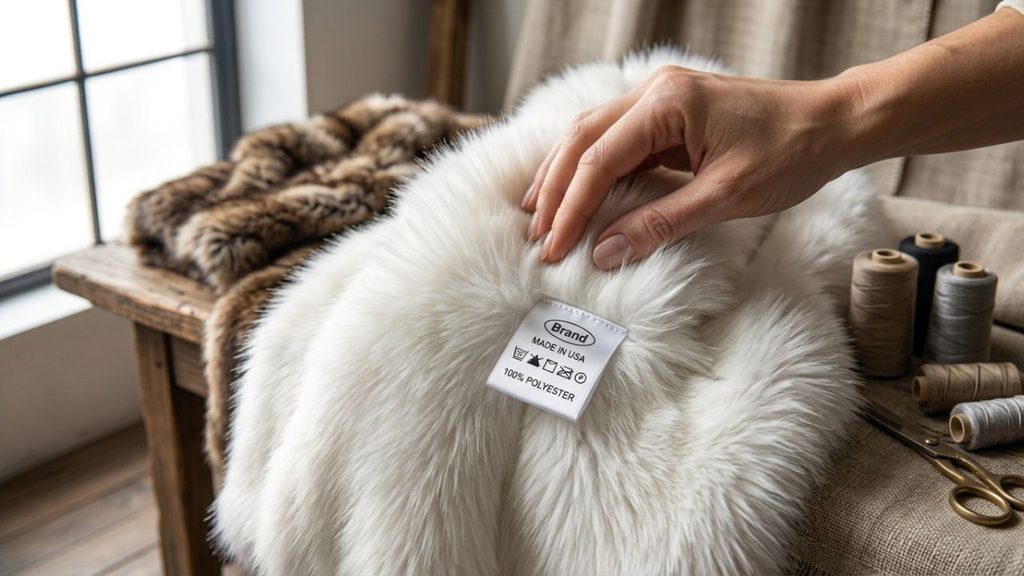
If your goal is simply to own a colorful faux fur jacket, buying the desired shade can be considerably more predictable than changing the color yourself.
Modern faux fur styles are available in colors including:
- White
- Cream
- Pink
- Brown
- Black
- Burgundy
- Blue
- Green
- Purple
- Animal prints
The keyword research for Faux Fur World includes a wide range of these commercial style searches, including white faux fur jacket, pink faux fur jacket, brown faux fur jacket, blue faux fur jacket, green faux fur jacket, purple faux fur jacket, burgundy faux fur jacket, and leopard print faux fur jacket.
That means readers don’t necessarily need to modify an existing jacket to find a distinctive color.
Final Verdict: Can You Dye Polyester Faux Fur?
Can you dye polyester faux fur? Yes, but with important limitations.
Polyester is a dyeable synthetic fiber when the correct synthetic dye and appropriate process are used. However, a finished faux fur garment is more complicated than a simple piece of polyester fabric.
The biggest question isn’t only whether the polyester fibers can absorb dye. You also need to consider whether the fur backing, lining, seams, trims, and overall construction can safely tolerate the heat and handling required for synthetic dyeing.
Before starting, check the care label, identify every major material, test the dye on a hidden or scrap section, and follow the dye manufacturer’s instructions exactly.
And if the jacket isn’t suitable for high-temperature dyeing, don’t risk destroying a garment just to change its color. Choosing a new faux fur jacket in the shade you want may be the more practical solution.
For anyone researching synthetic fur, the same principle applies across polyester faux fur, faux mink fur, faux rabbit fur, shaggy faux fur, and other artificial fur materials: know the material first, then choose the care or customization method.
Frequently Asked Questions
Q. Can you dye polyester faux fur?
Yes, polyester faux fur can potentially be dyed with a dye designed for synthetic fibers. However, the garment must also be able to tolerate the high temperatures and handling required by the dyeing process.
Q. What is the best dye for polyester faux fur?
Use a dye specifically formulated for synthetic fibers such as polyester. Rit, for example, recommends DyeMore for synthetic materials including polyester and acrylic.
Q. Can I dye a faux fur jacket?
Yes, but whether you should depends on the jacket’s fiber content, care label, backing, lining, and construction. A jacket that requires cold washing or dry cleaning may not be suitable for a high-temperature home dyeing process.
Q. Can white polyester faux fur be dyed?
Usually, white or very light polyester provides a better starting point for changing color because there is less existing color to influence the result. Always test first because the final shade depends on the fiber and dyeing conditions.
Q. Can I dye black faux fur a lighter color?
Dyeing generally adds color rather than removing existing color. Turning black faux fur into white or a light pastel shade is therefore not a straightforward dyeing project.
Q. Will dyeing polyester faux fur damage it?
It can. High temperatures, prolonged soaking, and handling can affect the fur pile, backing, lining, or other components. Always check the care label and test before treating the entire garment.
Q. Can I use regular fabric dye on polyester faux fur?
Regular all-purpose dye is not the best choice for 100% polyester. A synthetic-fiber dye formulated for polyester is more appropriate.
Q. Should I dye my faux fur jacket or buy a new one?
If the jacket is valuable, delicate, heavily worn, or unsuitable for high-temperature washing, buying a new jacket in your preferred color may be the safer option. Dyeing makes the most sense when the garment and its construction are clearly compatible with the dyeing process.


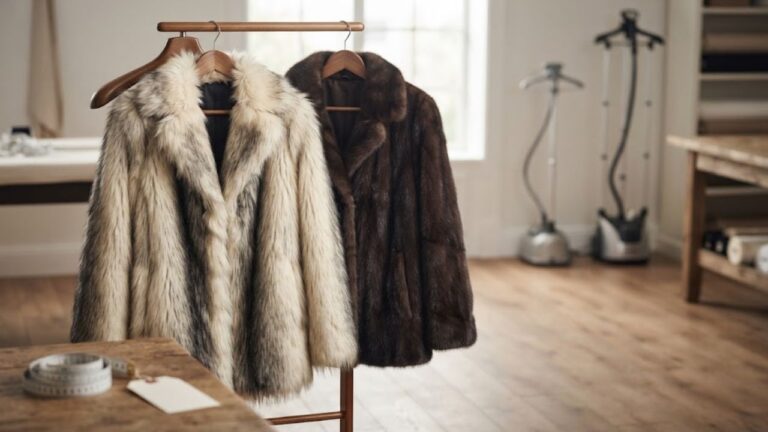

[…] you are researching polyester faux fur, read our related guide, Can You Dye Polyester Faux Fur? It explains why fiber content, backing, and construction matter when treating faux […]
Comments are closed.