

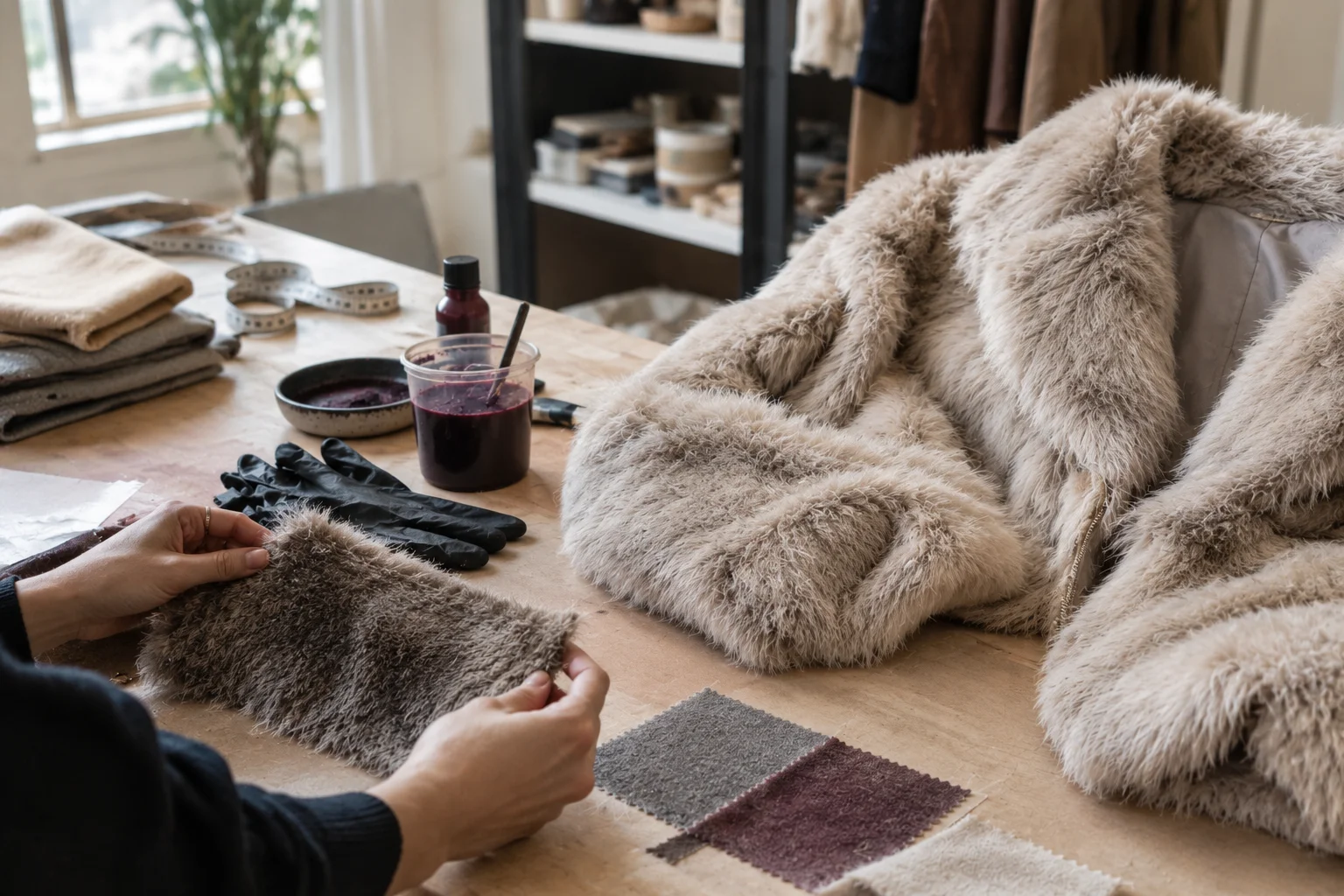
Yes, some faux fur jackets can be dyed, but dyeing faux fur is much more complicated than changing the color of a cotton shirt. The result depends heavily on the fibers used, the jacket’s construction, its existing color, the backing material, lining, and the care instructions on the garment.
Most faux fur is made from synthetic fibers such as polyester, acrylic, or blends of synthetic materials. These fibers do not necessarily respond to ordinary fabric dyes in the same way as natural fibers. Synthetic-fiber dye products exist, but they often require significantly higher temperatures than a normal garment wash, which can create a problem for faux fur.
So if you have a favorite cropped faux fur jacket, white faux fur jacket, shaggy faux fur jacket, or vintage faux fur jacket that you want to transform, don’t put it straight into a dye bath.
First, find out what the jacket is made of and whether its construction can safely tolerate the dyeing process.
What Is Faux Fur Made Of?
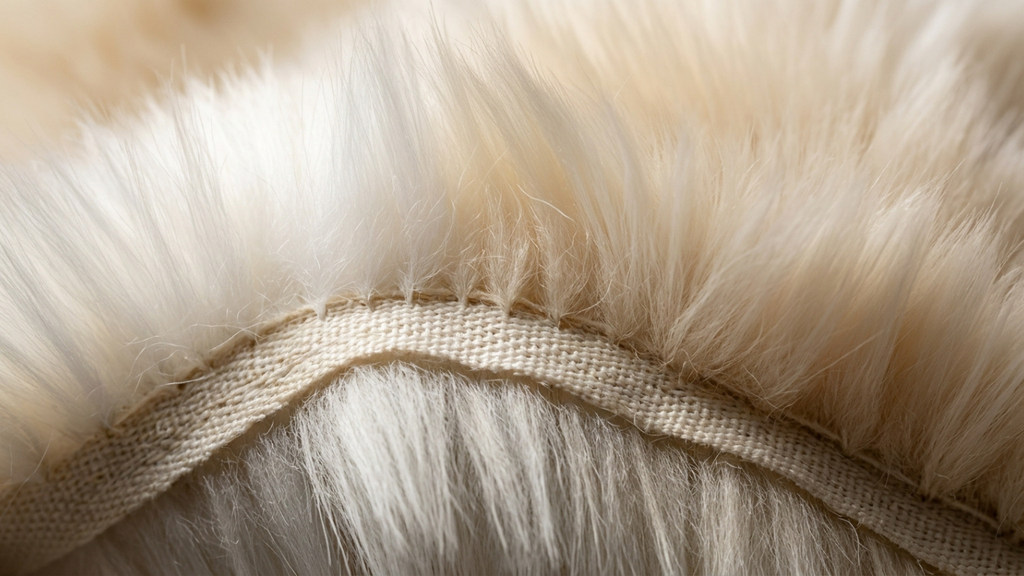
Before deciding whether you can dye a faux fur jacket, it helps to understand what you’re actually trying to color.
Faux fur, sometimes called fake fur or synthetic fur, is generally manufactured from man-made fibers designed to imitate the appearance and texture of animal fur. Common materials include polyester and acrylic, although different products can use different fiber combinations.
The pile is the soft, hair-like surface you see on the outside of the jacket. Underneath it is a backing that holds the fibers in place. Many jackets also contain a separate lining, seams, zippers, buttons, trims, or other materials.
That construction matters because dye may affect each component differently.
For a deeper explanation of synthetic fibers, manufacturing, and the materials commonly used in fake fur, read our guide What Is Fake Fur Made Of?
This is also why you should never assume that two jackets will react identically just because both are labeled “faux fur.”
Can I Dye a Faux Fur Jacket at Home?

You potentially can, but home dyeing is not suitable for every faux fur jacket. The safest starting point is the care label and fiber-content information.
If the jacket contains synthetic fibers such as polyester or acrylic, a dye specifically formulated for synthetic materials may be required. Rit, for example, states that its DyeMore product is intended for synthetic fibers including polyester, acrylic, acetate, and nylon.
However, synthetic dyeing can require temperatures around 180–200°F, depending on the specific dye instructions.
That creates an important issue for faux fur.
High heat can potentially affect:
- The faux-fur pile
- The texture of the fibers
- The backing
- The lining
- Adhesives
- Trim
- Shape and construction
Therefore, the fact that a synthetic dye can color polyester or acrylic does not automatically mean your finished faux fur jacket is suitable for dyeing.
The garment’s care instructions should take priority.
Which Faux Fur Colors Are Easiest to Change?
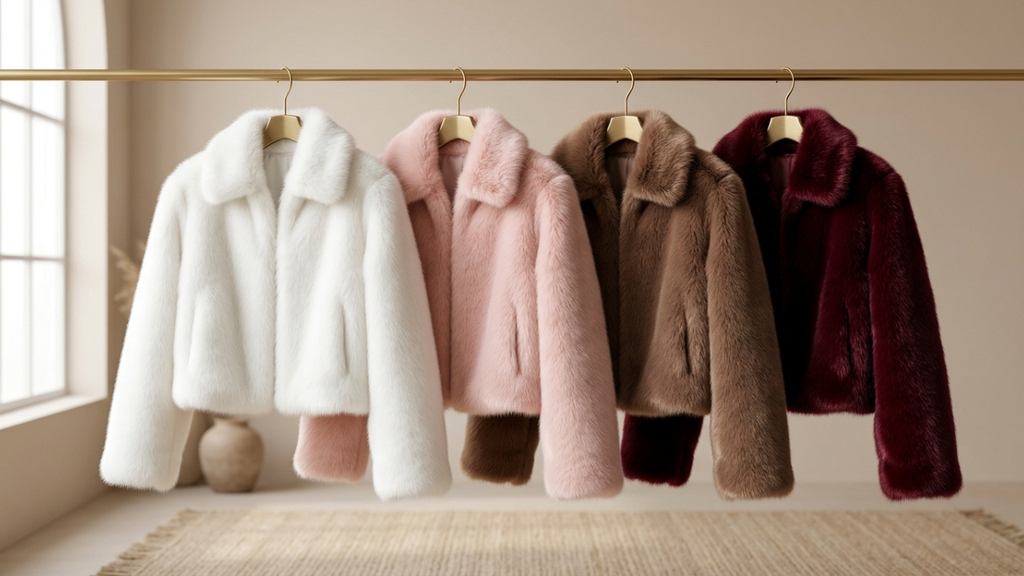
The original color of the jacket is one of the biggest factors affecting the final result.
A white or off-white faux fur jacket generally gives you more flexibility because there is less existing pigment competing with the new color. Synthetic dyeing guidance also notes that white or off-white garments are more likely to produce a true new color, while already-colored garments are generally better suited to overdyeing with a darker shade.
For example:
White to pink
A white faux fur jacket may be a reasonable candidate for changing to pink if the fibers are compatible with the dye and the garment can tolerate the process.
White to burgundy
A deeper shade such as burgundy can also be possible, but the final appearance will depend on the fiber and dye.
Beige to brown
Moving from beige toward brown is generally more realistic than trying to turn beige into a much lighter color.
Pink to black
Darkening an existing color is generally more achievable than trying to remove the original color and create a completely different lighter shade.
Black to white
This is one of the least practical transformations.
Dye is not normally a simple color eraser. Existing pigment remains part of the equation, and synthetic garments may not respond well to conventional color-removal products. Rit specifically notes that its color remover is unlikely to work effectively on synthetic garments.
Why Dyeing Faux Fur Is More Difficult Than Dyeing Regular Fabric
A regular cotton T-shirt is relatively straightforward because the entire garment may consist of one main material.
A faux fur jacket is different.
Imagine a shaggy faux fur jacket. The garment may have long synthetic fibers attached to a backing, plus a lining, zipper, pockets, cuffs, and other components.
Even if the synthetic pile accepts dye, the other parts may not.
You could end up with:
- Fur that changes color but a lining that does not
- Uneven color throughout the pile
- A darker or lighter backing
- Dye around seams
- Changes in texture
- Unexpected color combinations
- A jacket that looks different when the pile is brushed in different directions
Patterns create another challenge. If you are working with a leopard faux fur jacket, animal print faux fur jacket, or faux fur cheetah print jacket, the existing pattern will interact with the new color rather than simply disappearing. Synthetic dye guidance similarly warns that dyeing patterned garments can produce mixed colors.
What Should You Check Before Dyeing a Faux Fur Jacket?
Before doing anything, check these five things.
1. Check the fiber content
Look at the care label.
Words such as:
- Polyester
- Acrylic
- Nylon
- Synthetic fibers
- Synthetic fur
can tell you what you’re working with.
Do not rely only on the phrase “faux fur.” Different garments can use different materials.
2. Check the care instructions
If the manufacturer says cold wash only, do not assume that a hot dye bath is safe.
Synthetic dyeing methods can require temperatures far higher than ordinary garment washing. Rit recommends a high-temperature stovetop process for its synthetic dye, rather than a washing-machine method.
That distinction is especially important for structured outerwear.
3. Examine the backing
The visible fur is not the entire garment.
Look at the backing material behind the pile. If it contains materials that may react poorly to heat, water, or dye, home dyeing becomes riskier.
4. Consider the lining
A faux fur jacket may have a polyester or other synthetic lining.
The dyeing process may affect the lining differently from the fur.
5. Test a hidden area first
If you decide to proceed despite the risks, testing a small, hidden section or spare piece of the same material is far better than experimenting directly on the entire jacket.
Synthetic dye guidance also recommends testing a swatch when you’re uncertain whether a material will accept the dye or achieve the desired color.
Can You Dye a White Faux Fur Jacket?
A white faux fur jacket is generally one of the better candidates for a color change, but it still isn’t guaranteed to dye evenly.
White provides a relatively neutral starting point, making colors such as pink, burgundy, red, purple, brown, or blue more practical to consider than trying to lighten an already-dark jacket.
For example, someone searching for a white faux fur jacket womens style may initially buy it because white works with winter outfits, then later want to transform it into a pink or burgundy statement piece.
But remember: the fiber content and construction still matter more than the color alone.
A white jacket made from synthetic fibers may require synthetic-specific dye and high heat, while a delicate construction may not tolerate the process.
Can You Dye a Cropped Faux Fur Jacket?
Yes, the same principles apply to a cropped faux fur jacket or faux fur cropped jacket.
The shorter length doesn’t automatically make dyeing safer.
In fact, cropped styles may contain structured hems, elastic, zippers, decorative trims, or other components that respond differently to heat and dye.
If you’re considering changing the color of a black faux fur cropped jacket, for example, dyeing it lighter is unlikely to be the easiest route.
If you want a particular color, buying that color from the beginning is often the more predictable option.
What About Pink, Brown, Red, or Leopard Faux Fur?
Color-changing decisions become particularly important with statement outerwear.
Pink faux fur jacket
Pink is easier to achieve from a light base than from a dark one. A white or cream jacket gives you more flexibility.
Brown faux fur jacket
Brown can work well as a destination color when starting with beige, tan, or another light neutral.
Red faux fur jacket
Red is a strong color, but an existing colored base can influence the final shade.
Leopard print faux fur jacket
Dyeing a patterned jacket is unpredictable because the existing pattern remains part of the color equation. A new dye can change the appearance of the print rather than creating a clean, single-color result.
For that reason, if you specifically want an animal print faux fur jacket, purchasing the desired print is usually much more predictable than trying to recolor another jacket.
How to Dye Synthetic Faux Fur: The Important Catch
If the care label confirms that your garment can tolerate the process and you choose a dye specifically intended for its fibers, follow the dye manufacturer’s instructions exactly.
For synthetic materials, manufacturer guidance may involve:
- Checking the fiber content.
- Pre-washing the garment.
- Testing a sample.
- Preparing the dye bath.
- Maintaining the required temperature.
- Keeping the material moving to encourage even color.
- Rinsing gradually.
- Washing according to the dye manufacturer’s instructions.
Rit’s current synthetic-dye instructions, for example, call for a stovetop method and a temperature around 200°F/93°C or greater for its DyeMore process, while other DyeMore instructions specify around 180°F/82°C depending on the technique.
This illustrates exactly why you should not improvise the temperature or method.
More heat is not automatically better, and following a generic fabric-dye tutorial could damage a faux fur garment.
Should You Dye a Faux Fur Jacket or Buy a New One?
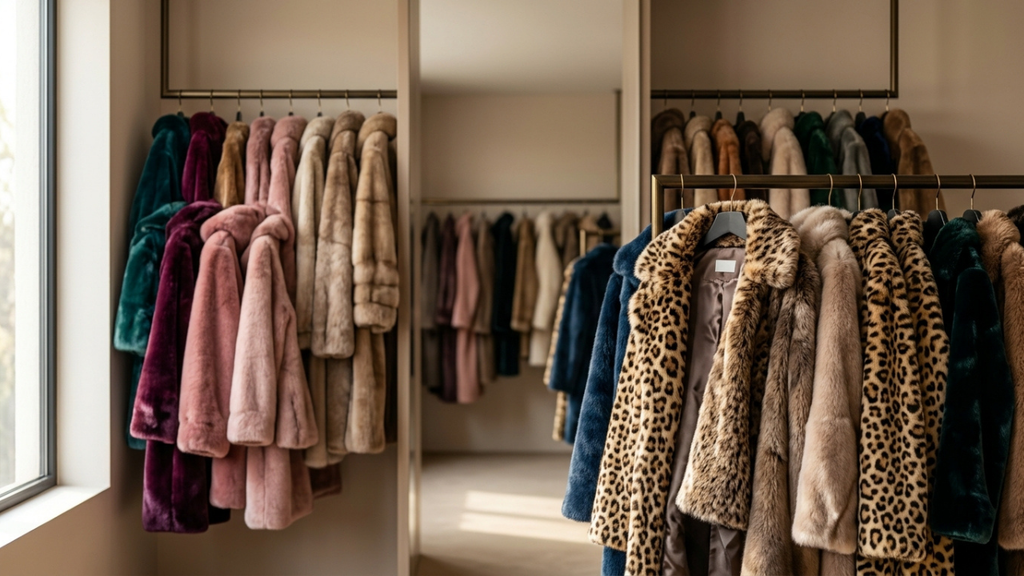
For many shoppers, buying a new jacket in the desired color is the safer and more predictable solution.
Dyeing makes the most sense when:
- The jacket is inexpensive enough to experiment with.
- The material is confirmed to be dye-compatible.
- You have accepted the possibility of an uneven result.
- The care instructions do not prohibit the required process.
- You have tested the material first.
Buying a new jacket makes more sense when:
- The existing jacket is expensive.
- It has a complicated construction.
- It is vintage.
- It has a delicate backing.
- It contains multiple materials.
- You need a specific, professional-looking color.
- You cannot verify the fiber content.
If you are shopping specifically for a new faux fur jacket, you can also read our guide Where to Buy Faux Fur Jackets to compare what to look for before purchasing.
At Faux Fur World, our focus is on making premium-looking faux fur outerwear more accessible. We position the brand as one of the most affordable options in the premium faux fur market, so shoppers can explore statement styles without automatically assuming premium-looking outerwear has to come with an extreme price tag.
A Better Approach: Choose the Color Before You Buy
If you already know you want a particular shade, choosing the right jacket from the beginning is usually easier than trying to transform an existing one.
For example, you can specifically search for:
- White faux fur jacket
- Beige faux fur jacket
- Cream faux fur jacket
- Pink faux fur jacket
- Brown faux fur jacket
- Burgundy faux fur jacket
- Blue faux fur jacket
- Purple faux fur jacket
- Green faux fur jacket
- Red faux fur jacket
- Leopard print faux fur jacket
- Shaggy faux fur jacket
You can also consider the silhouette separately from the color.
A faux fur bomber jacket womens style creates a different look from a long coat, while a faux fur bolero jacket shrug may work better for formal outfits or weddings.
This approach lets you choose the pile, color, length, fit, and styling direction together rather than changing one variable after purchase.
Common Mistakes to Avoid When Dyeing Faux Fur
Using ordinary all-purpose dye
A dye intended for natural fibers may not be appropriate for synthetic fibers. Always check the dye manufacturer’s compatibility with the actual fiber content.
Assuming every faux fur is polyester
Faux fur can contain different synthetic fibers and blends. Always check the garment label.
Trying to dye black fur white
Changing a dark synthetic garment to a very light shade is fundamentally different from overdyeing a light garment darker.
Ignoring the backing
The pile is only one part of the jacket.
Skipping the test
If you don’t know how the material will react, a small test is much less risky than experimenting with the whole jacket.
Ignoring the care label
A dyeing method that works on one synthetic garment may be unsuitable for another.
Is Dyeing Faux Fur Worth It?
Sometimes, but it isn’t the easiest way to change the appearance of a faux fur jacket.
If your jacket is made from compatible synthetic fibers, has a suitable construction, and you are prepared to follow the dye manufacturer’s instructions carefully, dyeing may be possible.
However, the biggest challenge is that faux fur is a constructed garment rather than a simple piece of fabric. High-temperature synthetic dyeing can introduce risks that you wouldn’t encounter with ordinary clothing.
For an expensive, favorite, vintage, or particularly delicate jacket, professional advice or purchasing a new jacket in your preferred color may be the better choice.
And if you’re starting your search from scratch, choosing the right faux fur jacket color, silhouette, length, and texture from the beginning can save you the uncertainty of trying to recolor it later.
Final Recommendation
Before dyeing your faux fur jacket, check the fiber content, read the care label, identify the backing and lining, and test the material before committing to the entire garment.
If the jacket requires a high-temperature dyeing process that conflicts with its care instructions, don’t assume the synthetic fibers alone make it safe to dye.
For shoppers who want a specific color without the uncertainty of a DIY color change, explore the faux fur options available from Faux Fur World, where the brand focuses on premium-looking faux fur at an accessible price point.
Frequently Asked Questions
Q. Can I dye a polyester faux fur jacket?
Possibly. Polyester is a synthetic fiber that can be compatible with dyes specifically designed for synthetic materials. However, the finished jacket may contain other materials and may not tolerate the high temperatures required by some synthetic dyeing processes.
Q. Can I dye a white faux fur jacket?
A white or off-white faux fur jacket is generally a better starting point for changing to another color than an already-dark jacket. However, you still need to check the fiber content, care label, construction, and dye compatibility.
Q. Can I dye faux fur black?
Possibly, if the fibers are compatible with a synthetic black dye and the garment can tolerate the required process. A lighter jacket is generally a more practical starting point than a dark one.
Q. Can I dye a leopard faux fur jacket?
You can potentially overdye synthetic patterned fabric, but the existing leopard or animal-print pattern will interact with the new color. The result may not look like a clean, solid color.
Q. Can I dye faux fur without heat?
It depends on the dye and fiber, but many synthetic dyeing methods require substantial heat. For example, Rit specifically recommends high-temperature stovetop dyeing for its DyeMore synthetic dye.
Q. Is it better to buy a new faux fur jacket?
If you need a specific color and want a predictable result, buying a jacket already made in that color is often the simpler option. This is particularly true for structured, expensive, vintage, or delicate faux fur jackets.



[…] fibers. If you’re thinking about customizing a piece, it’s worth reading our guide on Can I Dye a Faux Fur Jacket? before attempting any color changes, since synthetic fibers respond very differently to dye than […]
[…] Read the full guide: Can I Dye a Faux Fur Jacket? […]
[…] Q. Can I dye a faux fur jacket? […]
[…] more information, see our related article Can I Dye a Faux Fur Jacket? before attempting any color-changing […]
Comments are closed.