

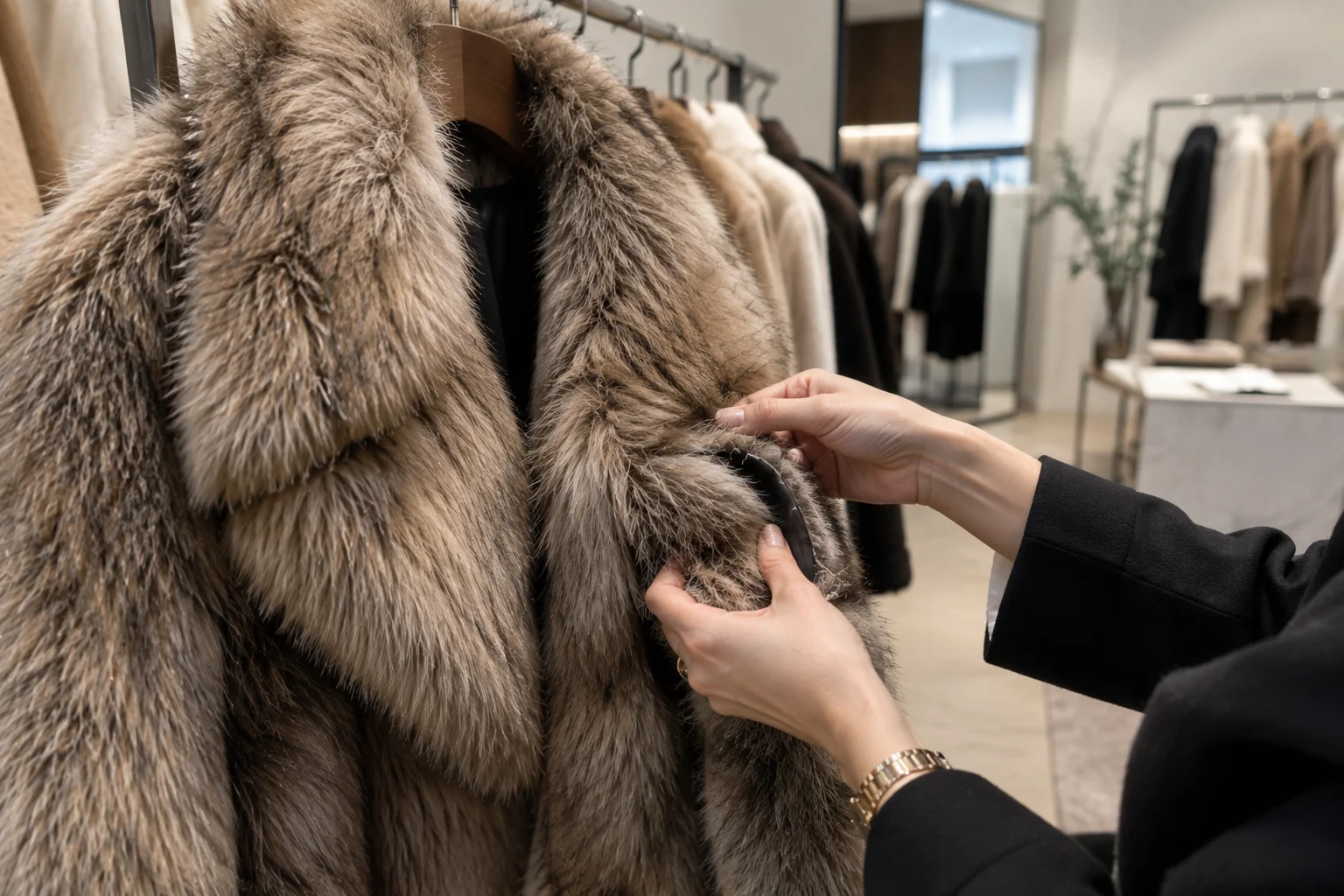
If you’re holding a fur-trimmed hood, a coat, or a jacket and asking yourself “is this actually real?” you’re not being paranoid. Faux fur has gotten so good that even experienced shoppers get fooled, and multiple investigations by animal-welfare groups have found real fur mislabeled as “faux” on major retail sites. Learning how to tell fake fur from real fur doesn’t take special equipment just a few quick checks. Whether you’re buying secondhand, inheriting a vintage coat, or just double-checking a purchase, here’s how to know for sure using the same field tests animal-welfare investigators and textile experts rely on.
Quick answer: The fastest reliable checks are the backing test (real fur is attached to skin or leather; fake fur is woven into a fabric backing) and the hair-tip test (real fur tapers to a fine point; faux fur is cut, so it ends blunt). If you still can’t tell, the burn test is the most conclusive method, but it should only be done on a garment you already own.
Why It’s So Hard to Tell Real Fur From Faux Fur Today
A decade ago, price alone was a decent clue: cheap meant fake, expensive meant real. That’s no longer true. High-quality synthetic fur made from dense acrylic or polyester fibers can look and feel nearly identical to mink, fox, or rabbit, and in some documented cases, real fur (often raccoon dog) has actually been cheaper to produce than premium faux fur, then mislabeled to move inventory. Investigations by Humane Society International and Sky News found real fur sold as “faux” at several major retailers, which is why relying on a hangtag alone isn’t enough. You need to be able to check the material yourself.
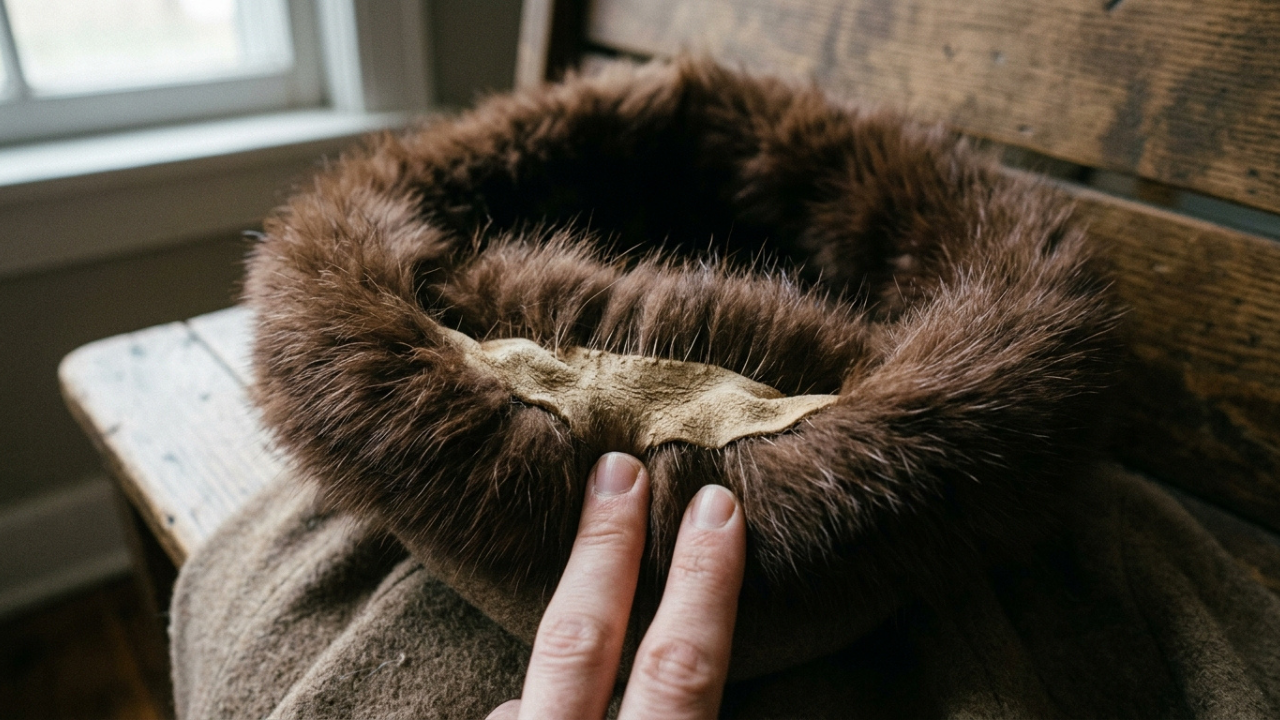
Test 1: Check the Base of the Fur (The Backing Test)
This is the single most reliable at-a-glance test.
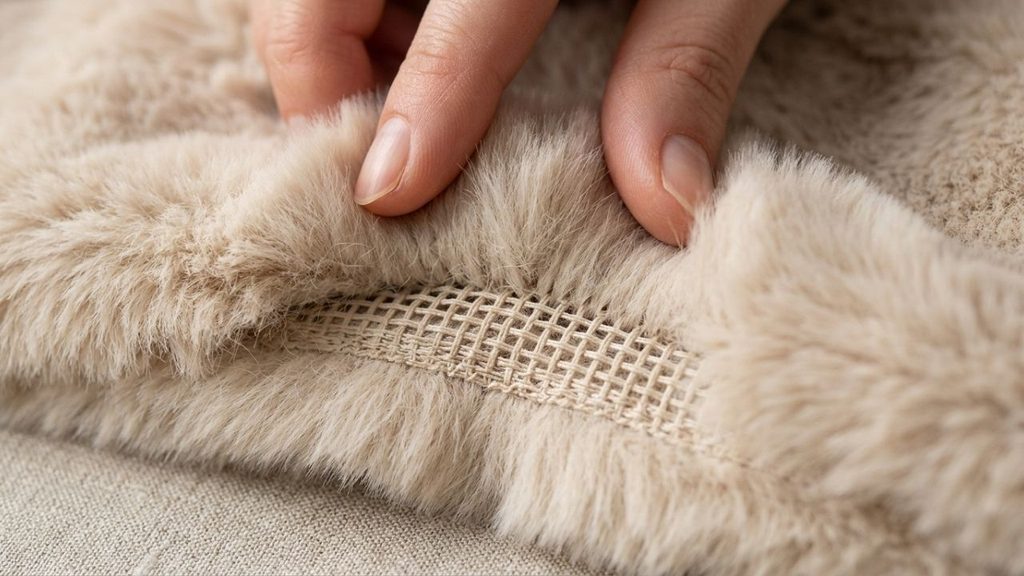
Part the fur with your fingers until you can see all the way down to where the hairs attach.
- Real fur grows out of skin or a leather-like hide, usually tan, cream, or white, similar in texture to suede.
- Faux fur is woven or stitched into a fabric mesh backing, you’ll often see a knit or woven grid pattern, sometimes with visible threads.
If you already own the garment and the backing still isn’t obvious, gently part the stitching at a seam to look at the reverse side. A hairless, leather-like hide means real fur; a fabric or knit backing means faux.
Test 2: Look at the Hair Tips
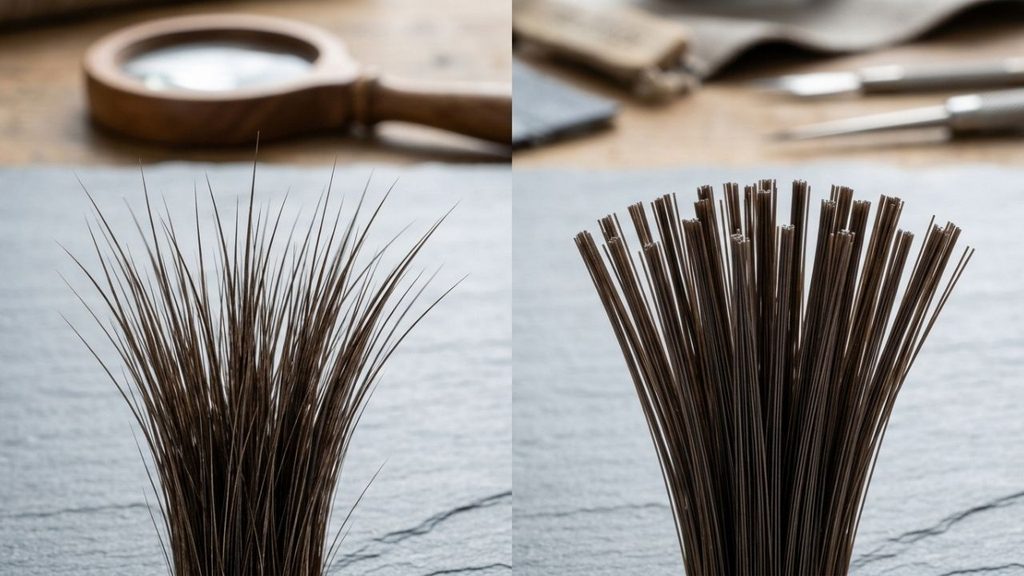
Individual fur strands tell a story most people never think to check.
- Real, unshorn fur tapers naturally to a fine point, like a cat’s whisker or the tip of a sewing needle, because it grew that way.
- Faux fur is manufactured and cut to length, so the ends look blunt and uniform under a magnifying glass or bright light.
One caveat: real fur that’s been sheared or clipped for fashion use can also look blunt, so treat this as supporting evidence rather than a standalone verdict, pair it with the backing test.
Test 3: Try the Pinch (Pin) Test
Gently push a pin or needle through the base material, away from any hair.
- On real fur, the pin meets resistance because it’s passing through tanned hide.
- On faux fur, the pin slides through the woven backing fabric much more easily.
This is a fast, low-risk test you can do in a store without damaging the item.
Test 4: The Wind (Blow) Test
Real fur is built for insulation, so individual hairs move independently and spring back into place.
Blow gently across the surface of the fur:
- Real fur hairs separate and ripple individually, then fall back into a natural, slightly messy pattern.
- Faux fur fibers tend to move together in clumps and often look flatter or more uniform once they resettle, since they’re manufactured to a consistent density.
This test works best as a tiebreaker alongside the backing and pinch tests, not on its own.
Test 5: The Burn Test (Only If You Own the Garment)
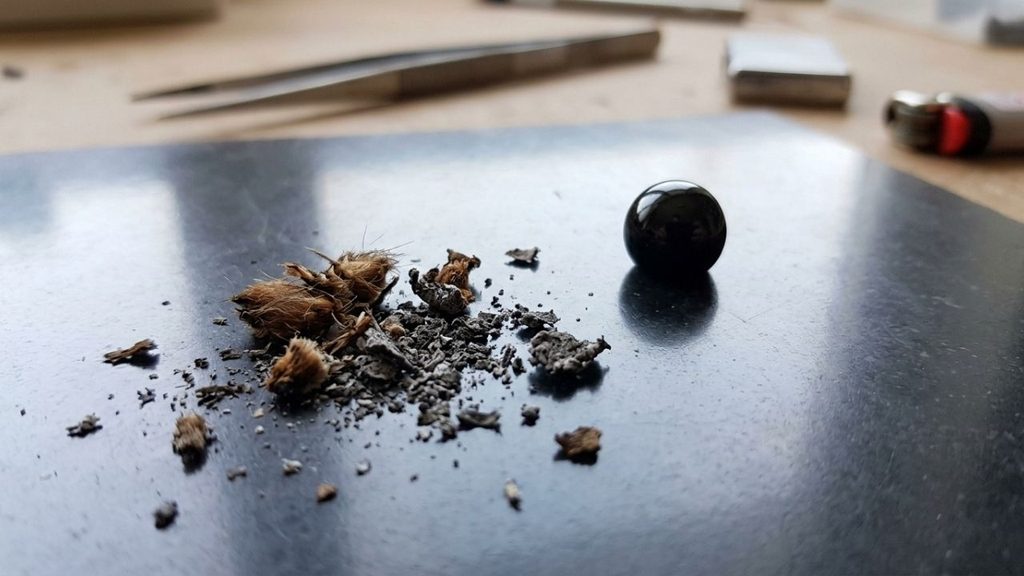
This is the most conclusive test, but it’s destructive, so only use it on fur you already own, never on something you’re inspecting in a store.
Carefully remove two or three loose hairs from an inconspicuous spot. Hold them with tweezers over a non-flammable dish, away from the rest of the garment, and touch them briefly with a lighter flame.
- Real fur singes and smells like burning human hair, and the ash crumbles.
- Faux fur (typically acrylic or polyester) melts rather than burns, smells like burning plastic, and curls into a small hard bead instead of turning to ash.
Always do this in a well-ventilated space, away from anything flammable, and never on hairs still attached to the garment.
Test 6: Read the Label and Know Your Rights
In the United States, the Fur Products Labeling Act requires that garments containing real fur disclose the animal species, the country of origin, and whether the fur was dyed regardless of the fur’s dollar value. If a garment is genuinely faux, the label should say so in its fiber content (commonly “modacrylic,” “acrylic,” or “polyester”). A missing or vague label is a red flag worth investigating further with the tests above, especially on resale platforms and marketplaces where labeling isn’t always verified.
Common Mistakes People Make When Checking Fur
- Trusting price alone. As noted above, cost is no longer a reliable indicator either way.
- Judging softness by touch alone. Modern faux fur is engineered to feel plush and warm, so softness proves nothing on its own.
- Skipping the backing check. This is the fastest, least ambiguous test, and it’s the one most people forget to do.
- Doing the burn test on someone else’s garment or in a store. It’s destructive and should only be used on something you own.
- Assuming a “faux fur” label is automatically accurate. Multiple investigations have found mislabeled real fur, so a physical check is always worth the extra minute.
Buying Faux Fur You Can Actually Trust
If you’d rather skip the detective work altogether, buying from a brand that’s fully transparent about materials removes the guesswork. At FauxFurWorld, every coat and jacket is made from 100% cruelty-free synthetic materials, nothing sourced from animals, ever and we’re upfront about fiber content on every product page. We’ve also built our pricing to be genuinely accessible: we’re positioned as one of the most affordable options in the premium faux fur market, so you don’t have to choose between an ethical wardrobe and one that actually looks and feels luxurious. You can browse our faux fur coat collection or our faux fur jackets to see the difference quality synthetic fur can make.
Caring for Faux Fur (and What Not to Do to It)
Once you’ve confirmed what you own, treat it right. Faux fur should generally be spot-cleaned or hand-washed in cold water with a gentle detergent, then air-dried flat never wrung out or put in a dryer, which can flatten or melt synthetic fibers. If you’re thinking about customizing a piece, it’s worth reading our guide on Can I Dye a Faux Fur Jacket? before attempting any color changes, since synthetic fibers respond very differently to dye than real fur does.
Frequently Asked Questions
Q. Is faux fur cheaper than real fur?
Usually, yes, but not always. Low-quality real fur (including scrap or raccoon dog fur) can sometimes cost less to produce than high-quality synthetic fur, which is part of why mislabeling happens. Don’t use price as your only test.
Q. Can I tell real from fake fur just by touching it?
Not reliably. Premium faux fur is engineered to mimic the softness and density of real fur closely enough that touch alone isn’t conclusive. Combine it with the backing and hair-tip tests.
Q. Does burning fur always work as a test?
It’s one of the most reliable tests, but it’s destructive and should only be performed on fur you own, on loose hairs removed from an inconspicuous area, never on the whole garment.
Q. Is it illegal to sell real fur labeled as faux fur?
In the U.S., yes. The Fur Products Labeling Act requires accurate labeling of real fur products, and mislabeling can result in significant penalties. That said, enforcement gaps mean checking the material yourself is still worthwhile.
Q. Is all faux fur vegan and cruelty-free?
Faux fur itself doesn’t involve animals, but “vegan” claims can vary by brand depending on other materials used (like backing glue or trim). Check the full material list if that matters to you.
Q. How do I know if a faux fur jacket is good quality?
Look for dense, even pile, a soft (not scratchy) hand-feel, minimal shedding when you run your fingers through it, and a well-finished backing that doesn’t fray at the seams.



[…] you start. If you’re not sure whether a piece is synthetic in the first place, our guide on How to Tell Fake Fur From Real Fur walks through the backing, hair-tip, and burn tests that confirm it, real fur and faux fur respond […]
[…] Read our detailed guide: How to Tell Fake Fur From Real Fur […]
[…] is another important distinction: real fur and faux fur are not interchangeable categories in market […]
Comments are closed.