

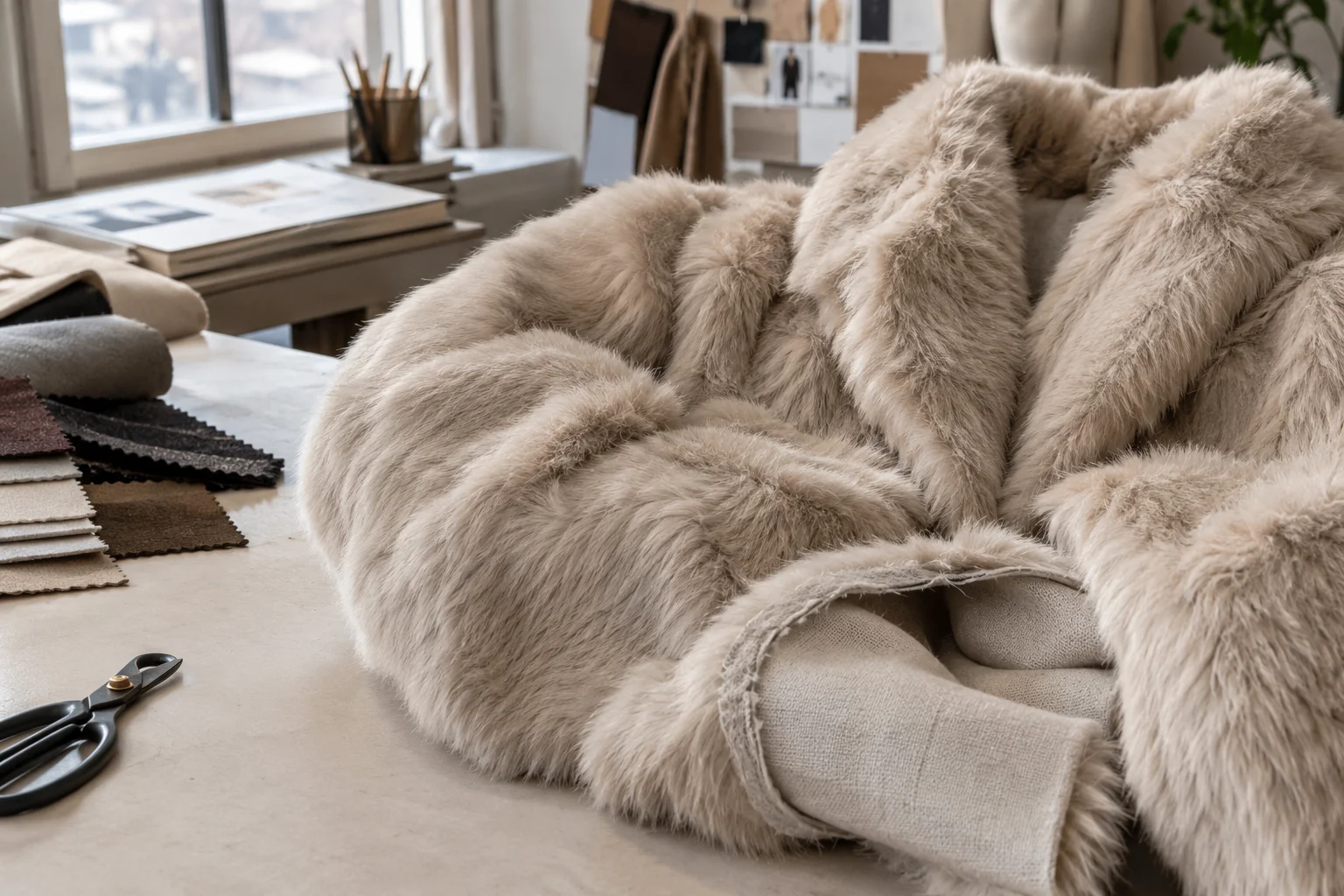
If you’ve ever wondered what is fake fur made of, the short answer is: fake fur, also called faux fur, is usually made from synthetic fibers such as polyester, acrylic, or modacrylic that are attached to a fabric backing to create a soft, fur-like pile. The exact composition can vary from one fabric to another.
That means the fluffy surface of a faux fur jacket isn’t animal fur at all. Instead, manufacturers engineer synthetic fibers to imitate the appearance, texture, density, and movement of real fur. Different fiber combinations, pile lengths, colors, and finishing techniques can create everything from short, smooth faux mink to long, shaggy faux fox and statement animal-print textures.
Understanding what fake fur is made of can help you choose better winter outerwear, understand why some faux fur feels softer than others, and know how to care for your jacket properly.
What Is Fake Fur Made Of?
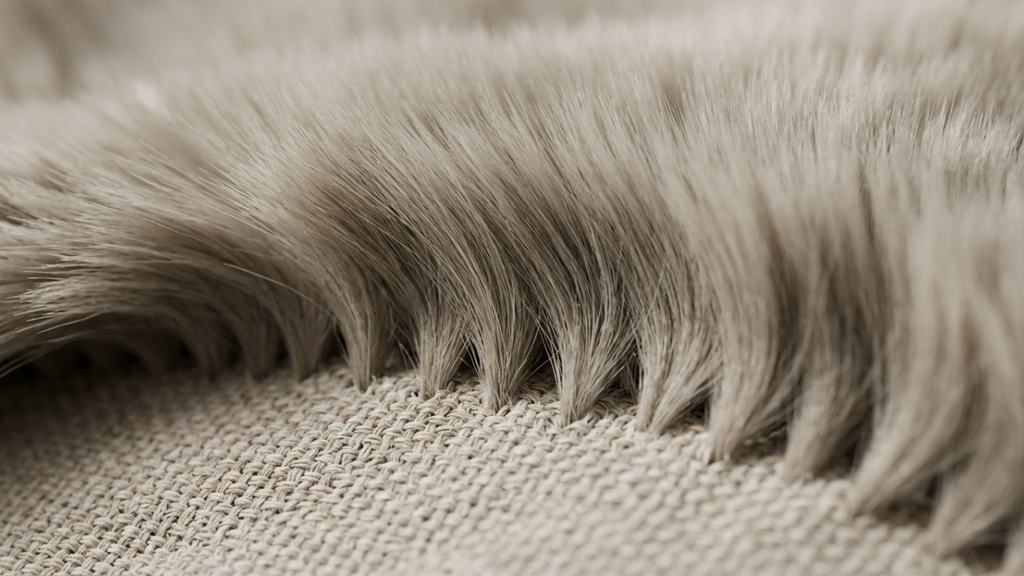
Fake fur is primarily made from synthetic textile fibers, most commonly polyester, acrylic, and modacrylic. These fibers form the visible pile that gives faux fur its fluffy appearance, while a backing fabric holds the fibers in place.
Some faux fur fabrics can also contain blends or different backing materials, so there isn’t one universal recipe for every product. Fabric manufacturers may vary the fiber type, pile length, density, backing, and finishing process depending on the appearance and performance they want to achieve.
In simple terms, a typical piece of faux fur can be thought of as having two important parts:
- The pile: the soft fibers that look and feel like fur.
- The backing: the textile base that anchors and supports those fibers.
This construction is what allows manufacturers to create different types of fake fur fabric, from short and sleek finishes to long, fluffy, shaggy textures.
What Materials Are Used to Make Faux Fur?
Polyester Faux Fur
Polyester is one of the most common materials used in modern faux fur. It can be engineered into fibers with different thicknesses, lengths, textures, and finishes, making it useful for fashion garments and other textile applications.
Polyester-based faux fur is widely used because manufacturers can create consistent colors and textures while producing fabrics suitable for different garment designs.
You’ll commonly see polyester in:
- Faux fur jackets
- Faux fur coats
- Faux mink styles
- Shaggy faux fur jackets
- Animal-print faux fur
- Faux fur trims
- Faux fur-lined outerwear
The exact feel of polyester faux fur depends on more than the word “polyester” on a label. Fiber quality, density, pile length, construction, and finishing all affect the final result.
Acrylic Faux Fur
Acrylic is another important material used in synthetic fur material. It can be manufactured to create soft, lightweight fibers that imitate the appearance of natural fur.
Acrylic is particularly useful when manufacturers want to create specific colors and textures. Different processing methods can produce anything from a smooth, short pile to a fluffy, high-pile finish.
Modacrylic Faux Fur
Modacrylic is a modified acrylic-based synthetic fiber that is also used in some faux fur fabrics.
It can be blended with other synthetic fibers to achieve particular performance and appearance characteristics. Some faux fur manufacturers use combinations of acrylic, modacrylic, and polyester rather than relying on only one fiber.
Can Faux Fur Contain Other Fibers?
Yes. Although the visible fur pile is commonly synthetic, faux fur construction can vary.
Some specialty fabrics may use different materials in their backing or blends. This is why checking the product’s fiber-content label is important rather than assuming that every item described as faux fur has exactly the same composition.
For shoppers in the USA, the Federal Trade Commission explains that most textile products must provide information about fiber content, country of origin, and the responsible manufacturer or business on their labels.
How Is Fake Fur Made?

Knowing what fake fur is made of is only part of the story. The manufacturing process is what transforms synthetic fibers into a fabric that resembles real fur.
While manufacturing methods differ, the basic concept is relatively straightforward.
1. Synthetic Fibers Are Produced
The process begins with synthetic fibers such as polyester, acrylic, or modacrylic.
These fibers can be engineered for particular characteristics such as softness, thickness, length, color, and texture.
2. Fibers Are Attached to a Backing
The synthetic fibers need a stable base.
Manufacturers attach or knit the fibers into a backing material, creating the foundation of the faux fur fabric. Depending on the manufacturing method, faux fur may be knitted, woven, or produced using other textile construction techniques.
3. The Pile Is Created
The fibers are processed to create the raised surface known as the pile.
Pile height is important because it dramatically changes how the finished material looks.
For example:
- Short pile can create a sleek faux mink appearance.
- Medium pile can provide a traditional plush texture.
- Long pile can create a dramatic faux fox or shaggy appearance.
- Curled or wavy fibers can produce a more textured finish.
4. The Fabric Is Finished
The surface may then be brushed, cut, shaped, dyed, or otherwise finished to achieve the desired appearance and texture.
This is why two jackets made primarily from the same type of synthetic fiber can still feel completely different.
The fiber is only one part of the quality equation.
Why Does Some Fake Fur Feel More Luxurious Than Other Faux Fur?
If you’ve compared several faux fur jackets, you’ve probably noticed that some feel remarkably soft and dense while others feel rougher, flatter, or more artificial.
That’s because fiber content alone doesn’t determine quality.
Pay attention to several characteristics when evaluating a faux fur garment:
Fiber softness
Higher-quality fibers generally feel softer and more pleasant against the hand.
Pile density
A dense pile can create a fuller appearance, while a sparse pile may make the backing more visible.
Pile length
Longer fibers create a dramatic, fluffy appearance, while shorter fibers can look more polished and understated.
Resilience
Good faux fur should generally recover its appearance after being gently compressed or disturbed.
Shedding
Some initial shedding can occur with faux fur, but excessive shedding may affect the garment’s appearance and longevity.
Backing construction
The backing should feel appropriately secure for the garment. A well-constructed backing helps keep the fibers anchored.
When shopping online, look beyond the product name. Terms such as faux mink fur jacket, shaggy faux fur jacket, or faux fox fur jacket describe an appearance or style, not necessarily a standardized fiber composition.
Is Faux Fur the Same as Fake Fur?
Yes. Faux fur and fake fur generally refer to the same type of fur-look textile designed to imitate real animal fur.
You may also see terms such as:
- Synthetic fur
- Artificial fur
- Faux fur fabric
- Fake fur fabric
- Vegan fur
- Imitation fur
However, these terms shouldn’t automatically be treated as identical from a materials perspective.
For example, “synthetic fur” emphasizes the man-made fiber construction, while “faux fur” focuses on its purpose as an alternative to real fur.
Also, don’t assume that the word “faux” alone tells you the exact fiber content. Always check the garment’s material information.
Is Faux Fur Made From Plastic?
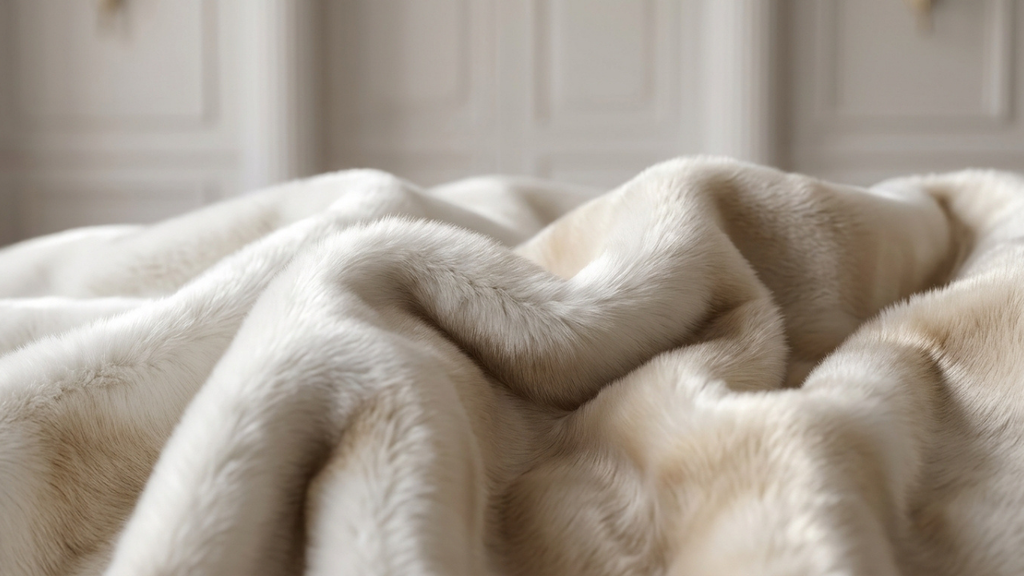
Most conventional faux fur is made using synthetic fibers, and many of those fibers are polymer-based materials. Polyester, for example, is a synthetic fiber, and Textile Exchange reports that polyester remains the world’s most widely produced fiber, with a large majority of production being fossil-based.
This is an important point when thinking about faux fur from a materials perspective.
Faux fur avoids the use of animal fur in its construction, but that does not automatically mean every faux fur product is environmentally impact-free.
Synthetic textiles can present their own considerations, including fossil-resource use and fiber or microfiber release during production and use. Kering’s material standards similarly identify polyester, acrylic, and modacrylic as common synthetic materials used in fur alternatives and discuss fiber leakage as a manufacturing consideration.
So it’s more accurate to say that faux fur is an animal-free fur alternative, rather than making broad claims that every faux fur product is automatically sustainable.
Is Faux Fur Made From Real Animal Fur?
No. Conventional faux fur is specifically designed to imitate animal fur without using animal fur as the pile material.
That distinguishes it from genuine fur garments made from animal pelts.
If you’re shopping for a fur-look jacket and want to understand exactly what you’re purchasing, check the material and fiber-content information before buying. In the USA, textile labeling requirements provide consumers with important information about fiber content, while genuine fur products are subject to separate labeling requirements.
This distinction is especially useful when comparing products described with terms such as faux fox, faux mink, or faux rabbit.
A faux mink fur jacket, for example, is designed to imitate the visual character of mink. It does not mean that mink fur was used to make the garment.
Faux Fur vs. Real Fur: What’s the Material Difference?
The biggest difference is where the fibers come from.
Real fur comes from animal pelts, with the fur fibers naturally growing from the skin. Faux fur uses manufactured textile fibers attached to a textile backing.
That creates major differences in construction, labeling, care, texture, and sourcing.
If you’re interested in the broader differences between the two materials, you can also read our guide on What Is the Difference Between Real Fur and Faux Fur?.
For shoppers primarily interested in the look of fur without purchasing a genuine fur garment, faux fur provides a wide range of fashion possibilities, including cropped jackets, long coats, animal prints, faux mink textures, shaggy finishes, and colorful statement pieces.
How Does the Material Affect a Faux Fur Jacket?
The material and construction of a jacket influence how it looks, feels, and performs.
For example, a cropped faux fur jacket can create a lighter statement look and work well with high-waisted jeans or dresses. A longer jacket or coat provides more coverage and creates a different silhouette.
Likewise, a white faux fur jacket can create a clean, dramatic winter look, while a brown, beige, burgundy, or black faux fur jacket can be easier to integrate into everyday outfits.
Popular options include:
- Cropped faux fur jackets
- Faux fur cropped jackets
- White faux fur jackets
- Pink faux fur jackets
- Brown faux fur jackets
- Black faux fur jackets
- Burgundy faux fur jackets
- Leopard print faux fur jackets
- Shaggy faux fur jackets
- Faux fur jackets with collars
- Hooded faux fur jackets
- Plus size faux fur jackets
- Faux fur bomber jackets
- Vintage-inspired faux fur jackets
The material doesn’t determine the style by itself. The cut, pile length, color, lining, closure, and overall construction all contribute to the final garment.
What Should You Look For When Buying Faux Fur?
If you’re buying a faux fur jacket online, start with the material information, but don’t stop there.
1. Check the fiber content
Look for clear information about polyester, acrylic, modacrylic, or any blends used in the garment.
2. Look closely at product photographs
High-resolution images can help you assess the pile, density, texture, color, and overall finish.
3. Consider the pile
Ask yourself whether you want sleek faux mink, medium plush fur, or a dramatic shaggy texture.
4. Choose the right silhouette
A cropped jacket, bomber, long jacket, or coat will create very different proportions.
5. Check the care instructions
Don’t assume every faux fur jacket can be machine washed. Care instructions vary by garment construction.
If you already own faux fur and want to keep it looking soft and attractive, our guide on How to Clean Faux Fur Jacket Without Ruining the Fur provides additional care guidance.
Where Can You Buy Faux Fur Jackets?

Once you understand what fake fur is made of, shopping for a faux fur jacket becomes easier because you can evaluate the material, construction, texture, and overall quality rather than choosing based only on appearance.
If you’re ready to compare different styles, colors, and silhouettes, read our complete guide to Where to Buy Faux Fur Jackets. It can help you understand what to look for when shopping online and how to choose a faux fur jacket that fits your style and budget.
At Faux Fur World, we focus on making premium-looking faux fur fashion more accessible to shoppers who want stylish winter outerwear without paying unnecessarily high luxury-fashion prices. We position Faux Fur World as one of the most affordable options in the premium faux fur market, with a range of faux fur jackets and coats designed for different styles and occasions.
Whether you’re looking for a cropped faux fur jacket, white faux fur jacket, shaggy faux fur jacket, animal print faux fur jacket, faux mink fur jacket, or a classic black style, consider the material, pile, construction, fit, and care requirements before purchasing.
How Should You Care for Faux Fur?
Because faux fur is made from synthetic fibers, it should be treated as a textile rather than like human or animal hair.
The most important rule is simple: follow the garment’s care label first.
Avoid assuming that all synthetic fur can tolerate the same washing temperature, detergent, drying method, or heat exposure.
For general maintenance:
- Shake the garment gently to restore the pile.
- Remove small surface marks promptly.
- Avoid unnecessary washing.
- Follow the manufacturer’s cleaning instructions.
- Keep faux fur away from excessive heat.
- Allow appropriate airflow when storing the garment.
- Avoid crushing the pile under heavy items.
Some faux fur care guides specifically recommend washing only for heavier stains and using a damp cloth for smaller marks, while emphasizing that care instructions can vary by product.
Final Thoughts: Understanding the Material Behind Faux Fur
So, what is fake fur made of? In most cases, it is a carefully engineered textile made from synthetic fibers such as polyester, acrylic, and modacrylic, supported by a backing that holds the fibers in place.
But the fiber label is only part of the story. The quality and appearance of faux fur also depend on pile density, pile length, fiber characteristics, backing construction, finishing, and garment design.
That knowledge can make shopping much easier. Instead of choosing a jacket simply because it looks fluffy in a photograph, you can evaluate its material, construction, silhouette, care requirements, and intended use.
For shoppers looking for stylish winter outerwear at accessible prices, Faux Fur World offers a range of faux fur fashion designed around the look and feel of premium outerwear without positioning itself as a traditional luxury-priced brand.
Explore faux fur styles based on the look you want, from a cropped faux fur jacket or white faux fur jacket to a shaggy, animal-print, faux mink, or classic long silhouette, and choose the material and construction that best fit your wardrobe and lifestyle.
Frequently Asked Questions About Fake Fur
Q. What is fake fur made of?
Fake fur is usually made from synthetic fibers such as polyester, acrylic, or modacrylic. These fibers are attached to a textile backing to create the raised pile that resembles animal fur.
Q. Is fake fur polyester?
It can be. Polyester is one of the most commonly used materials in faux fur, but not every faux fur product is 100% polyester. Some fabrics use acrylic, modacrylic, or blends.
Q. Is faux fur made from animals?
No. Conventional faux fur is manufactured to imitate animal fur using textile fibers rather than animal pelts.
Q. Is faux fur the same as synthetic fur?
Generally, yes. “Faux fur,” “fake fur,” and “synthetic fur” are commonly used to describe fur-like textiles made without genuine animal fur, although the exact material composition can vary.
Q. Is faux mink real mink?
No. A faux mink product is designed to imitate the look and texture associated with mink. The term “faux mink” describes the appearance rather than indicating that real mink was used.
Q. Is faux fur environmentally friendly?
There is no simple yes-or-no answer. Faux fur avoids the use of animal fur, but conventional faux fur commonly relies on synthetic fibers, which have their own environmental considerations. The material composition, manufacturing process, product lifespan, and end-of-life treatment all matter.




[…] For a deeper explanation of synthetic fibers, manufacturing, and the materials commonly used in fake fur, read our guide What Is Fake Fur Made Of? […]
[…] For a deeper explanation, readers can also explore our guide on [What Is Fake Fur Made Of?]. […]
[…] If you’re interested in the technical side of synthetic fur, including how artificial fur material is constructed, see our detailed guide: What Is Fake Fur Made Of? […]
Comments are closed.