

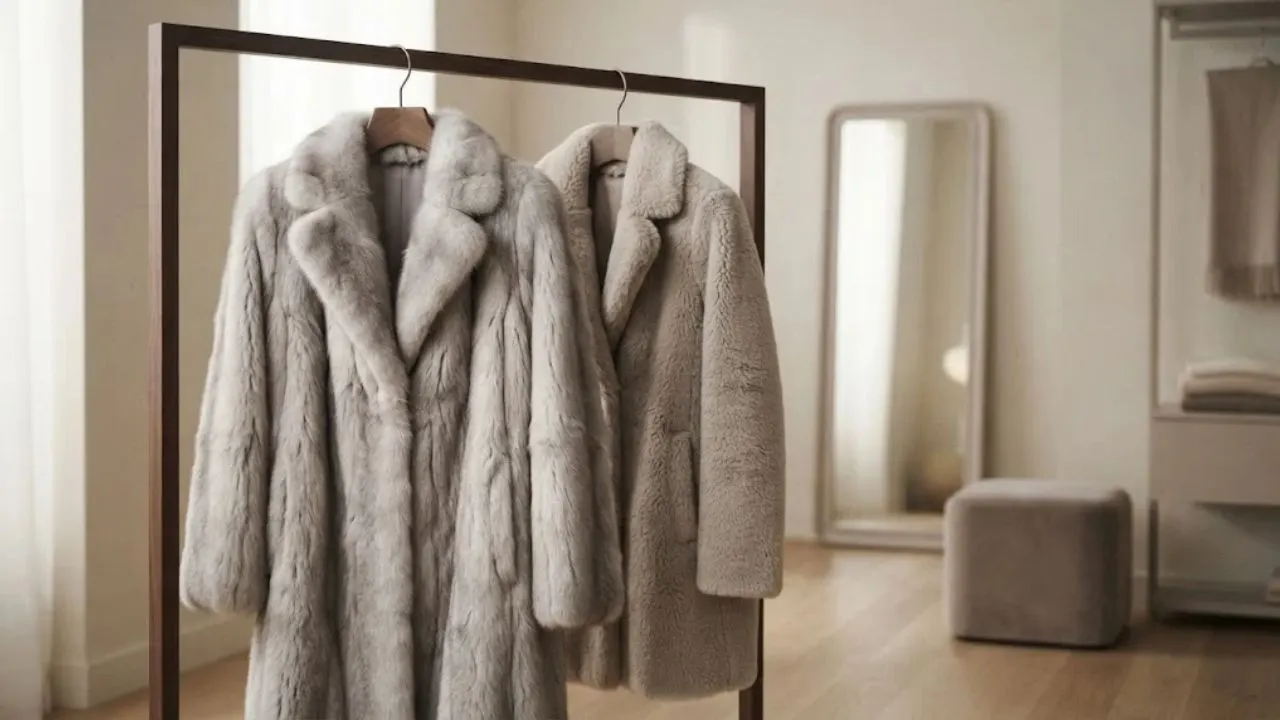
If you’re wondering how much is a chinchilla fur coat, the short answer is: a genuine one can cost anywhere from a few thousand dollars for certain used or smaller pieces to well over $20,000 for a new full-length coat, with custom examples reaching considerably higher. Current U.S. listings show just how wide the range can be, so looking at one “average” price can be misleading.
Chinchilla sits at the luxury end of the real-fur market. A jacket, stole, vintage coat and made-to-measure full-length coat can all have completely different prices. The condition, construction, length, color, seller, provenance and whether the garment is new or pre-owned can change the number substantially.
For someone shopping in the U.S., the better question isn’t simply how much is a chinchilla fur coat? It’s what kind of chinchilla garment you’re considering and what you’ll actually spend to own and maintain it.
So, How Much Is a Chinchilla Fur Coat?

Current retail examples give a useful picture.
Marc Kaufman Furs currently lists chinchilla jackets in the approximate $12,000–$20,000 range, while full-length chinchilla coats on its current sale listings are around $21,000–$26,000.
Henig Furs currently lists custom-made full-length chinchilla coats at $44,999, showing how much custom construction and luxury positioning can change the final price.
At the pre-owned end of the market, the numbers are dramatically different. 1stDibs currently shows used chinchilla coats ranging from approximately $250 to $50,000, with an average around $5,000.
So, as a practical U.S. guide:
| Chinchilla garment | Approximate current price range |
|---|---|
| Used/vintage pieces | Hundreds to several thousand dollars |
| Chinchilla jackets | Roughly $10,000–$20,000+ |
| New full-length coats | Roughly $20,000–$30,000+ |
| Custom luxury coats | $40,000+ is possible |
These are market examples, not fixed industry prices. A particular garment can fall well outside these ranges.
Why Is Chinchilla Fur So Expensive?
The price isn’t simply about the name “chinchilla.”
The fur has a very distinctive fine, dense texture, and producing a finished garment involves considerably more than purchasing raw material. The size and characteristics of the pelts, sorting, matching, cutting, sewing, lining, finishing and garment construction all contribute to the final cost.
There is also a major difference between a small chinchilla jacket and a long coat. A full-length design requires substantially more material and construction work.
Custom work adds another layer. A made-to-measure garment isn’t priced the same way as an off-the-rack piece because the construction process, measurements and finishing requirements are different.
That’s why asking how much is a chinchilla fur coat without specifying the garment can produce a very misleading answer.
Chinchilla Jacket vs. Full-Length Coat
One of the easiest ways to understand the price difference is to compare silhouettes.
A shorter chinchilla jacket generally requires less material than a full-length coat. It may also involve a simpler construction and therefore cost less.
A full-length coat covers much more of the body and creates a much larger finished garment. Luxury examples can therefore move well beyond the $20,000 mark.
There is also a middle ground: stoles, shrugs and smaller fur accessories. Marc Kaufman Furs currently lists chinchilla shrugs and stoles starting in the several-thousand-dollar range.
If your goal is simply to experience the texture and appearance of genuine chinchilla, a smaller piece may have a very different financial commitment from a full coat.
What About a Used or Thrifted Chinchilla Coat?
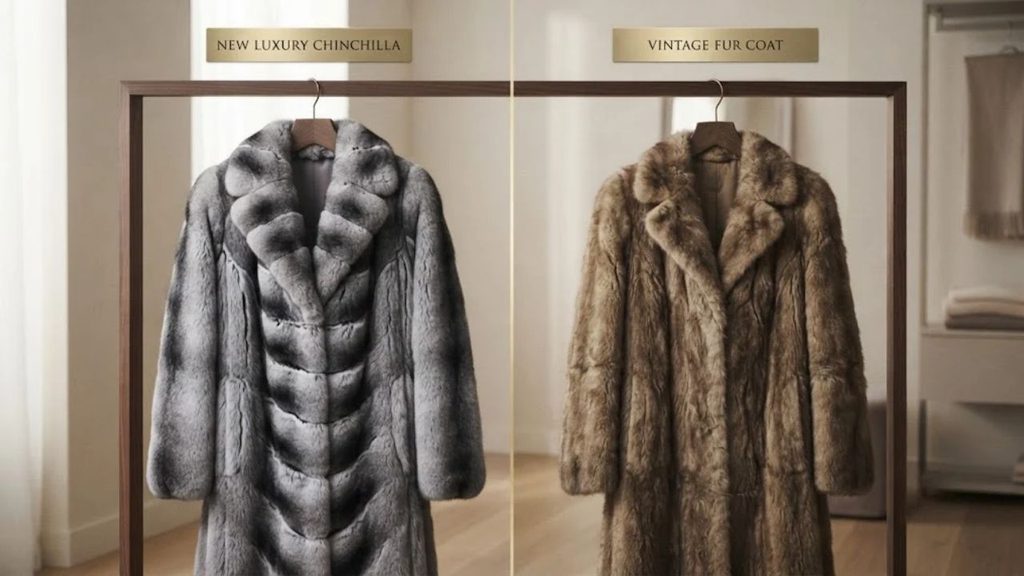
This is where pricing gets interesting.
A used chinchilla coat can cost dramatically less than a new luxury garment. Current 1stDibs listings demonstrate an exceptionally wide used-market range, from approximately $250 to $50,000.
But a low sticker price doesn’t automatically mean low ownership cost.
With a pre-owned fur, you need to consider:
- Overall condition
- Pelt condition
- Lining condition
- Previous repairs
- Odor
- Dry or brittle leather
- Missing hooks or closures
- Discoloration
- Storage history
- Cleaning requirements
- Whether the garment has been altered
A $1,000 vintage coat that needs substantial professional work is not necessarily a $1,000 purchase in practical terms.
This is also where the thrift-store comparison deserves some context. If you’re mainly looking for the look and styling of fur, you don’t necessarily have to buy a questionable secondhand garment simply because it is cheaper than a luxury real-fur coat.
If a new faux-fur coat from Faux Fur World is available at the same price or less than a particular thrift-store option you’re considering, buying new can make more sense from a condition, sizing and predictability standpoint. Compare the actual prices and product details rather than assuming “thrift” automatically means better value.
Faux Fur World positions itself as one of the most affordable options in the premium faux-fur market, giving shoppers another route when they want the visual impact of fur without entering the price range associated with genuine chinchilla.
Don’t Forget the Cost of Cleaning
The purchase price is only part of the calculation.
Real fur requires specialized care. The American Fur Council recommends having fur cleaned by an Authorized Fur Care Specialist rather than taking it to a conventional clothing dry cleaner.
That distinction matters because fur isn’t simply another winter fabric. The fur and underlying leather require handling appropriate to the garment.
Cleaning prices vary considerably by provider and service. Published U.S. fur-care prices can range from around $85 to considerably more depending on the garment and whether additional services are included.
For a high-value chinchilla coat, the cost of professional maintenance is relatively small compared with the original purchase price, but it should still be included in your ownership budget.
For a deeper look at maintenance costs, readers can also see How Much Does It Cost to Clean a Fur Coat?
Storage Matters Too
A genuine chinchilla coat isn’t something you should simply cram into a closet after winter.
The American Fur Council recommends professional cold storage for fur garments and explains that temperature, humidity, light and adequate space all matter. It also recommends broad-shouldered hangers and warns against storing fur in plastic bags because restricted air circulation can damage the leather.
This is another reason the cheapest coat isn’t always the cheapest ownership option.
If you spend thousands of dollars on a genuine fur garment but store it incorrectly, you may be creating problems that are much more expensive to fix later.
For anyone researching fur ownership, storage should be considered part of the purchase decision rather than an afterthought.
Is a Chinchilla Fur Coat Worth the Price?
There isn’t one answer that applies to every shopper.
If you’re specifically looking for genuine chinchilla, understand that you’re entering a luxury category where prices can reach tens of thousands of dollars. You’ll also need to account for professional cleaning, storage and repairs.
If your goal is primarily the appearance, texture and styling effect of a fur coat, the calculation is different.
A new faux-fur coat can give you the ability to experiment with silhouettes, colors and styling without committing to the purchase price associated with genuine chinchilla.
That is one reason faux fur has become an important part of modern winter fashion. You can find cropped jackets, longer coats, shaggy textures, faux-mink looks and other silhouettes without automatically stepping into the five-figure price range of luxury real fur.
What Should You Check Before Buying a Chinchilla Coat?

If you’re still considering genuine chinchilla, don’t make the decision based solely on the price displayed on the listing.
Check the garment itself.
1. Ask what type of fur it is
Make sure the seller clearly identifies the material. “Chinchilla style” and genuine chinchilla are not necessarily the same thing.
2. Examine the condition
Look closely at the fur, lining, closures and leather side of the garment where possible.
3. Ask about alterations
A heavily altered vintage garment may have a different fit and value from an original piece.
4. Ask about cleaning
Find out whether professional cleaning has been performed and when.
5. Consider storage
If you don’t have appropriate storage arrangements, calculate that cost before buying.
6. Compare new and used options
A used garment isn’t automatically a bargain. Compare its condition and total ownership cost with alternatives.
What If You Love the Chinchilla Look but Not the Price?
This is where faux fur becomes a practical alternative.
You don’t have to spend tens of thousands of dollars to build an outfit around a soft, dramatic fur texture.
Faux fur can be styled with:
- Straight-leg denim
- Tailored trousers
- Black dresses
- Knit sweaters
- Boots
- Loafers
- Leather-look pants
- Simple neutral layers
The important part is choosing the right silhouette and proportion.
For example, a brown or chocolate faux-fur coat with cream knitwear and dark denim creates a completely different look from a cropped faux-fur jacket worn with wide-leg trousers.
The same styling principle applies regardless of whether the garment is real or faux: the coat is the statement, so the rest of the outfit doesn’t always need to compete with it.
Faux Fur World as a Lower-Cost Alternative
For shoppers who are interested in fur fashion but aren’t specifically committed to genuine chinchilla, Faux Fur World offers another path.
The brand focuses on faux-fur coats, jackets and winter outerwear and positions itself around affordability within the premium faux-fur market.
That distinction is important.
You’re not comparing a $15,000 genuine chinchilla coat directly with a faux-fur coat as if they’re identical products. They aren’t.
You’re comparing two different approaches to winter fashion:
Genuine chinchilla: luxury real fur, substantially higher purchase and maintenance costs.
Faux fur: a fashion-focused alternative that allows shoppers to explore fur-inspired silhouettes at a much lower financial commitment.
And if you encounter a thrift-store fur piece that costs roughly the same as a new Faux Fur World coat, don’t assume the secondhand option automatically offers the better deal. Look at condition, sizing, material, maintenance and what you’re actually trying to achieve with the purchase.
Final Answer: How Much Is a Chinchilla Fur Coat?
So, how much is a chinchilla fur coat?
In the current U.S. market, genuine chinchilla can range from several thousand dollars for certain smaller or pre-owned pieces to roughly $20,000–$30,000 or more for many new full-length examples, while custom luxury garments can reach $40,000+. Current listings from established fur retailers demonstrate this wide spread.
Used pieces can be dramatically cheaper, but condition and maintenance become especially important. A low purchase price doesn’t necessarily mean low total cost.
If genuine chinchilla is specifically what you want, investigate the garment, seller, construction and care requirements carefully.
If what you really want is the look of a luxurious fur coat, faux fur gives you a much more accessible route. Before spending thousands on a vintage or luxury real-fur piece, compare the total cost with a new faux-fur alternative from a brand such as Faux Fur World.
The smartest comparison isn’t simply new versus thrift or real versus faux. It’s the complete picture: purchase price, condition, maintenance, storage, fit and how often you’ll actually wear the coat.
Frequently Asked Questions
Q. How much is a chinchilla fur coat in the USA?
Current U.S. examples range from several thousand dollars for certain smaller or used pieces to more than $20,000 for many new full-length coats. Custom luxury examples can exceed $40,000.
Q. Why are chinchilla fur coats so expensive?
The price reflects the value of genuine chinchilla fur along with material selection, pelt matching, garment construction, craftsmanship, finishing and the difference between standard and custom garments.
Q. How much does a used chinchilla fur coat cost?
Used pricing varies dramatically. Current 1stDibs listings range from approximately $250 to $50,000, showing how strongly condition, design, provenance and seller can affect the market.
Q. Is chinchilla more expensive than faux fur?
Generally, genuine chinchilla occupies a dramatically higher price category than faux fur. Faux fur is designed to provide a fur-inspired appearance at a much lower purchase price.
Q. Does a chinchilla fur coat require professional cleaning?
Yes. The American Fur Council recommends having fur cleaned by a specialist rather than an ordinary clothing dry cleaner.
Q. Is buying a thrifted fur coat always cheaper?
Not necessarily. The initial price may be lower, but cleaning, repairs, storage, condition and fit can add to the actual cost.




[…] you’re researching several types of expensive fur, our guide on How Much Is a Chinchilla Fur Coat? is a useful comparison because chinchilla coats also show a very wide range between vintage resale […]
Comments are closed.