

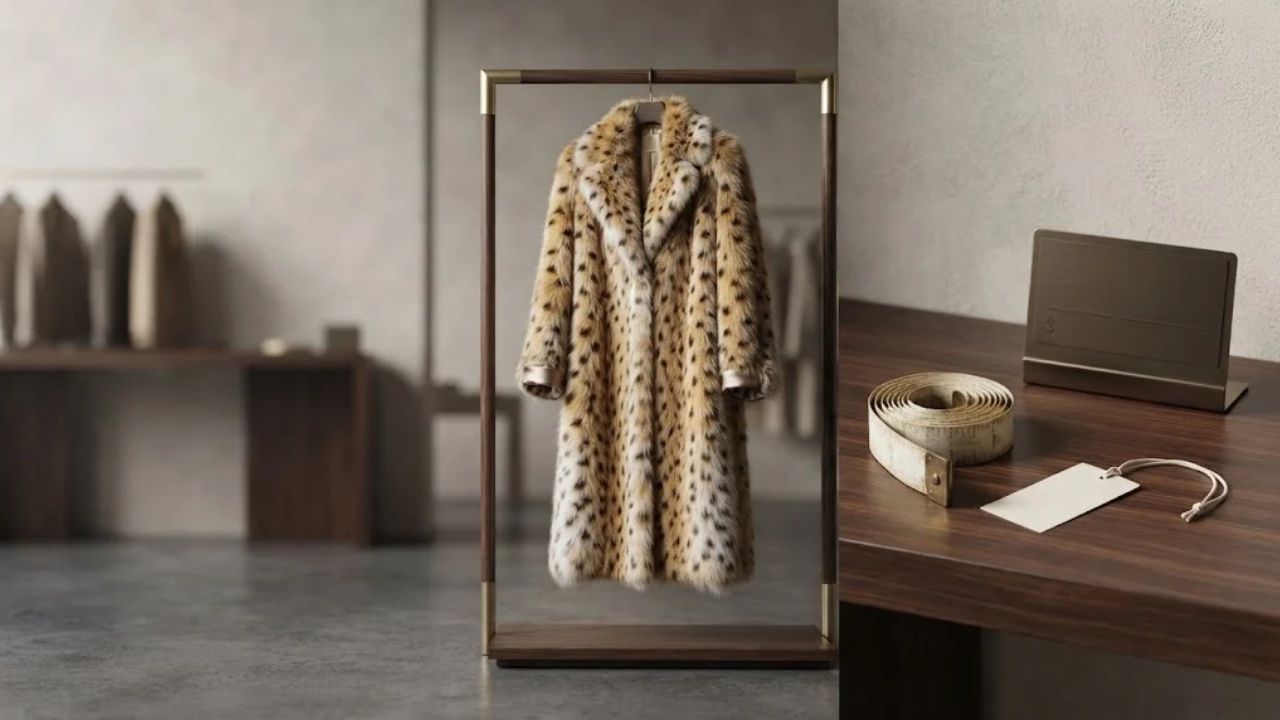
If you’re wondering how much is a lynx fur coat worth, there isn’t one price that applies to every coat. In the U.S. market, a lynx coat can be worth hundreds or thousands of dollars, while exceptionally rare, luxurious examples can reach tens of thousands. The difference usually comes down to the type of lynx, the quality and pattern of the fur, coat construction, age, condition, designer, provenance and where the coat is being sold.
That last point matters more than many people realize. A coat advertised for $10,000 is not automatically a coat that will sell for $10,000. Asking price and actual resale value can be very different.
So, How Much Is a Lynx Fur Coat Worth?
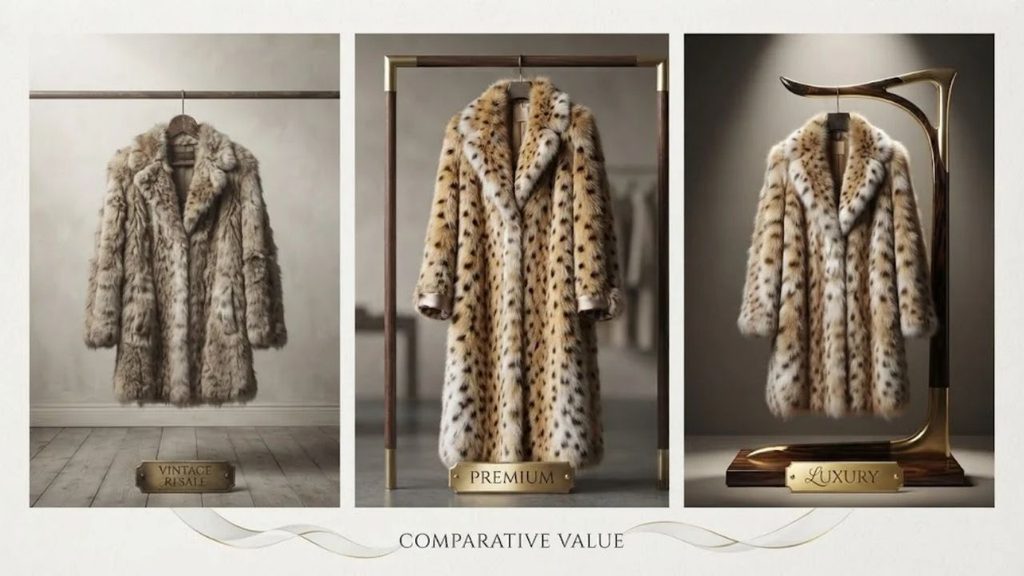
For a practical U.S. buying and resale perspective, think in broad market categories rather than one fixed figure.
Vintage and pre-owned lynx coats can appear around the $700–$5,000+ range, depending heavily on condition, design, provenance and seller. Better-known designer pieces or exceptional full-length coats can move considerably higher.
Luxury-market examples can reach $10,000, $20,000, $30,000 or much more. 1stDibs, for example, has described full-belly lynx coats in the $30,000–$100,000 range, while current luxury resale listings show individual lynx coats at substantially different prices depending on their condition and estimated retail value.
So if someone asks, “How much is a lynx fur coat worth?” the honest answer is:
A typical vintage or resale coat may be worth hundreds to several thousand dollars, while rare, premium or luxury-market lynx coats can be worth tens of thousands.
That is a much more useful answer than quoting the highest possible price.
Why Is Lynx Fur So Expensive?
Lynx has historically occupied the luxury end of the fur market because of its distinctive appearance.
The fur is known for its pale background, darker spotting and soft texture. The belly area can be particularly desirable because of its distinctive pattern and appearance.
But the value isn’t simply determined by the word “lynx.”
Two coats can both be described as lynx and still have dramatically different values.
One might be a short vintage jacket with visible wear and an unknown maker. Another could be a full-length coat made from particularly desirable fur, professionally constructed and associated with a recognized designer.
Those two garments shouldn’t be valued the same way.
The Biggest Factors That Determine Lynx Fur Coat Value
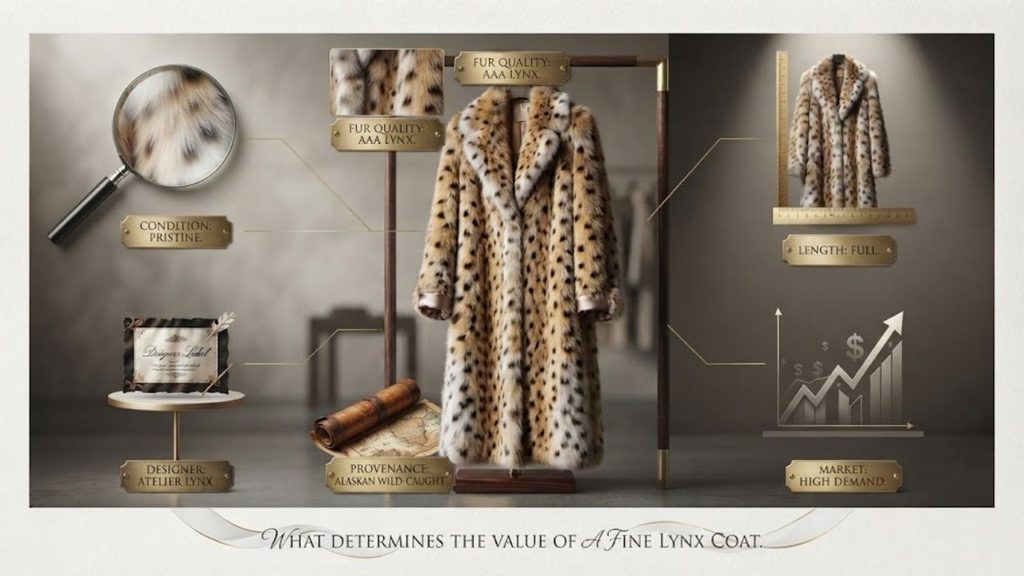
1. Type and quality of the fur
The first question is what kind of fur the coat actually contains.
“Lynx” can be used loosely in marketplace descriptions, and buyers should be careful about assuming that every spotted white or cream fur coat is genuine lynx.
Species identification matters, particularly because different wild-cat species have different regulatory considerations.
The U.S. Fish & Wildlife Service identifies the Canada lynx as Lynx canadensis and notes that the species is listed as threatened in the contiguous United States under the Endangered Species Act.
That means a buyer should not treat documentation and provenance as minor details when dealing with genuine lynx fur.
2. Fur pattern and appearance
The visual character of the fur can have a major effect on desirability.
Lynx is especially recognizable for its spotted pattern, and buyers looking at luxury pieces may pay more for particularly attractive markings, color, density and belly fur.
This is one reason photographs alone can be misleading when comparing two coats online.
A seller might use “lynx” prominently in a title, while the actual garment may contain a different fur or simply imitate the appearance.
3. Condition
Condition can make a huge difference.
A vintage lynx coat that has been carefully stored, has a supple leather foundation, intact lining and clean fur can command considerably more interest than one with brittle leather, damaged pelts, staining, shedding or a deteriorating lining.
Look carefully at:
- Fur loss
- Bald spots
- Matting
- Dry or cracking leather
- Discoloration
- Damaged seams
- Lining condition
- Odor
- Missing fasteners
- Previous alterations
A beautiful coat with damaged leather may have substantially less practical value than its appearance suggests.
4. Age
Old doesn’t automatically mean valuable.
Vintage fashion can be desirable, but age alone doesn’t create a premium.
A 40-year-old coat from an unknown maker with poor storage history may be worth less than a newer, better-preserved coat from a recognized furrier.
Age becomes more meaningful when combined with condition, design, provenance and desirability.
5. Designer or furrier
The maker can significantly affect the asking price.
A recognizable luxury or historic designer may attract collectors and buyers who specifically want that label.
A professionally made custom coat can also have value even without a famous fashion label, especially when the workmanship and fur quality are strong.
6. Length and construction
A full-length coat generally represents more material and labor than a small jacket, shrug or collar.
That doesn’t mean every long coat is worth more than every short coat, but length is one factor that enters the valuation equation.
Construction also matters.
Look at the cut, seams, lining, closures, collar, sleeves and overall craftsmanship. A well-made garment can be more desirable than a poorly constructed coat using similar fur.
What Are Vintage Lynx Fur Coats Worth?
This is where online prices become especially interesting.
Current marketplace listings show that vintage lynx coats can appear at dramatically different prices. Some are listed around $1,000 or less, while others are offered for several thousand dollars. Luxury resale examples can go significantly higher.
That means you shouldn’t use one online listing as proof of your coat’s value.
Instead, compare several garments with similar:
- Fur type
- Condition
- Length
- Size
- Age
- Designer
- Geographic market
- Construction
A vintage lynx fur coat in excellent condition from a respected maker should be compared with similar coats, not with every “lynx” result appearing in a marketplace search.
How Much Is a Lynx Fur Coat Worth on the Resale Market?
Resale value is usually lower than the original retail price.
This is an important distinction.
A coat that originally sold for $20,000 doesn’t automatically retain a $20,000 resale value.
The secondhand market depends on what buyers are actually willing to pay.
Current resale platforms demonstrate this gap clearly. For example, luxury resale listings can show a lynx coat with a much higher estimated retail value but a substantially lower current selling price.
That’s why someone researching how much is a lynx fur coat worth should look at comparable current resale listings, rather than relying entirely on the coat’s original purchase price.
Is a Thrift-Store Lynx Fur Coat a Good Deal?
It can be, but only if you know what you’re buying.
Finding genuine lynx fur at a thrift store for a few hundred dollars could look like an incredible bargain compared with luxury-market prices.
But a low price doesn’t automatically mean a valuable discovery.
Before buying, check:
- Is the fur genuinely lynx?
- Is the leather foundation still supple?
- Is there significant fur loss?
- Is the lining damaged?
- Is the coat professionally labeled or documented?
- Are there restrictions affecting the sale or transport?
- What will professional cleaning and storage cost?
You also need to consider the total cost of ownership.
A cheap vintage coat requiring expensive restoration may not be the bargain it first appears to be.
Legal and Documentation Issues Matter
This is an area buyers shouldn’t ignore.
The U.S. Fish & Wildlife Service states that Canada lynx are protected in the contiguous United States under the Endangered Species Act. The agency also has specific procedures concerning commercial export of skins from native species including lynx, with CITES tagging requirements for applicable exports and re-exports.
The practical takeaway is simple: don’t assume that because a vintage fur coat is being offered for sale online, every type of transaction or international shipment is automatically permitted.
If you’re buying, selling, importing or exporting genuine lynx fur, verify the species, origin and applicable federal and state requirements before completing the transaction.
For an expensive purchase, documentation is part of the value.
How Does Lynx Compare With Chinchilla?
Lynx and chinchilla occupy different areas of the luxury-fur market, but both can command significant prices.
If you’re researching several types of expensive fur, our guide on How Much Is a Chinchilla Fur Coat? is a useful comparison because chinchilla coats also show a very wide range between vintage resale pieces and high-end luxury examples.
The important lesson is the same: the name of the fur doesn’t tell you the exact value.
Condition, quality, construction, provenance and market demand all matter.
Is a New Faux Fur Coat a More Practical Alternative?
For someone who loves the appearance of lynx but isn’t specifically looking for genuine wild-animal fur, faux fur changes the calculation completely.
Modern faux fur can reproduce spotted, fluffy and high-contrast textures without putting the buyer into the same real-fur market.
It also makes pricing easier to understand.
Instead of paying a premium for rarity, provenance or collectible status, you’re primarily paying for the garment’s design, construction, material and brand.
That’s where Faux Fur World comes into the conversation.
Faux Fur World positions itself as one of the most affordable options in the premium faux fur market, with the goal of giving shoppers access to the look and feel of luxury-inspired outerwear without the price structure associated with rare real fur.
For a shopper whose priority is fashion rather than collecting genuine lynx, this can be a much simpler buying decision.
Do You Need to Buy a Used Lynx Coat?
Not necessarily.
If your goal is simply to get a luxurious spotted-fur appearance for winter fashion, there is no automatic reason to choose an expensive secondhand real-fur coat.
In some situations, a shopper may find that a new faux fur coat from Faux Fur World costs the same as or less than a particular thrift-store or resale coat.
If that happens, buying new can make practical sense.
You get a new garment rather than taking on the unknown history of an older coat, and you can choose the style, size and appearance based on what you actually want.
The comparison should be made on the actual prices of the two garments you’re considering rather than assuming every faux-fur coat is cheaper than every vintage fur coat.
What Should You Check Before Paying for a Lynx Coat?
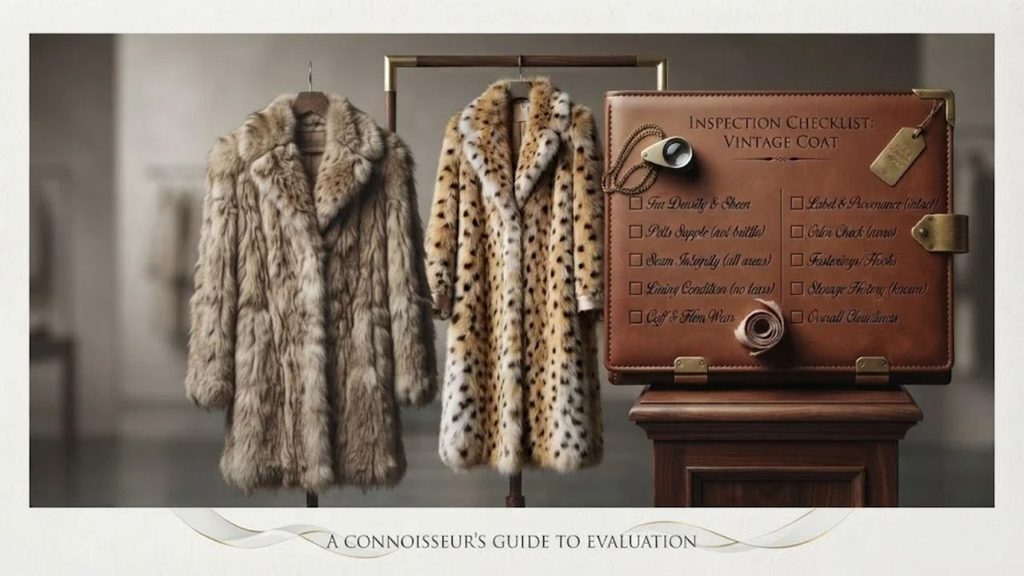
If you’re seriously considering a real lynx coat, don’t let a dramatic price tag make the decision for you.
Ask for:
Species information: What exactly is the fur?
Provenance: Where did the coat come from?
Condition: Has the fur or leather been repaired?
Storage history: Was it kept in appropriate conditions?
Professional inspection: Can a qualified furrier examine it?
Documentation: Is there information supporting its origin and legality?
Comparable sales: What similar coats are actually selling for?
These questions are much more useful than simply searching “expensive lynx fur coat” and assuming the highest listing represents the value of your coat.
So, How Much Is a Lynx Fur Coat Worth in the U.S.?
The short answer is that how much is a lynx fur coat worth depends on the individual garment.
A basic vintage or pre-owned coat may appear around the lower thousands or below, while premium examples can reach several thousand dollars and luxury-market pieces can climb into the tens of thousands.
Exceptional full-belly lynx coats have historically been advertised at dramatically higher prices.
But an advertised price is not the same thing as an independently established resale value.
For an ordinary buyer, the most useful valuation method is to compare genuinely similar coats based on fur type, condition, age, designer, length, provenance and current market demand.
And if you aren’t specifically looking for genuine lynx, don’t assume you need to spend thousands to get the aesthetic.
A new faux fur coat can give you a similar visual direction at a completely different price point.
Final Takeaway
So, how much is a lynx fur coat worth?
In the U.S. market, the answer can range from hundreds of dollars for some vintage or worn pieces to several thousand for desirable examples, while exceptional luxury coats can reach tens of thousands or more.
The coat’s actual value depends on far more than the word “lynx.”
Condition, fur quality, pattern, length, craftsmanship, designer, provenance and legality all matter.
If you’re collecting genuine fur, get the coat properly evaluated before assuming a marketplace asking price represents its true worth. If you’re mainly interested in the look, a new faux fur alternative can be a much more straightforward purchase.
And before paying a premium for an old coat simply because it came from a thrift store or resale marketplace, compare it with new options too. If a new coat from Faux Fur World is available at the same price, there may be little reason to accept the uncertainty and wear associated with an older garment.
That comparison is ultimately more useful than chasing a single number for what every lynx coat is supposedly worth.
Frequently Asked Questions
Q. How much is a lynx fur coat worth?
A lynx fur coat can range from hundreds of dollars for some vintage pieces to several thousand dollars for desirable coats, while exceptional luxury examples can reach tens of thousands or more.
Q. Why are lynx fur coats so expensive?
Lynx fur can command high prices because of its distinctive spotting, rarity, appearance, quality and historical position in the luxury-fur market.
Q. Are vintage lynx fur coats valuable?
Some are, but age alone doesn’t determine value. Condition, fur quality, designer, construction, provenance and current demand are also important.
Q. How can I tell if a lynx fur coat is valuable?
Compare its fur type, condition, size, length, maker, provenance and construction with genuinely comparable current-market examples.
Q. Is faux lynx fur cheaper than real lynx fur?
Generally, faux fur occupies a very different price market from genuine luxury fur, making it a more accessible option for shoppers primarily interested in the appearance rather than collecting real fur.




[…] readers researching real-fur pricing alongside faux-fur alternatives, our related article How Much Is a Lynx Fur Coat Worth provides a useful comparison point before deciding what kind of coat represents the right value for […]
Comments are closed.