

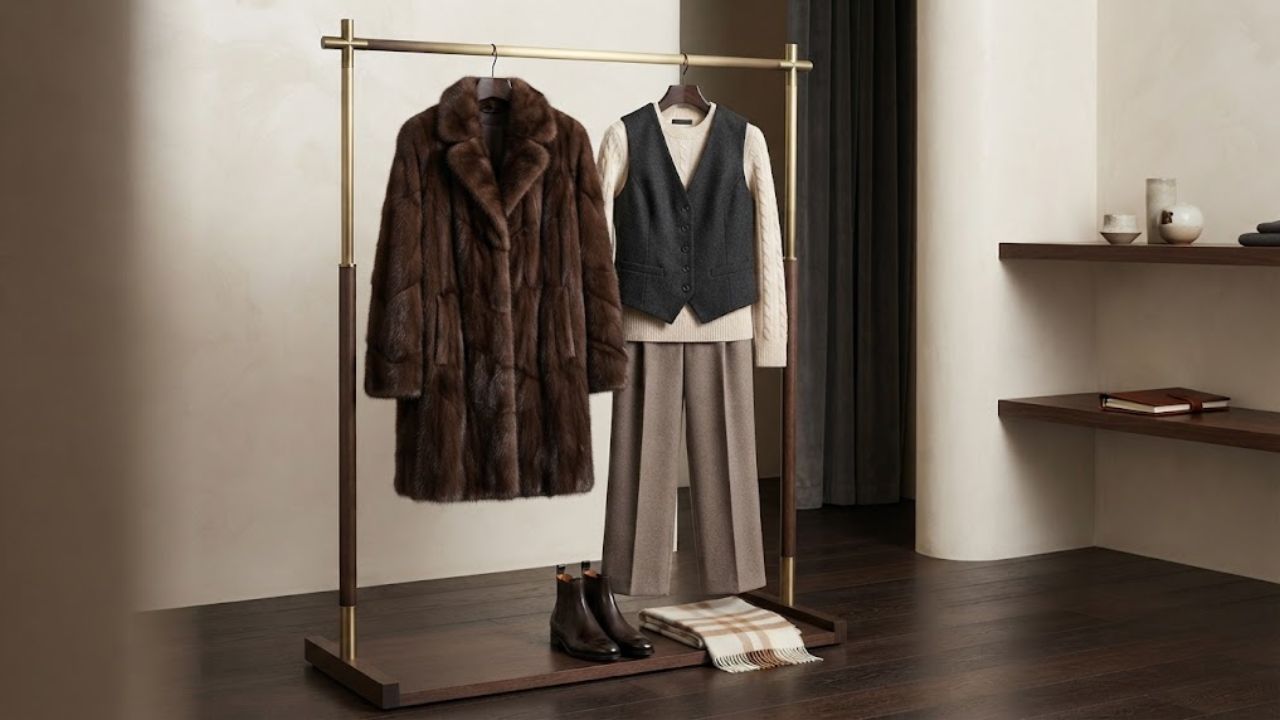
If you are wondering how much is a real mink coat, there is no single price that applies to every garment. In the U.S. market, a real mink coat can cost anywhere from around a thousand dollars for certain used or simpler pieces to many thousands of dollars for new, full-length, premium, vintage-designer, or highly customized garments. Current pricing sources show just how wide that range can be.
That makes the question more complicated than simply asking for an average. A short mink jacket, a vintage coat from the resale market, and a new designer full-length mink coat are three very different purchases.
If you are researching how much is a real mink coat because you are considering buying one, this guide breaks down what actually influences the price, what you can expect from different parts of the market, and how faux fur compares from a budget perspective.
So, How Much Is a Real Mink Coat?
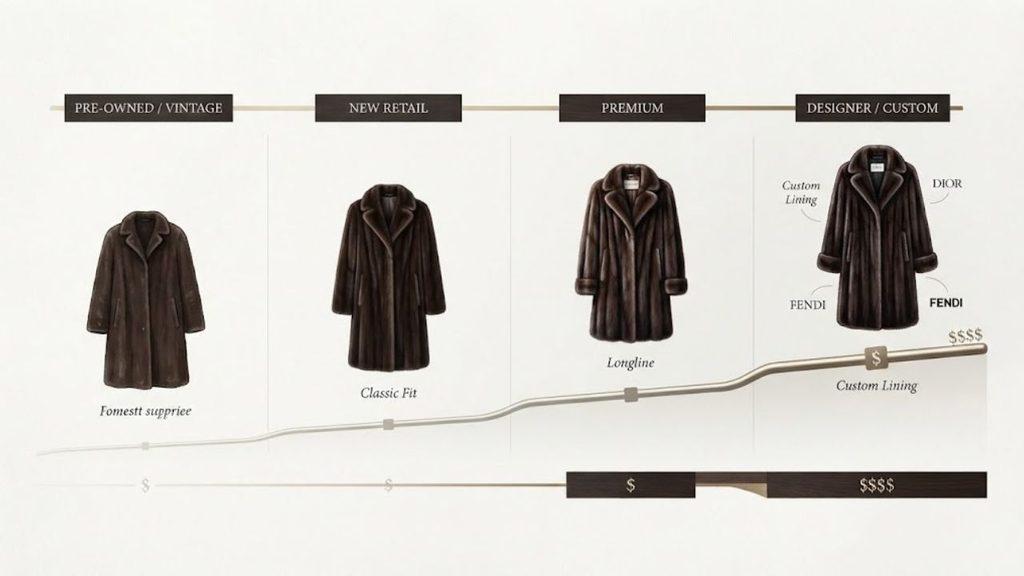
A practical way to think about the U.S. market is in broad ranges rather than one fixed price.
New mink garments can commonly fall into the $1,500–$10,000 range, while premium full-length, designer, custom, or particularly desirable pieces can reach $10,000–$30,000 or more. Used and vintage mink coats can be considerably less expensive, with some resale examples available for only a few hundred dollars to around $1,500.
One current 2026 catalog analysis illustrates the upper end of the market particularly well: its 149-piece sample had a median listed price of $5,760, while individual garments ranged from $2,520 to $26,920. That is a catalog-specific sample rather than a universal market average, but it demonstrates why quoting one “normal” mink coat price can be misleading.
So, how much is a real mink coat in practical terms?
It depends heavily on what kind of mink garment you are looking at.
| Type of mink garment | Broad price expectation |
|---|---|
| Used / vintage mink | Around $100–$1,500+ |
| New shorter mink jacket | Around $1,500–$5,000+ |
| New mid-range coat | Around $3,000–$10,000+ |
| Premium / full-length mink | Often $10,000+ |
| Designer / exceptional pieces | Can reach $20,000–$30,000+ |
These are broad market reference ranges, not guaranteed retail prices. Condition, construction, brand, location, season and seller can move the actual price substantially.
Why Are Real Mink Coats So Expensive?
One reason how much is a real mink coat can be difficult to answer is that the price reflects much more than the fur itself.
A finished fur garment involves the pelts, processing, design, cutting, sewing, matching, lining, finishing and retail process. Fur Commission USA describes fur garments as labor-intensive products involving processing, dressing, design and manufacturing.
1. Fur quality
The quality and characteristics of the mink affect the garment’s value.
Buyers may consider:
- Density of the fur
- Texture
- Guard-hair quality
- Color
- Uniformity
- Pelt condition
- Construction
- How the pelts have been matched
Fur Commission USA notes that mink quality can vary by characteristics such as density, color and the individual properties of the pelts.
This is one reason two coats that look superficially similar can have very different prices.
2. Coat length
Length also matters.
A short mink jacket generally requires less material than a full-length coat. A longer silhouette can therefore involve more pelts, more construction work and more material.
That does not mean every long coat is automatically worth more. Construction quality, condition, brand and fur quality still matter.
3. Construction
A mink coat isn’t simply fur attached to a lining.
The way pelts are cut, matched and assembled can affect the appearance, weight, durability and overall finish of the garment.
Some garments use whole skins, while others use pieced construction. Fur Commission USA notes that pieced mink can be less expensive than certain whole-skin constructions and may have different wear characteristics.
4. Brand and designer status
Designer labeling can create a significant price difference.
A recognizable fashion house, collectible vintage label or limited piece can command a price that goes beyond the intrinsic material value of the garment.
This is particularly important when shopping secondhand. A high original retail price does not automatically mean the same garment has a high current resale value.
Does Vintage Mink Cost Less?
Often, yes.
If your goal is simply to own a real mink coat rather than purchase a new luxury garment, the vintage and secondhand market can look completely different.
A vintage mink coat may sell for several hundred dollars, while a designer vintage piece in excellent condition can be worth considerably more. 1stDibs notes that vintage mink pricing can range from roughly $300 for smaller pieces to more than $10,000 for high-end designer examples, depending on factors such as size, brand, quality and condition.
This creates an important distinction when asking how much is a real mink coat:
Original retail price ≠ current resale value.
A coat that originally cost thousands of dollars decades ago may now have a much lower resale price.
Conversely, a rare designer garment in excellent condition may retain substantially more value.
What Makes One Mink Coat More Valuable Than Another?
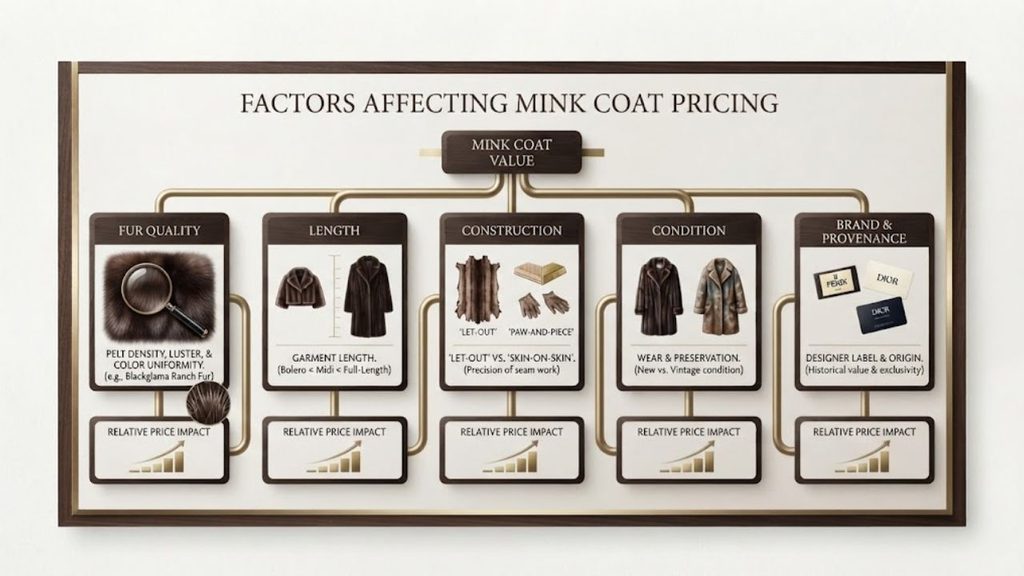
If you are comparing several real mink coats, look beyond the label.
Consider these factors together:
Condition
Look closely at the fur, lining, seams and leather beneath the fur.
Wear, dryness, damage, staining, odors or deterioration can reduce the practical value of a garment.
Fur quality
Look for consistent texture, density and color.
The fur should also be evaluated in relation to the construction of the garment rather than judged from a photograph alone.
Construction
Check seams, closures, lining, pockets and the way the pelts have been joined.
Brand
Designer or historically significant labels can influence resale pricing, although brand alone doesn’t guarantee quality or current market value.
Size and silhouette
A desirable contemporary silhouette may be easier to wear than an outdated cut. Vintage garments can also require alterations, which adds another expense.
Provenance and documentation
For expensive purchases, documentation and accurate labeling matter.
In the U.S., the Federal Trade Commission requires fur products to carry specific information including the animal name, seller/manufacturer identification, country of origin and certain treatment information.
That means shoppers should be cautious about listings that make vague claims about fur type or origin.
Don’t Forget the Cost of Owning a Mink Coat
The purchase price isn’t necessarily the entire financial commitment.
A real fur garment may require professional cleaning, specialized care, repairs, storage and potentially insurance depending on its value and the owner’s circumstances.
This is especially relevant when considering how much is a real mink coat as a long-term purchase rather than simply looking at the checkout price.
Storage deserves particular attention. Fur Commission USA describes fur as a delicate natural material that requires careful handling and processing.
For a broader storage guide, see our article:
How Do You Store a Fur Coat? A Practical Guide for U.S. Shoppers
That guide can help you understand why storing a fur garment correctly matters when considering its long-term condition.
Is a Cheap Mink Coat Always a Good Deal?
Not necessarily.
A $500 vintage mink coat might look like a bargain compared with a $5,000 new coat, but the cheaper garment may need cleaning, repairs, alterations or professional evaluation.
The reverse can also be true: a well-maintained vintage coat at a reasonable price can be an attractive purchase for someone specifically looking for real fur.
The key is to compare total value, not just the sticker price.
Before buying, ask:
- What is the actual fur?
- Is it new, used or vintage?
- What condition is it in?
- Is the fur properly labeled?
- Is the lining intact?
- Are there signs of deterioration?
- Does the seller provide enough product information?
- Will alterations be necessary?
- What ongoing care will it require?
Real Mink vs. Faux Fur: What Is the Budget Difference?
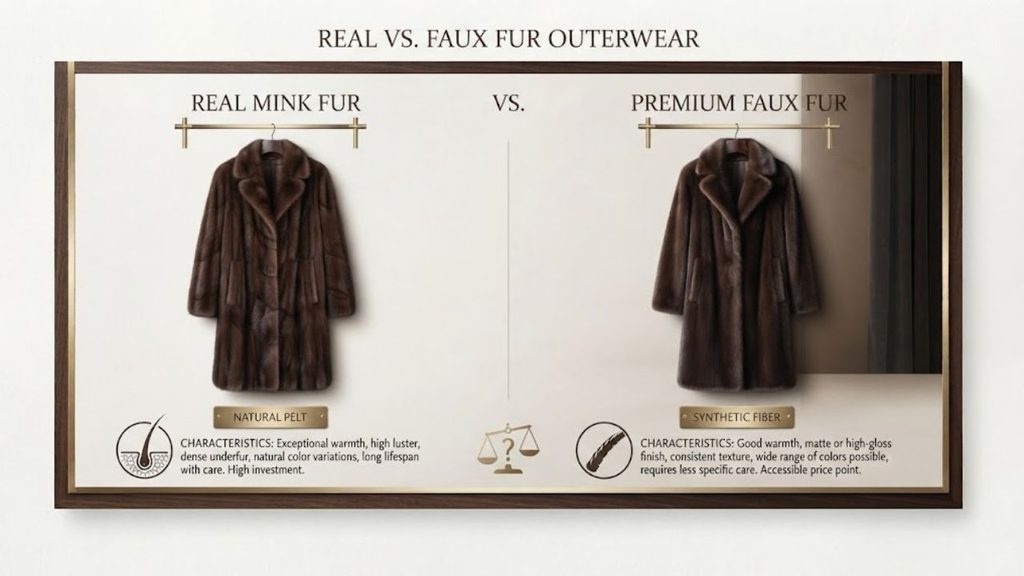
This is where the decision becomes very different for many shoppers.
A real mink coat can represent a substantial financial commitment, particularly when shopping for new, premium or designer garments.
Faux fur provides another route for shoppers who want the visual character of fur-inspired outerwear without shopping in the real-fur market.
Modern faux fur is available in many silhouettes, including:
- Cropped faux fur jackets
- Faux fur bomber jackets
- Long faux fur coats
- Hooded faux fur jackets
- Shaggy faux fur jackets
- Faux mink-inspired styles
- Leopard-print faux fur coats
- White faux fur jackets
- Brown faux fur jackets
- Plus-size faux fur coats and jackets
The right comparison is therefore not simply “real versus fake.” It is about what the shopper actually wants from the garment: appearance, styling flexibility, budget, care requirements, material preference and intended use.
Why Faux Fur Can Make Sense for Budget-Conscious Shoppers
If your priority is achieving a fur-inspired winter look without entering the high-priced real-fur market, faux fur can substantially change the purchasing equation.
At Faux Fur World, our focus is faux fur coats, faux fur jackets and winter outerwear. We position the brand as the most affordable in the premium faux fur market, with the goal of making premium-looking faux fur more accessible to shoppers.
That positioning is particularly relevant for someone searching how much is a real mink coat and realizing that a new mink garment may cost several thousand dollars.
Instead of spending the entire budget on one real fur garment, a shopper can explore different faux fur silhouettes and colors, such as a cropped faux fur jacket for casual outfits or a longer faux fur coat for a more dramatic winter look.
The important point is not that every shopper should choose the same material. It is that understanding the price difference gives you more options.
How to Tell What You Are Actually Buying
Online shopping makes material verification especially important.
If a listing claims that a product is real mink, shoppers should look for clear information about the fur type, origin and seller.
The FTC’s Fur Products Labeling Act requires covered fur products sold in the U.S. to disclose specific information, including the animal name and country of origin for imported fur.
This is also a useful reminder for anyone shopping for faux fur.
A product described as faux fur should accurately represent its materials. The FTC has previously taken action involving products marketed as faux fur that allegedly contained real fur, demonstrating why accurate fur descriptions matter to consumers.
So, How Much Should You Budget for a Real Mink Coat?
If you are planning a purchase, think in categories rather than searching for one universal number.
For a used or vintage mink, a few hundred dollars may sometimes be enough to enter the market, although condition and provenance matter.
For a new mink jacket or coat, a budget of several thousand dollars is much more realistic.
For premium full-length, designer or highly specialized garments, prices can move well into five figures.
That is why how much is a real mink coat has no single correct answer.
A better question is:
What type of mink coat are you buying, in what condition, from which market, and at what quality level?
Those variables can completely change the answer.
Final Takeaway
So, how much is a real mink coat?
In the U.S., a real mink garment can range from hundreds of dollars on the vintage and resale market to several thousand dollars for many new coats, with premium and designer examples reaching $10,000, $20,000 or even higher. Current market examples show that the spread is too large for one average price to describe every mink coat accurately.
The most important factors are fur quality, construction, length, condition, brand, age and the market in which the garment is being sold.
If your goal is simply a luxurious winter look, faux fur gives you another category to explore. Faux Fur World focuses specifically on faux fur coats, jackets and winter outerwear and positions itself as the most affordable option in the premium faux fur market.
Understanding the real cost of mink makes it easier to compare your choices realistically rather than judging a garment by its label or appearance alone.
Frequently Asked Questions
Q. How much is a real mink coat?
A real mink coat can range from a few hundred dollars for some used or vintage pieces to several thousand dollars for new garments, while premium and designer coats can reach $10,000 or more.
Q. How much does a new mink coat cost?
Many new mink garments fall somewhere in the low-thousands to $10,000 range, although premium, full-length and designer garments can cost substantially more.
Q. Are vintage mink coats cheaper?
Often, yes. Vintage and used mink coats can be significantly less expensive than new luxury garments, although designer labels, condition and rarity can increase resale prices.
Q. Why are mink coats expensive?
Pricing reflects factors including fur quality, pelts, construction, labor, length, finishing, brand and retail positioning.
Q. Is faux fur cheaper than real mink?
Faux fur is generally positioned in a different price category from new premium real-fur garments, giving shoppers another option when they want a fur-inspired winter look without shopping in the real-fur market.




[…] readers researching the subject in greater detail, our guide How Much Is a Real Mink Coat? can be used as the next step in understanding the difference between original retail pricing, […]
Comments are closed.