

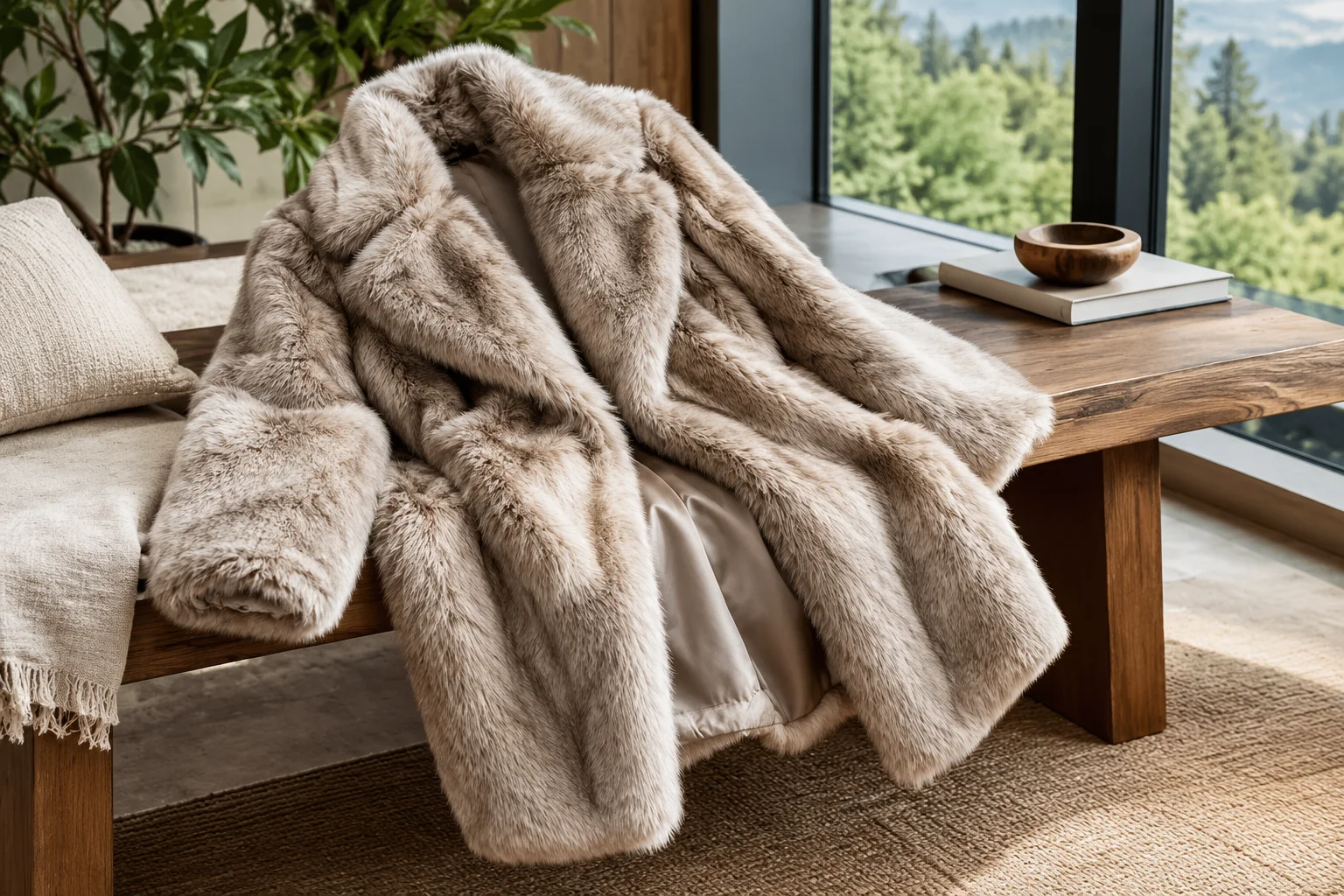
If you are considering a faux fur coat but wondering are faux fur coats bad for the environment, the honest answer is: they can have environmental drawbacks, but the answer is more complicated than simply calling faux fur “good” or “bad.” Most faux fur is made from synthetic fibers such as polyester or acrylic, which are derived from fossil-based materials and can contribute to plastic waste and microfiber pollution. At the same time, faux fur avoids the use of animal pelts and can be a practical alternative for shoppers who do not want to buy real fur.
The environmental impact of a faux fur coat depends on several factors, including the materials used, manufacturing process, how often the garment is washed, how long it remains in your wardrobe, and what happens to it when you no longer want it.
So, rather than asking only whether faux fur is environmentally friendly, it is more useful to ask how sustainable a particular faux fur jacket or coat is across its entire life cycle.
Are Faux Fur Coats Bad for the Environment?
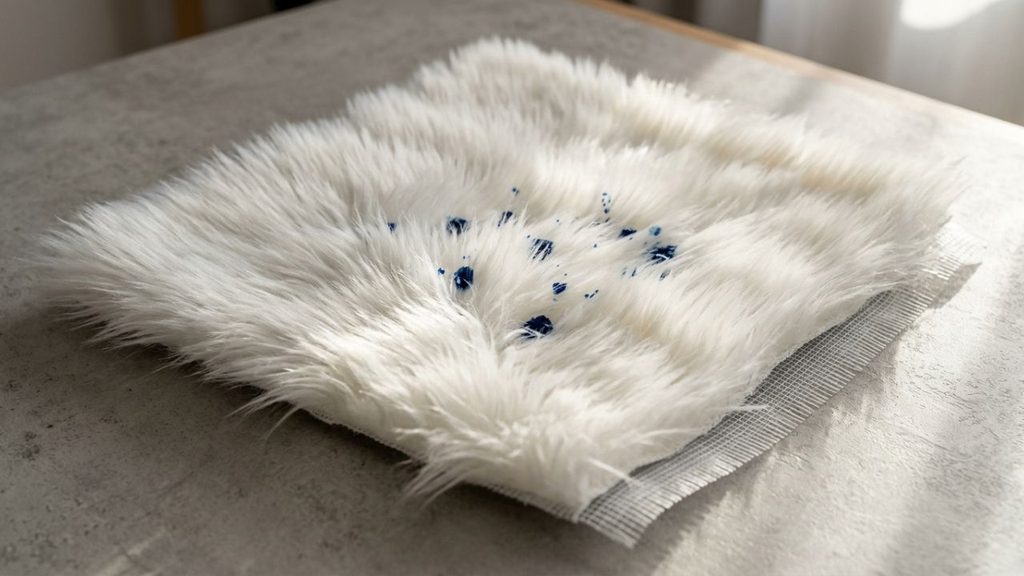
Faux fur is not impact-free, but it is not automatically one of the worst choices you can make either.
Most faux fur is a type of synthetic fur made from man-made fibers. Polyester, acrylic and other synthetic materials are commonly used to create the soft pile that gives artificial fur its appearance and texture.
The main environmental concerns are connected to:
- Fossil-based synthetic fibers
- Energy and resources used during manufacturing
- Microfiber shedding during washing
- Chemical processing
- Difficulty recycling mixed-material garments
- Textile waste at the end of a garment’s life
The United Nations Environment Programme has highlighted the environmental impact of synthetic textiles, including microfiber pollution from fabrics such as polyester, acrylic and nylon.
That means the answer to are faux fur coats bad for the environment is not a simple yes or no.
A better question is: What is the coat made from, how long will you use it, and how responsibly will you care for it?
Why Is Faux Fur Made From Synthetic Materials?
Faux fur is designed to reproduce the appearance and feel of animal fur without using an animal pelt.
Unlike real fur, which is an animal-derived material, synthetic fur uses manufactured fibers to create the fur-like surface. Depending on the garment, the construction can include polyester, acrylic, modacrylic or blends of different fibers.
This gives manufacturers considerable flexibility. They can create a:
- Shaggy faux fur jacket
- Faux mink fur jacket
- Leopard print faux fur coat
- Faux fur cropped jacket
- Long faux fur coat
- Hooded faux fur jacket
- Faux fur lined jacket
- Faux fur bomber jacket
- Animal print faux fur jacket
However, the synthetic nature of the material is also where some environmental concerns begin.
Synthetic fibers are essentially plastic-based materials. During their production, resources and energy are required, and some synthetic textiles can shed tiny fibers during use and washing.
So while fake fur eliminates the need for an animal pelt, it does not eliminate the environmental footprint associated with manufacturing clothing.
Does Faux Fur Cause Microplastic Pollution?
Yes, synthetic textiles can contribute to microfiber pollution.
When synthetic clothing is washed, mechanical action can cause tiny fibers to detach from the fabric. These fibers can enter wastewater and, depending on wastewater treatment and other factors, some may ultimately reach aquatic environments.
UNEP identifies synthetic textiles as a source of microfibers and microplastics.
This is particularly relevant when discussing polyester faux fur because polyester is a synthetic plastic-based fiber.
That does not mean you should never wash a faux fur jacket. It means faux fur care matters.
Washing a garment only when necessary, following its care label, avoiding unnecessarily aggressive washing cycles, and extending the useful life of the garment can all be sensible steps for reducing unnecessary wear.
If you own faux fur already, learning how to wash faux fur jacket correctly is more useful than simply replacing it because you are concerned about its environmental impact.
Is Faux Fur Better for the Environment Than Real Fur?
This is where the comparison becomes complicated.
Real fur and faux fur have completely different environmental considerations.
Real fur comes from animals and therefore involves animal production, trapping, hunting or farming depending on the type of fur and its source. Faux fur does not require an animal pelt, but it commonly relies on synthetic materials.
Neither material should automatically be described as completely environmentally friendly without considering the full life cycle of the garment.
If you are comparing the two specifically because you want to understand their material differences, read our guide: What Is the Difference Between Real Fur and Faux Fur?
That comparison explains how real fur and fake fur differ in materials, appearance, construction, care and other practical considerations.
The important takeaway is that avoiding real fur does not automatically make a garment environmentally neutral.
What Is the Environmental Problem With Polyester Faux Fur?
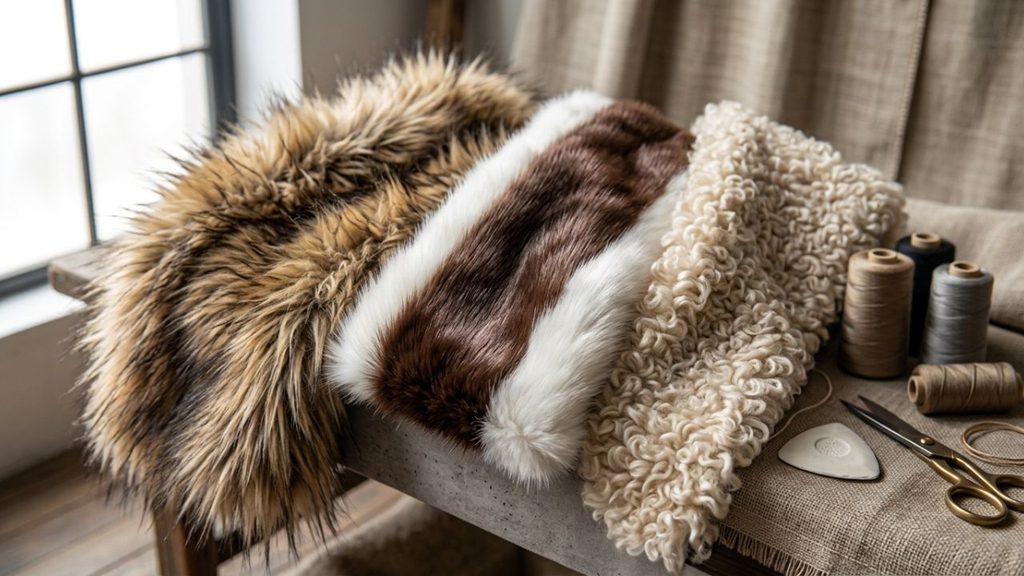
Polyester is popular because it is versatile, durable and relatively inexpensive. It can also be engineered into different textures, making it useful for everything from soft teddy-style coats to dense faux mink textures.
But polyester is a synthetic plastic-based fiber.
Its environmental concerns include the fossil-based origins of many synthetic fibers, energy requirements during production, microfiber shedding and end-of-life challenges.
UNEP notes that synthetic materials make up a significant portion of clothing materials and that synthetic textiles can release microfibers during washing.
This is one reason it would be misleading for a brand to simply label every synthetic garment “eco-friendly.”
The U.S. Federal Trade Commission advises businesses that broad, unqualified environmental claims such as “green” or “eco-friendly” can be difficult to substantiate. Environmental claims should be specific and supported by appropriate evidence.
For shoppers, this means you should look beyond marketing language.
Does Buying a Faux Fur Coat Still Make Sense?
Yes, especially if you buy it with longevity in mind.
One of the most practical ways to reduce the environmental impact of clothing is to get more useful wear from the garments you already own.
Instead of buying a faux fur jacket for one season and replacing it the next, look for a design you can realistically wear for several winters.
Consider:
1. Choose a versatile style
A black faux fur jacket, brown faux fur jacket, cream faux fur jacket or neutral long coat can work with many outfits.
More dramatic options such as a pink faux fur jacket, red faux fur jacket or leopard print faux fur jacket can also be useful if they genuinely fit your personal style.
The best choice is not necessarily the least colorful one. It is the one you are actually going to wear repeatedly.
2. Pay attention to construction
A dense, well-made faux fur coat may remain useful for years if cared for correctly.
Look at:
- Stitching
- Lining
- Closures
- Seams
- Fur density
- Overall construction
- Fit
- Care instructions
A garment that quickly loses its shape or becomes uncomfortable may be replaced sooner, creating additional consumption.
3. Buy for your actual climate
If you live somewhere with relatively mild winters, you may not need an extremely heavy full-length faux fur winter coat.
If you live in a colder U.S. climate, a longer faux fur winter coat, hooded design or heavily lined jacket may be more practical.
Buying according to your actual needs helps prevent unnecessary purchases.
Does Washing Faux Fur Make It Worse for the Environment?
It can contribute to microfiber shedding because synthetic textiles may release tiny fibers during washing.
That is why proper faux fur care is important.
Before washing a faux fur coat, always check its care label. Some garments may require special cleaning rather than standard machine washing.
Avoid washing a faux fur jacket simply because you have worn it once. If it is only lightly used and does not need cleaning, unnecessary washing can increase wear and fiber shedding.
When cleaning is necessary, follow the manufacturer’s instructions rather than using an aggressive cleaning method.
Extending the life of an existing garment is often more practical than constantly replacing it.
Can Faux Fur Be Recycled?
This is one of the difficult questions.
A faux fur garment may contain several different components, including synthetic fur, backing fabric, lining, thread, buttons, zippers and other materials.
Because of this combination, recycling the entire garment is not always straightforward.
Recycling availability also varies significantly by location and textile type. The FTC advises that recyclable claims should be qualified when appropriate recycling facilities are not widely available.
So don’t assume that every faux fur coat can simply go into a normal household recycling bin.
Instead, consider these options before disposal:
Repair it: Fixing a damaged lining, zipper or seam can extend its life.
Reuse it: A coat that is no longer your style may still be useful to someone else.
Donate it: If it remains wearable, donation can keep the garment in use.
Resell it: Good-quality vintage or gently used faux fur jackets may have resale value.
The goal is to keep a wearable garment in circulation for as long as reasonably possible.
Is Recycled Polyester Faux Fur Better?
Potentially, but don’t assume that “recycled” automatically means environmentally harmless.
Recycled polyester can reduce reliance on newly produced polyester feedstock in some circumstances, but the overall environmental impact still depends on the complete product and manufacturing process.
The FTC specifically advises marketers to make recycled-content claims clearly and accurately, including identifying how much of a product actually contains recycled material.
For consumers, look for specific information rather than vague claims such as:
“100% eco-friendly.”
“Completely sustainable.”
“Zero environmental impact.”
Those statements require evidence and can be misleading when they describe a complex product with multiple environmental trade-offs.
How Can You Make Your Faux Fur Coat More Environmentally Responsible?
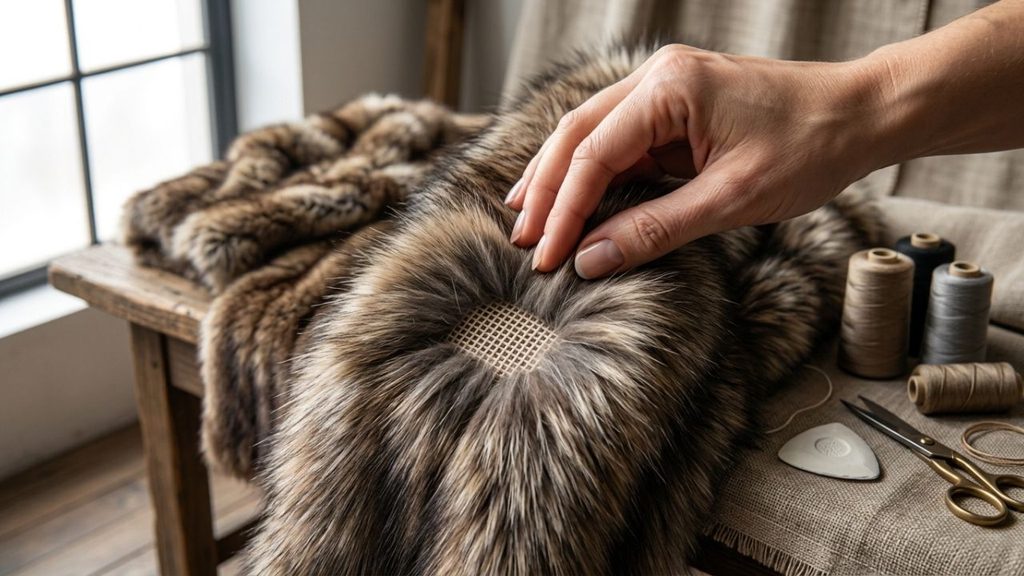
You don’t have to stop wearing faux fur to make better choices.
Instead, focus on the entire lifespan of the garment.
Buy less, but buy something you’ll wear
A coat worn for many winters is generally a more sensible purchase than several coats that rarely leave the closet.
Choose quality and fit
A well-fitting coat that works with your wardrobe is more likely to become a long-term staple.
For example, a long black faux fur jacket can work with jeans, trousers, dresses and evening outfits.
A cropped faux fur jacket can work well with high-rise jeans, skirts and dresses.
Follow the care instructions
Proper care can help maintain the pile, lining and overall construction.
Wash only when necessary
Avoid unnecessary washing and use the care method recommended by the manufacturer.
Repair instead of immediately replacing
A damaged button or seam doesn’t necessarily mean the entire garment has reached the end of its life.
Donate or resell
If you simply no longer want the coat, another person may still get years of use from it.
These choices may sound simple, but they address one of the most important questions behind are faux fur coats bad for the environment: how long will the garment actually remain useful?
What Should You Look for When Buying a Faux Fur Coat?
If environmental impact is part of your buying decision, don’t focus only on whether the label says “faux.”
Look at the complete garment.
Check the:
- Fiber content
- Construction
- Lining
- Care instructions
- Expected use
- Durability
- Fit
- Versatility
- End-of-life options
You can also compare different styles.
For example, a faux fur lined jacket may be useful for someone who wants warmth without a full faux fur exterior, while a dense shaggy faux fur jacket may appeal to someone who prioritizes a dramatic fashion look.
A plus size faux fur jacket should provide comfortable movement and enough room for layering rather than simply being selected based on appearance.
The best environmental decision is often the product that fits your lifestyle well enough that you will continue wearing it.
Faux Fur World: Affordable Faux Fur Without Overcomplicating the Choice
At Faux Fur World, our focus is faux fur fashion that combines statement-making style with practical everyday wear.
We also aim to make premium-looking faux fur more accessible. Our positioning is centered on offering premium faux fur at an affordable price, so shoppers can explore faux fur coats, faux fur jackets and other faux fur outerwear without automatically moving into luxury-level pricing.
However, affordability should not encourage unnecessary consumption.
A better approach is to choose a faux fur coat that genuinely fits your wardrobe, climate and lifestyle, then take care of it so you can continue wearing it season after season.
That is a more useful way to think about responsible faux fur shopping than simply searching for a label that says “eco-friendly.”
So, Are Faux Fur Coats Bad for the Environment?
Are faux fur coats bad for the environment? They can have environmental impacts, particularly because many are made from synthetic materials such as polyester and acrylic, but calling every faux fur coat simply “bad” misses the bigger picture.
Faux fur avoids the use of animal pelts, but synthetic fur can contribute to fossil-resource use, textile waste and microfiber pollution.
The better approach is to consider the garment’s full life cycle.
Choose a coat you genuinely love. Look for appropriate construction and materials. Take care of it correctly. Wash it only when necessary. Repair it when possible. And when you no longer need it, consider resale, donation or reuse before disposal.
In other words, are faux fur coats bad for the environment is not a question with a simple yes-or-no answer.
The environmental impact depends on what the coat is made from, how it is produced, how long you keep it, how you care for it and what happens to it afterward.
For shoppers who want the look of fur without purchasing animal fur, faux fur can still be a practical choice, provided they understand its environmental trade-offs rather than treating it as automatically sustainable.
Final Takeaway
Faux fur is neither perfectly sustainable nor automatically environmentally harmful.
It is a synthetic alternative to real fur with its own environmental trade-offs. The smartest approach is to understand those trade-offs and make the garment last.
If you are shopping for faux fur coats for women, faux fur jackets for women, a long winter style, or a statement animal print faux fur coat, choose something that genuinely fits your wardrobe and lifestyle.
A coat that gets worn repeatedly, cared for properly and kept in use for years is a much more thoughtful purchase than something bought simply because it is marketed as “green.”
Frequently Asked Questions
Q. Are faux fur coats bad for the environment?
They can have environmental drawbacks because many faux fur garments use synthetic fibers such as polyester or acrylic. These materials can involve fossil-based resources and may shed microfibers during washing. However, the impact of an individual coat also depends on its durability, use, care and end-of-life.
Q. Is faux fur more environmentally friendly than real fur?
There is no universal answer. Faux fur avoids the use of animal pelts but commonly uses synthetic materials. Real fur has different environmental impacts associated with animal production or harvesting and processing. Comparing the two requires looking at their full life cycles rather than one material characteristic.
Q. Does faux fur shed microplastics?
Synthetic textiles can release tiny plastic fibers during washing. UNEP identifies synthetic clothing as a source of microfiber pollution.
Q. Is polyester faux fur bad?
Polyester is a synthetic material with environmental impacts, but “bad” is too broad a description. A polyester faux fur coat can still be a useful long-term garment if it is well made, used frequently and cared for properly.
Q. How can I make my faux fur jacket more sustainable?
Buy a style you will wear for years, avoid unnecessary washing, follow the care label, repair damage when possible, and donate or resell the garment when you no longer need it.
Q. Can faux fur coats be recycled?
Some textile materials can be recovered or recycled, but the availability of suitable recycling programs varies. Faux fur garments can also contain multiple materials, making recycling more complicated. Check local textile-recycling options instead of assuming a coat belongs in household recycling.
Q. Is recycled faux fur better?
Recycled material can offer specific benefits depending on how it is sourced and manufactured, but recycled content does not automatically make an entire garment environmentally friendly. Look for specific, verifiable information about the percentage and type of recycled material.




[…] If you are concerned about the environmental impact of synthetic clothing, you may also want to read: Are Faux Fur Coats Bad for the Environment? […]
Comments are closed.