

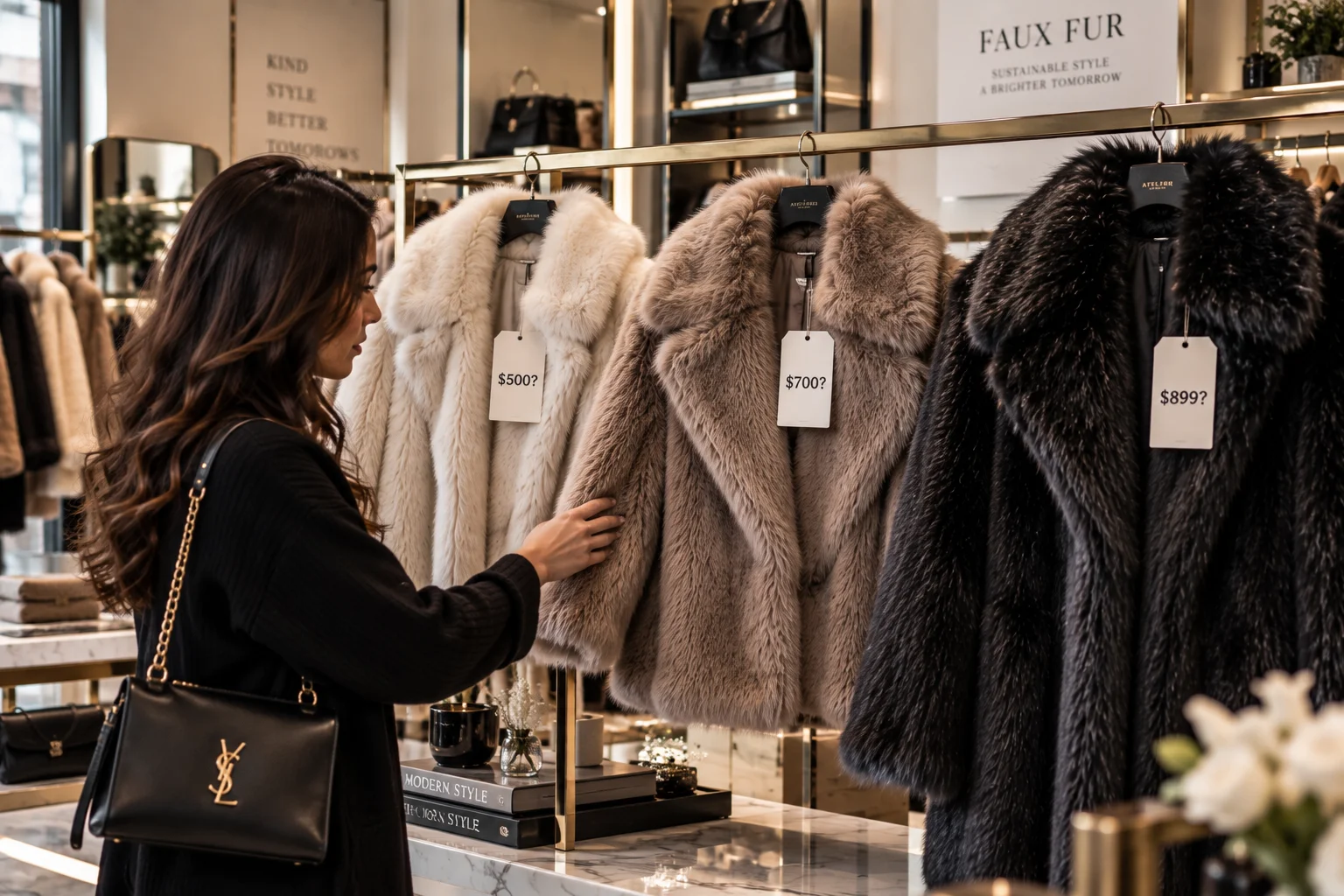
If you’re shopping for winter outerwear and wondering, “is faux fur expensive?”, the honest answer is that it depends entirely on which faux fur you’re looking at. Faux fur pricing spans an enormous range, from $30 crop jackets to $800+ designer coats, and that gap has almost nothing to do with the fact that it’s synthetic and everything to do with how it’s made. Understanding what actually drives the price lets you avoid overpaying for a logo, and just as importantly, avoid underpaying for something that will shed and flatten after one winter.
Quick answer: Is faux fur expensive? Not inherently, but it can be, depending on fiber quality, pile density, backing construction, and dyeing complexity. Budget faux fur pieces typically run $30 to $100, mid-range garments fall between $100 and $300, and premium designer faux fur can exceed $500 to $1,000. Compared to real fur, though, even expensive faux fur is almost always significantly cheaper, since it skips the cost of pelts, tanning, and fur-specific construction labor.
Why Faux Fur Prices Vary So Much
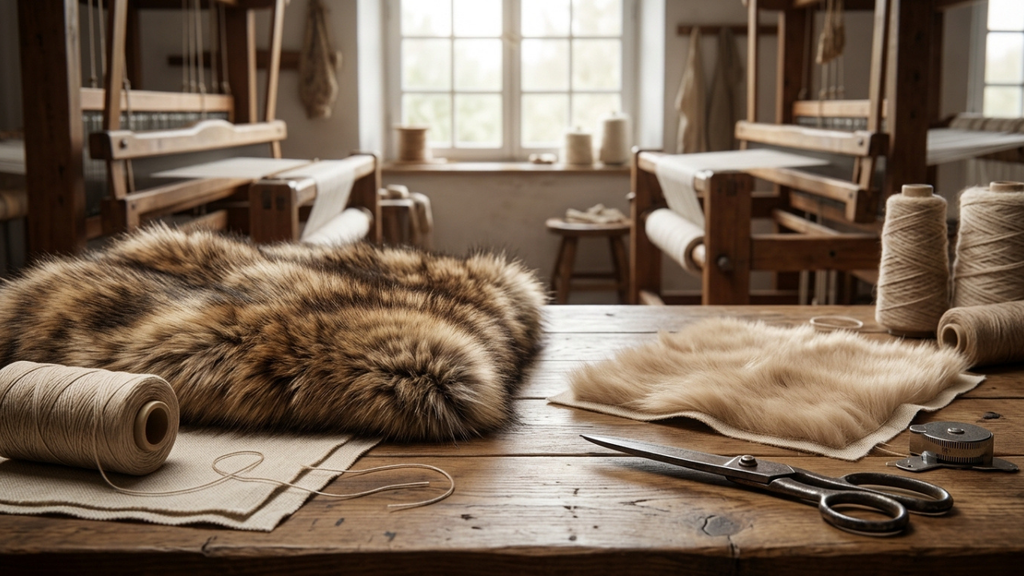
The question “is faux fur expensive” doesn’t have one answer because faux fur isn’t one product. It’s a category that spans everything from thin craft-store fabric to fiber engineered closely enough to fool a trained eye. A handful of manufacturing factors explain nearly all of the price difference you’ll see between one coat and another.
Fiber blend and quality. Most faux fur is made from acrylic, modacrylic, or polyester, or a blend of the three. Acrylic-only fur is the cheapest to produce, but it also tends to lose its shape and shine faster with wear. Higher-grade modacrylic blends hold their shape, resist matting, and take dye more evenly, and that added performance costs more to manufacture. This single factor alone explains a large share of why two faux fur coats that look similar on a hanger can feel completely different after a season of actual use.
Pile weight and density. Faux fur fabric is typically sold and priced by weight, not just pile height. Heavier, denser fabric (often in the 1,000 to 1,600 grams-per-yard range) takes significantly more yarn and knitting time to produce than a thin, lightweight version. A short but densely knit pile can actually cost more than a longer but sparse one, which is why judging quality by how “fluffy” a coat looks in a photo can be misleading.
Backing construction. A thin, single-layer backing is cheap to produce but prone to fraying, stretching, and shedding over time. Double-layered or reinforced backings cost more to manufacture, but they hold the pile in place far longer and are what separates a coat that still looks good after three winters from one that’s visibly thinning after one.
Dyeing and finishing complexity. Solid-color faux fur is relatively fast and inexpensive to produce. Techniques like tip-dyeing, where the tips of individual fibers are a different shade than the base, or jacquard-style multi-tone patterns meant to mimic natural animal coloring, require far slower, more specialized production. That extra production time and equipment shows up directly in the final price tag.
Brand and markup. Once the underlying fabric and construction cost is accounted for, brand positioning adds its own separate layer on top. Designer labels can charge several times the actual material and manufacturing cost purely for the name on the tag, which is worth keeping in mind when you’re comparing two visually similar coats at very different prices.
Is Faux Fur Expensive Compared to Real Fur?
No, and it’s not particularly close in most cases. Real fur pricing depends on the animal species, pelt grading, and labor-intensive processes like tanning, dressing, and fur-specific stitching, all of which add up quickly. A single real mink or fox coat can run into the thousands of dollars before retail markup is even factored in, and rarer furs command even steeper prices. Faux fur skips pelts and tanning entirely, so even a premium, designer-level faux fur coat generally costs a fraction of its real-fur equivalent. If you’re asking “is faux fur expensive” with real fur as your mental comparison point, the answer is almost always no, and the gap tends to widen the higher up the real fur quality ladder you go.
What You’re Actually Paying For at Each Price Tier
Budget tier, roughly $30 to $100. Thinner single-layer backing, shorter or lower-density pile, and simpler solid-color dyeing. Fine for occasional wear, costumes, or trying out a style before committing to something pricier, but expect more shedding and faster flattening with regular use through a full winter.
Mid tier, roughly $100 to $300. Denser pile, sturdier backing, and more consistent color throughout the garment. This is where most reliable, everyday faux fur outerwear lives, and it’s usually durable enough to handle a full winter season of regular wear without visible wear patterns showing up by spring.
Premium tier, $300 and up. Heavyweight, high-density pile, reinforced double-layer backing, and often more advanced dyeing techniques like tip-dyeing or realistic multi-tone patterns designed to closely mimic specific real furs such as mink or fox. This is the tier where faux fur starts to look genuinely difficult to distinguish from the real thing, even up close.
Is faux fur expensive at this top tier? It can be, but the price at this level reflects real, measurable differences in fiber engineering and construction, not just a bigger logo or a fancier hangtag.
Does Choosing Cruelty-Free Automatically Cost More?
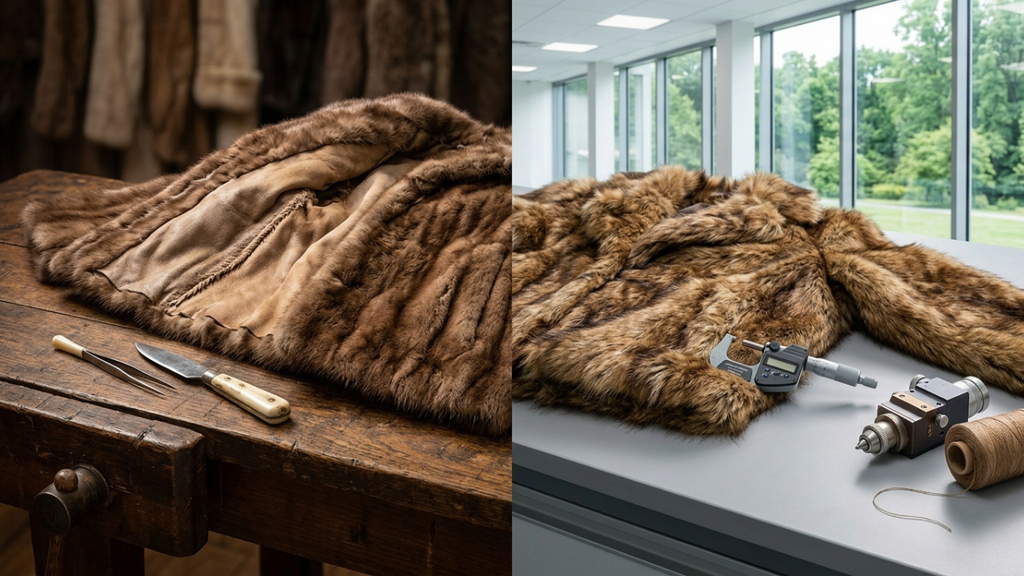
Not really, and this is a common assumption worth addressing directly. Because faux fur skips animal farming, pelt processing, and fur-specific tanning entirely, the ethical choice and the more affordable choice usually point in the same direction rather than pulling against each other. The price differences you see across faux fur products come from the manufacturing factors above (fiber blend, pile weight, backing, and finishing), not from any added cost of being cruelty-free. So if part of what’s behind your “is faux fur expensive” question is whether an animal-friendly wardrobe means paying a premium, the answer is generally no. If anything, faux fur tends to be the more budget-friendly path to the same silhouette real fur offers.
How to Tell If a Faux Fur Price Is Actually Fair
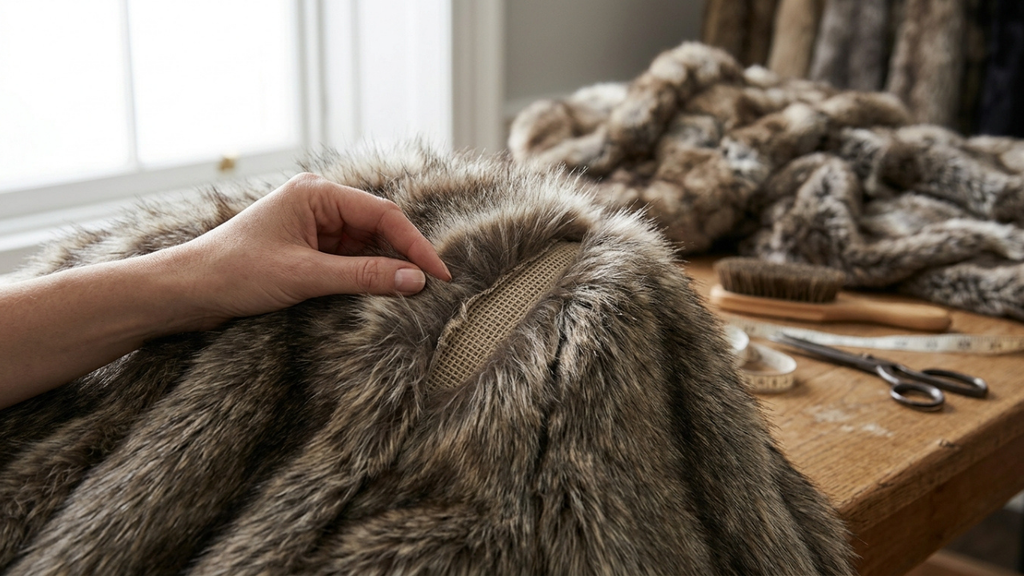
Since price alone doesn’t tell the full story, it helps to check the details that actually predict how a piece will hold up. Run your hand against the grain of the pile: it should spring back into place quickly rather than leaving a flattened track. Check the backing by gently parting the fur; a thicker, tightly woven backing resists fraying far better than a thin one. Look at the color under natural light rather than store lighting, since uneven dyeing is easier to spot in daylight. And read the fiber content on the label rather than trusting “faux fur” alone as a quality signal, since a vague listing like “polyester mix” without further detail is often a sign of a lower-tier product regardless of the price charged for it. In the United States, apparel is legally required to disclose fiber content on the garment label, so this information should always be available to check before you buy, not just guessed at from the feel of the fabric.
One more way to judge whether a price is fair: think in terms of cost per wear rather than sticker price alone. Research from the University of Bath, published in the journal Psychology & Marketing, found that dividing a garment’s price by how many times you expect to wear it consistently shifts shoppers toward the more durable, higher-quality option, since a $250 coat worn for five winters can end up cheaper per wear than a $60 coat replaced every season. Applied to faux fur, this is exactly why the answer to “is faux fur expensive” often depends less on the number on the price tag and more on how long the piece is actually built to last.
Common Mistakes When Shopping for Faux Fur
- Assuming the cheapest option will last a full season. Thin, low-density pile mats and sheds noticeably faster with regular wear, which can make a budget purchase more expensive in the long run if you end up replacing it sooner.
- Assuming a higher price always means better quality. Some of that markup is pure brand premium. Check the fiber content and backing construction yourself rather than relying on price as your only signal.
- Overlooking care requirements. A well-made faux fur coat can last five to ten years with proper care, but improper washing or drying shortens that significantly regardless of what you originally paid for it.
- Not checking fiber content before buying. “Faux fur” alone doesn’t tell you the blend. Look for acrylic, modacrylic, or polyester listed specifically, since blend quality affects both feel and long-term durability.
- Comparing prices without comparing pile weight. Two coats can look nearly identical in a photo while one is knit from noticeably heavier, denser fabric than the other, which is a large part of why their prices differ.
- Buying based on trend timing alone. A style that’s heavily discounted purely because it’s going out of season isn’t automatically lower quality, and one that’s newly trending isn’t automatically better made. Judge the construction on its own terms rather than the hype or markdown around it.
Customizing Instead of Buying New
If your real question is less “is faux fur expensive” and more “can I make what I already own work instead of replacing it,” customization is often the more budget-friendly route. A faded or dated-colored coat doesn’t necessarily need replacing. Our guide on How to Color Fake Fur walks through which methods actually work on synthetic fibers, so you can refresh a piece you already own instead of buying new, and put that money toward a piece you’ll actually keep wearing.
Getting Premium Quality Without the Premium Price
This is exactly the gap FauxFurWorld was built to close. So, is faux fur expensive if you shop with us? Not by design. We’re positioned as one of the most affordable options in the premium faux fur market, using the same dense-pile, well-backed construction you’d expect from higher-priced designer pieces, without the brand-name markup layered on top. You can browse our faux fur coat collection to see that build quality and price don’t have to be a trade-off.
Frequently Asked Questions
Q. Is faux fur expensive to maintain?
Not particularly. Most faux fur can be spot-cleaned or hand-washed in cold water and air-dried, with no dry-cleaning required for most pieces. The main ongoing cost is time and gentleness, not money.
Q. Why is some faux fur so much more expensive than other faux fur?
Pile density and weight, backing quality, and dyeing complexity (like tip-dyeing or multi-tone patterns) drive most of the price difference between pieces, with brand markup adding an additional layer on top of designer products.
Q. Is faux fur expensive compared to buying a wool coat?
It’s typically comparable to, or cheaper than, a wool coat of similar quality and construction, though prices vary widely on both sides depending on brand, fiber quality, and country of manufacture.
Q. Does expensive faux fur last longer than cheap faux fur?
Generally yes, since higher pile density and stronger backing resist matting and shedding better over time, but proper care matters just as much as the original price point in how long a piece actually lasts.
Q. Is it worth paying more for premium faux fur?
If you plan to wear the piece regularly through multiple winters, yes, since the denser pile and stronger backing hold up better under repeated use. For occasional or costume use, a budget option is often perfectly reasonable.
Q. Can affordable faux fur still look high-quality?
Yes. Price and brand name aren’t the only signals of quality. Checking the fiber blend, pile density, and backing construction directly will tell you more than the price tag alone.
Q. Does faux fur ever go on sale or get cheaper seasonally?
Faux fur outerwear, like most winter fashion, tends to see the deepest discounts at the end of the winter season, so shopping in late winter or early spring can be a practical way to get premium construction at a lower price point if you’re not in a rush.




[…] it’s worth thinking about the cost of restoring versus replacing in real terms. Our guide on Is Faux Fur Expensive? breaks down what actually drives faux fur pricing, including pile density and backing construction, […]
Comments are closed.