

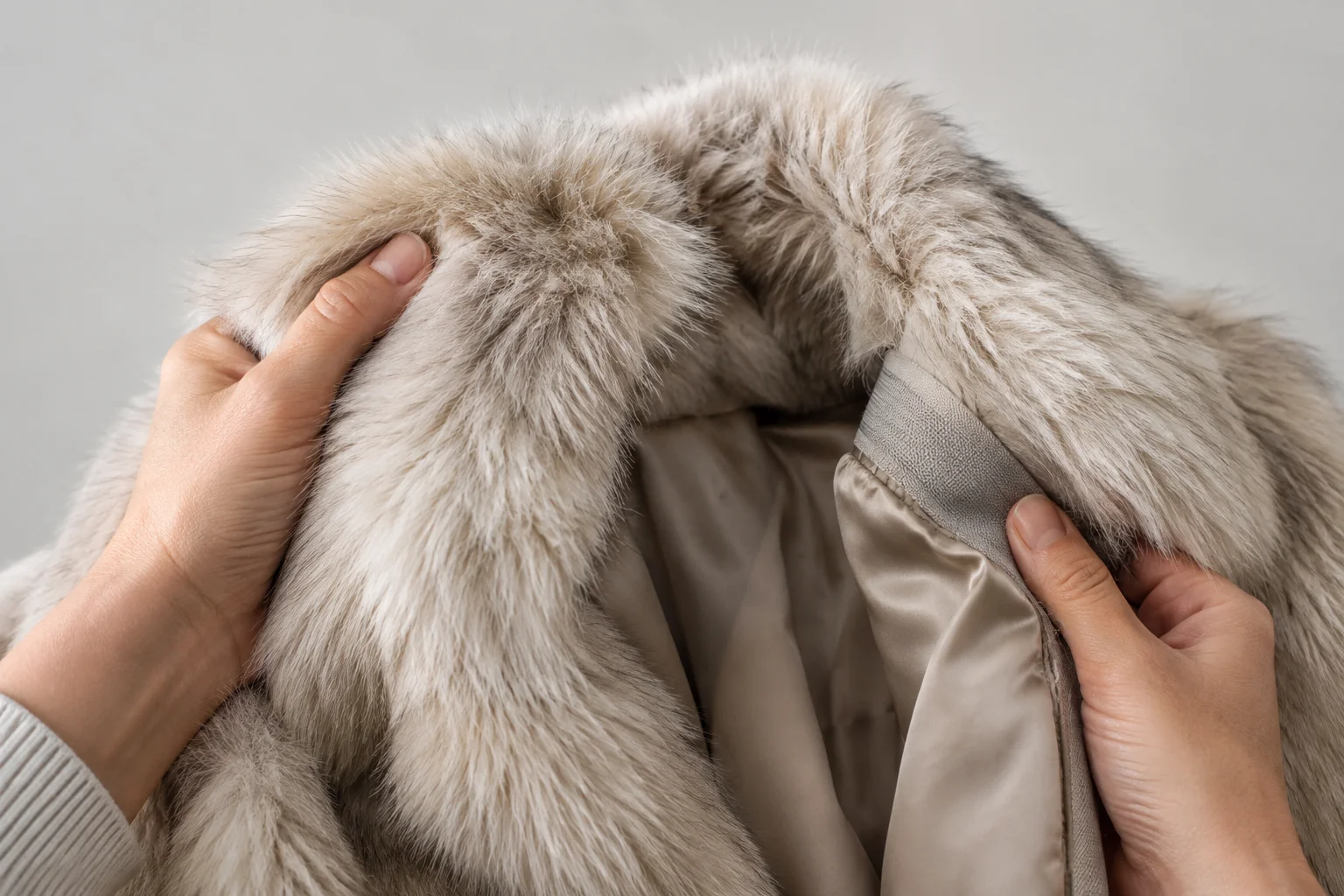
If you have ever wondered is faux fur toxic to humans, the short answer is: faux fur itself is not automatically toxic, but the safety of a faux fur garment depends on the fibers, dyes, finishes, coatings, and other chemicals used during manufacturing. Most faux fur is made from synthetic fibers such as polyester or acrylic, and finished clothing can contain additional substances introduced during dyeing and processing. That does not mean a faux fur jacket or coat is dangerous to wear. Instead, it means shoppers should understand what synthetic fur is made from and know what to look for when choosing a quality garment.
For shoppers in the USA, this is especially useful when comparing inexpensive fashion pieces with better-made faux fur outerwear. If you are considering a faux fur jacket for everyday winter wear, the goal should not simply be to find the softest or cheapest option. You should also consider the material, construction, finishing, care instructions, and transparency of the seller.
At Faux Fur World, we focus on fashionable faux fur outerwear designed to give shoppers access to premium-looking styles without the price associated with traditional luxury fur fashion. We aim to be one of the most affordable options in the premium faux fur market, while keeping the focus on style, comfort, and practical everyday wear.
What Is Faux Fur Made Of?

Before answering is faux fur toxic to humans, it helps to understand what faux fur actually is.
Faux fur, also called fake fur, artificial fur, or synthetic fur, is a textile designed to imitate the appearance and texture of animal fur. Unlike real fur, faux fur does not use animal pelts.
The pile is commonly produced from synthetic fibers, including:
- Polyester
- Acrylic
- Modacrylic
- Nylon
- Blends of synthetic fibers
The exact material varies from one product to another. Some faux fur is short and smooth, while other varieties are long, shaggy, curly, or designed to imitate mink, fox, rabbit, or other fur textures.
The base fabric holds the fibers in place and can also include a backing or lining. During manufacturing, dyes, finishing agents, adhesives, or other processing chemicals may be used.
That distinction matters because faux fur is not one single chemical or material. Two jackets can both be labeled “faux fur” while having very different fiber compositions and manufacturing processes.
For a deeper explanation, readers can also explore our guide on [What Is Fake Fur Made Of?].
So, Is Faux Fur Toxic to Humans?
Generally, wearing a properly manufactured faux fur garment does not mean you are being exposed to a dangerous level of toxic material.
The more accurate answer to is faux fur toxic to humans is that the potential concern is usually related to specific chemicals, finishes, dyes, or contaminants, rather than the concept of faux fur itself.
Textile manufacturing can involve many different chemical substances. Some are necessary for coloring, processing, improving softness, controlling shrinkage, or producing particular performance characteristics.
For example, formaldehyde can be used in textile finishing processes. The U.S. Environmental Protection Agency has identified formaldehyde as presenting unreasonable risks to human health under certain conditions of use.
This does not mean that every faux fur jacket contains dangerous levels of formaldehyde. It means that chemical safety in textiles is a legitimate consideration and that manufacturing standards and testing matter.
OEKO-TEX® STANDARD 100 is one example of a textile safety certification system. Its testing covers finished textile products and components for harmful substances, with requirements that vary according to the intended use and level of skin contact. Jackets fall under its product class for textiles without direct skin contact.
So rather than asking only is faux fur toxic to humans, a better shopping question is:
Has the garment been manufactured and tested according to appropriate textile safety requirements?
Can Faux Fur Cause Skin Irritation?
Some people may experience skin irritation from clothing, but this does not automatically mean that the faux fur itself is toxic.
Skin reactions can potentially be associated with:
- Certain dyes
- Finishing chemicals
- Detergent residue
- Friction
- Sweat and heat
- Adhesives or coatings
- Other components of the garment
The lining may actually be closer to your skin than the fur pile itself, so shoppers should consider the complete garment rather than focusing only on the visible fur.
People with particularly sensitive skin may prefer garments with clear material information and reputable manufacturing standards.
OEKO-TEX notes that textile chemical requirements become stricter as the intensity of skin contact increases, which is one reason textile testing considers the intended use of the product.
If a new faux fur jacket has a strong chemical smell, causes persistent irritation, or produces an unusual reaction, stop wearing it and investigate the product’s materials and care information rather than assuming that all faux fur is unsafe.
Are Synthetic Fibers in Faux Fur Dangerous?

Synthetic fibers such as polyester and acrylic are widely used in clothing. Their presence alone does not establish that a garment is toxic.
The important distinction is between the material itself and potentially harmful substances that may be present in a finished textile.
For example, textile safety organizations test for substances that can be restricted or harmful at certain levels. OEKO-TEX® STANDARD 100 evaluates textiles for more than 1,000 potentially harmful substances and applies requirements based on product use.
This is why shoppers should avoid making broad assumptions such as:
“Polyester is synthetic, therefore polyester clothing is toxic.”
That conclusion is too simplistic.
A synthetic textile can be manufactured and tested to meet safety requirements, while an individual garment may still vary in quality depending on its manufacturing and finishing processes.
The same principle applies to a faux mink fur jacket, shaggy faux fur jacket, hooded faux fur jacket, or leopard print faux fur jacket. The style does not determine whether the garment is safe; the materials and manufacturing quality do.
What About PFAS and Faux Fur?
PFAS, or per- and polyfluoroalkyl substances, have received significant attention because some PFAS can persist in the environment and certain exposures have been associated with adverse health effects.
The U.S. Environmental Protection Agency explains that exposure to certain PFAS may be harmful to human health, although research continues into the effects of different exposure levels and individual PFAS compounds.
PFAS are not synonymous with faux fur. A faux fur jacket should not automatically be assumed to contain PFAS simply because it is synthetic.
However, chemical restrictions and testing are increasingly important considerations in modern textile manufacturing. OEKO-TEX® has introduced requirements intended to prevent intentional use of PFAS in certified textiles and has incorporated total fluorine testing into its standards.
For consumers, this reinforces a simple principle:
Don’t judge a faux fur garment solely by whether it is synthetic. Look at the quality, manufacturer information, applicable testing, and materials used in the finished product.
Is Faux Fur Safer Than Real Fur?
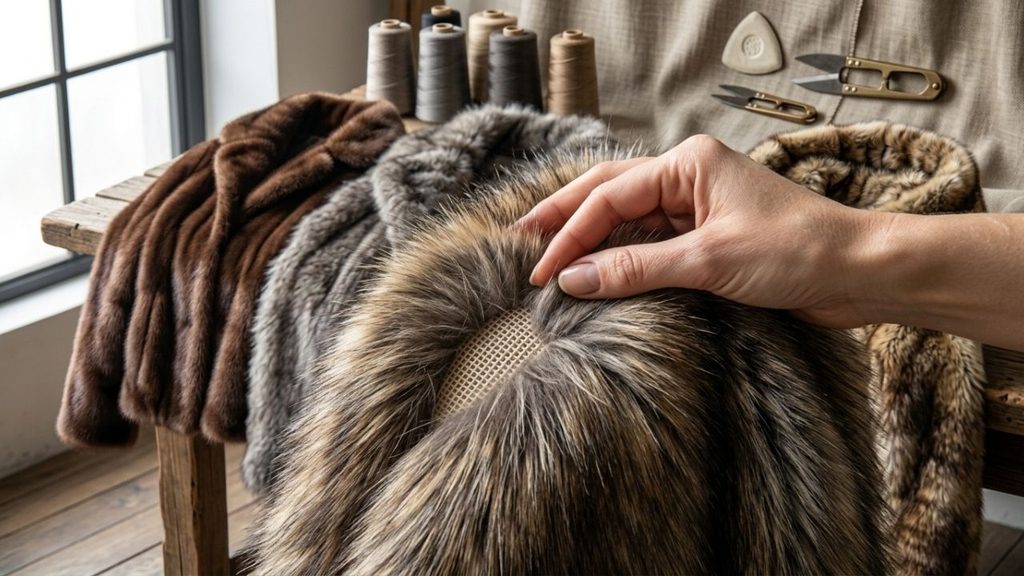
If your concern is animal use, faux fur offers an obvious difference: it is manufactured from textile fibers rather than an animal pelt.
But “synthetic” does not automatically mean “healthy,” “environmentally harmless,” or “toxic.” Those are separate questions.
Real fur and faux fur have different material and manufacturing considerations. Faux fur generally uses synthetic fibers, while real fur involves animal-derived materials and tanning or preservation processes.
If your main priority is avoiding animal fur, faux fur provides an animal-free alternative for achieving a fur-inspired appearance.
If your main priority is human health, however, the more useful question is whether the particular garment meets appropriate textile safety requirements.
That is a much more meaningful way to evaluate is faux fur toxic to humans than making a blanket comparison between real and fake fur.
How to Choose a Safer Faux Fur Jacket
If you are shopping for faux fur outerwear in the USA, use the following checklist.
1. Check the fiber composition
Look for clear information about the main fibers used in the garment.
Terms such as polyester faux fur, acrylic, nylon, or synthetic fur can help you understand what you are purchasing.
2. Look for credible testing or certifications
Where available, recognized textile certifications can provide additional reassurance.
For example, OEKO-TEX® STANDARD 100 tests textile products for harmful substances.
Do not assume that a seller’s statement such as “non-toxic” is equivalent to an independent certification.
3. Check the lining and other components
The fur pile is only one part of a jacket.
Also consider:
- Lining
- Zippers
- Buttons
- Thread
- Adhesives
- Coatings
- Decorative trims
A complete garment can contain multiple materials.
4. Pay attention to unusual odors
A strong chemical smell immediately after opening a garment does not automatically prove toxicity. However, an unusually persistent odor can be a reason to air the garment out and check the manufacturer’s care and material information.
5. Follow the care instructions
Incorrect washing, high heat, aggressive chemicals, or excessive friction can damage synthetic fibers and finishes.
If you are unsure how to restore the texture after storage or cleaning, read [How Do I Make My Faux Fur Coat Fluffy Again] for practical care guidance.
Can Washing Make Faux Fur Safer?
Washing can remove some surface residues, dust, and odors, but it should not be viewed as a guaranteed method for eliminating potentially harmful chemicals from a garment.
More importantly, faux fur should be washed according to its care label.
High temperatures can damage synthetic fibers. Excessive heat from a dryer or iron can cause the pile to become flattened, distorted, or even melted.
For many faux fur garments, gentle handling and appropriate air drying are preferable to aggressive heat.
If the garment is labeled dry-clean only, follow the manufacturer’s instructions.
Never assume that more washing is automatically better.
Why Does Faux Fur Become Flat?
This is a common concern after storage or cleaning.
Faux fur can become compressed because of:
- Being folded for long periods
- Pressure from other clothing
- Moisture
- Incorrect washing
- Heat exposure
- Friction
- Heavy bags rubbing against the pile
A flattened faux fur jacket is not necessarily damaged beyond repair.
Gentle brushing, careful steaming from an appropriate distance, and proper drying may help restore the appearance depending on the construction and fiber type.
However, high heat can permanently damage synthetic fibers, so caution is important.
For a step-by-step guide, our article [How Do I Make My Faux Fur Coat Fluffy Again] can help you understand how to restore loft without aggressively treating the fabric.
Does Faux Fur Release Microplastics?
Synthetic textiles can contribute to the release of microfibers during laundering. This is an environmental concern associated with synthetic clothing more broadly.
OEKO-TEX® notes that microplastics can be released from textiles and clothing during laundering and manufacturing.
This is different from saying that wearing a faux fur coat makes a person toxic or poisoned.
The issue is primarily about environmental release and the broader lifecycle of synthetic textiles.
Consumers can reduce unnecessary textile impact by following care instructions, washing garments only when needed, avoiding excessive agitation when appropriate, and keeping clothing in use for as long as practical.
A durable faux fur jacket that is worn for multiple seasons can be a more sensible purchase than repeatedly replacing low-quality garments.
Is Faux Fur Toxic to Humans When Worn Every Day?

For a properly manufactured garment that complies with applicable safety requirements, there is no reason to assume that everyday wear automatically makes faux fur toxic to humans.
However, no responsible answer should claim that every faux fur garment on the market is chemically identical or completely free of every potentially concerning substance.
The best approach is to evaluate the individual product.
Look for:
- Clear material information
- Responsible manufacturing
- Appropriate textile testing where available
- Proper care instructions
- A reputable seller
- Good-quality construction
If you experience unexplained skin irritation or another persistent reaction after wearing any clothing item, stop using the item and seek appropriate medical advice.
Why Quality Matters When Buying Faux Fur
A cheap faux fur jacket and a premium faux fur jacket can look similar online but behave very differently in real life.
Quality can affect:
- Fiber softness
- Pile density
- Shedding
- Stitching
- Lining quality
- Shape retention
- Durability
- Overall appearance
- Ease of care
This is one reason shopping based only on the lowest price can be misleading.
At Faux Fur World, our goal is to make premium-looking faux fur fashion more accessible to shoppers without positioning every piece as an ultra-luxury purchase. We aim to be among the most affordable choices in the premium faux fur market, giving customers access to fashionable faux fur jackets and coats at accessible prices.
Whether you prefer a cropped faux fur jacket, white faux fur jacket, brown faux fur jacket, pink faux fur jacket, animal print faux fur jacket, or a classic neutral style, the same principle applies: understand the garment rather than judging safety from appearance alone.
What Should You Look for in a Faux Fur Coat?
When choosing winter outerwear, think beyond whether the fur looks fluffy.
Consider:
Material: Check what the faux fur and lining are made from.
Construction: Look at stitching, seams, closures, and overall finish.
Fit: A properly fitted jacket is easier to layer and more comfortable for extended wear.
Care: Check whether the garment can be machine washed, hand washed, or requires specialized cleaning.
Certification: Where available, look for credible third-party textile safety certification.
Seller transparency: A trustworthy retailer should provide useful product information rather than vague claims.
For shoppers who are primarily interested in style and value, Faux Fur World offers a range of faux fur outerwear designed around contemporary winter fashion.
The Bottom Line: Is Faux Fur Toxic to Humans?
So, is faux fur toxic to humans? Not inherently.
Faux fur is generally made from synthetic textile fibers such as polyester or acrylic, and the presence of a synthetic fiber does not by itself mean that a garment is toxic.
The more important consideration is the complete finished product: its fibers, dyes, finishes, coatings, manufacturing processes, and compliance with relevant textile safety requirements.
Certain substances used in textile production, including formaldehyde and some PFAS, can raise legitimate health concerns under particular exposure conditions. The EPA recognizes health risks associated with formaldehyde and certain PFAS exposures, while textile standards such as OEKO-TEX® STANDARD 100 provide a framework for testing finished textile products for harmful substances.
That means you do not need to avoid every faux fur jacket simply because it is synthetic. Instead, make informed purchasing decisions, choose transparent retailers, follow care instructions, and consider credible product testing where available.
If you are ready to explore stylish faux fur outerwear, you can browse Faux Fur World’s collection and compare different jacket and coat styles for your winter wardrobe.
Frequently Asked Questions
Q. Is faux fur toxic to humans?
Faux fur is not inherently toxic to humans. Most faux fur is made from synthetic fibers such as polyester or acrylic. Potential concerns are more closely related to specific dyes, finishes, coatings, or other chemicals used during manufacturing.
Q. Is polyester faux fur safe to wear?
Polyester is widely used in clothing and its presence does not automatically make a garment unsafe. The safety of a finished faux fur garment depends on its manufacturing, processing, finishing, and compliance with relevant textile safety requirements.
Q. Can faux fur cause skin irritation?
Yes, some people can experience irritation from clothing because of dyes, finishes, friction, sweat, detergents, or other components. This does not necessarily mean the faux fur itself is toxic.
Q. Does faux fur contain PFAS?
Not necessarily. Faux fur should not automatically be assumed to contain PFAS simply because it is synthetic. PFAS concerns relate to specific chemicals and treatments rather than synthetic fibers as a category.
Q. How can I choose safer faux fur clothing?
Look for clear material information, reputable sellers, appropriate textile safety certifications where available, and proper care instructions. Third-party certifications such as OEKO-TEX® STANDARD 100 can provide additional information about testing for harmful substances.
Q. Can washing faux fur remove chemicals?
Washing can remove some surface residues and odors, but it should not be treated as a guaranteed method for removing potentially harmful chemicals. Always follow the garment’s care instructions.
Q. Is faux fur better than real fur?
Faux fur provides an animal-free alternative to real fur and can reproduce many fur-like textures and appearances. However, faux and real fur have different environmental and material considerations, so the best choice depends on the shopper’s priorities.




[…] You can learn more in our related article [Is Faux Fur Toxic to Humans?]. […]
[…] You can explore the full safety discussion here: Is Faux Fur Toxic to Humans? […]
Comments are closed.