

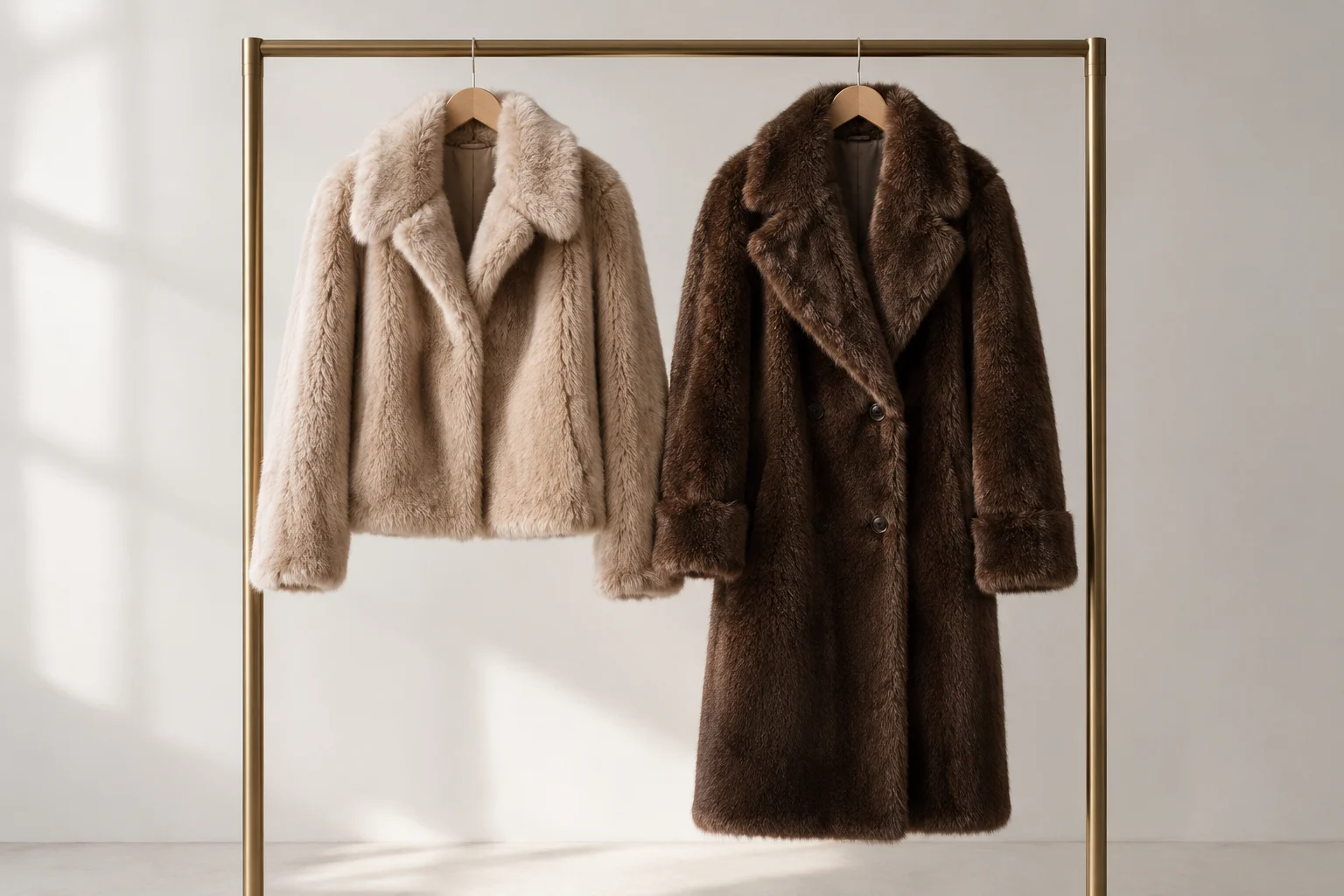
Faux fur has become one of the most versatile choices in modern winter fashion. From a cropped faux fur jacket worn with jeans to a full-length faux fur coat styled over an evening dress, today’s faux fur can offer warmth, texture, and a luxurious appearance without using animal fur. But choosing and caring for faux fur involves more than picking a color you love. You may also want to know what fake fur is made of, whether faux fur is safe, how to wash it, how to keep it fluffy, whether it can be dyed, and how to tell fake fur from real fur.
This complete guide to faux fur jackets and coats brings those questions together in one place. Think of it as your starting point for understanding faux fur, from materials and safety to styling, cleaning, buying, and long-term care. Whenever you want a deeper answer, you can follow the relevant guide from Faux Fur World.
What Is Faux Fur?
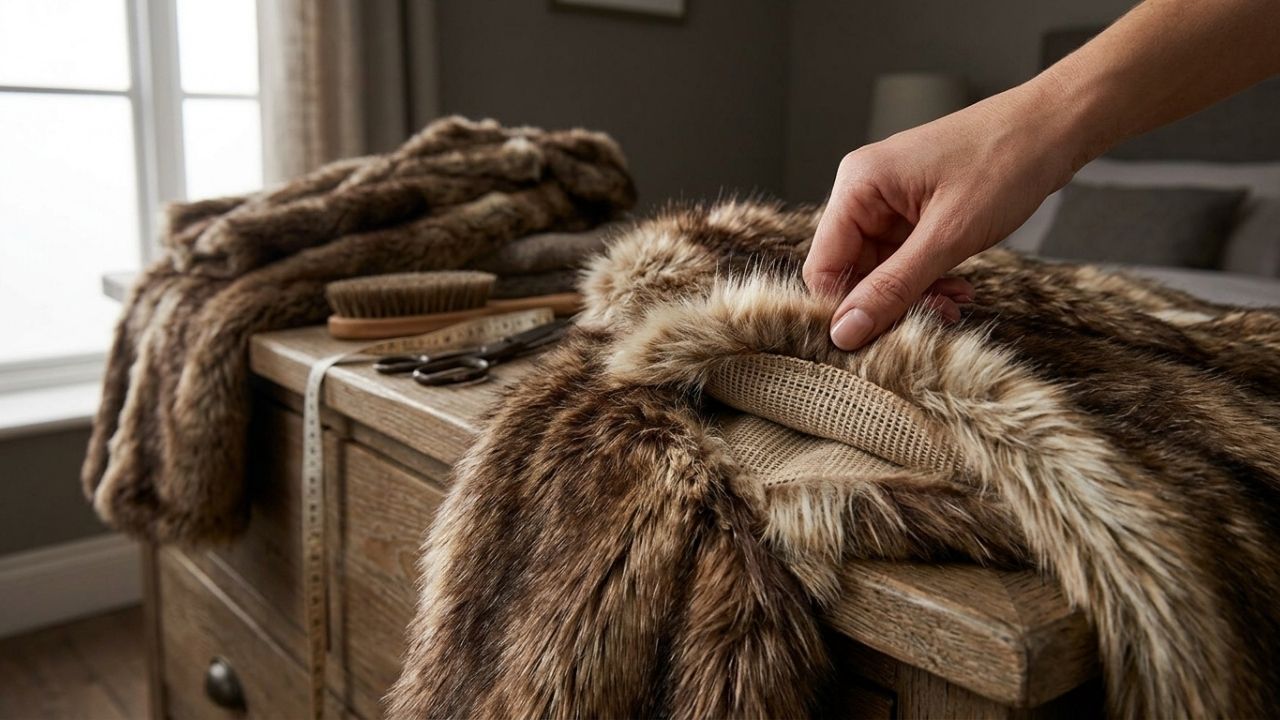
Faux fur is a textile designed to imitate the appearance and texture of animal fur. Unlike genuine animal fur, faux fur is manufactured from textile fibers that are processed into a pile or surface designed to resemble fur.
The exact construction varies between products. Synthetic fibers such as polyester and acrylic are commonly used in faux-fur textiles, although the fiber composition should always be checked on the garment’s care or fiber-content label.
This distinction matters when you’re shopping. Two coats can both be advertised as “faux fur” while having very different textures, pile lengths, weights, linings, and construction.
In the United States, textile products generally have labeling requirements concerning fiber content, country of origin, and the responsible manufacturer or marketer. The Federal Trade Commission explains that textile labels disclose the generic names and percentages of constituent fibers in covered products.
What Is Fake Fur Made Of?
The short answer is that fake fur is generally made from manufactured textile fibers rather than animal fur.
Common materials can include:
- Polyester
- Acrylic
- Other synthetic fibers or fiber blends
- A textile backing that holds the fur-like pile
- Additional lining or insulation materials depending on the garment
The best way to know what a particular jacket or coat contains is to check its fiber-content label rather than assuming every faux fur product has the same composition.
If you’re interested in the technical side of synthetic fur, including how artificial fur material is constructed, see our detailed guide: What Is Fake Fur Made Of?
Understanding the material also helps you understand how to care for the garment. Heat, friction, moisture, and incorrect cleaning methods can affect synthetic fibers and the texture of the pile.
Is Faux Fur Toxic to Humans?
One of the most common questions shoppers ask is, is faux fur toxic to humans?
Generally, the fact that a garment is faux fur does not by itself mean that it is toxic to wear. However, “faux fur” describes the construction or appearance of the material, not a guarantee that every product has identical chemical composition or manufacturing standards.
Synthetic textiles can contain dyes, finishes, processing chemicals, and other components. Some people can also experience skin irritation or contact dermatitis from particular fabrics, dyes, or chemicals used in clothing.
The American Academy of Dermatology notes that clothing dyes, fabrics, and certain synthetic materials can contribute to contact dermatitis in some people. It also recommends washing new clothes before wearing them if you are prone to contact dermatitis because washing can help remove residues and dyes that may cause irritation.
So, is faux fur toxic to humans? The more useful question is whether the specific garment has been manufactured, finished, labeled, and tested appropriately and whether you personally react to any of its materials.
For consumers who are especially concerned about textile chemicals, certifications can provide additional information. For example, OEKO-TEX STANDARD 100 is a textile certification that tests certified products for harmful substances, with requirements that vary according to how closely a product comes into contact with skin.
You can explore the full safety discussion here: Is Faux Fur Toxic to Humans?
The important takeaway is not to assume that “synthetic” automatically means dangerous, or that every synthetic textile is identical. Check the garment information, follow care instructions, and pay attention to how your skin responds.
Faux Fur vs. Real Fur: What’s the Difference?
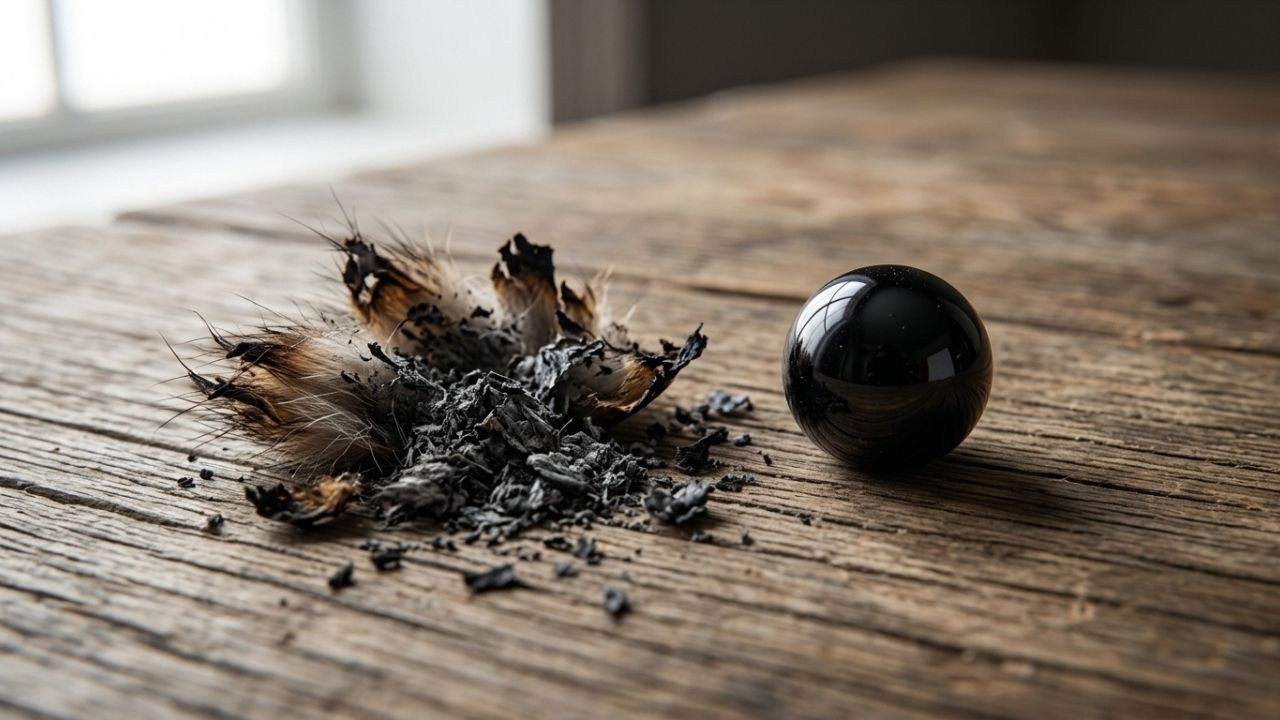
The most obvious difference is the source of the material.
Real fur comes from animals. Faux fur is manufactured as a textile intended to imitate fur.
There are also practical differences in labeling and identification. In the United States, the FTC has specific rules governing fur products and requires certain information for products made with genuine animal fur.
This is particularly important because shoppers should be able to understand what they are actually buying. The FTC has previously taken action against retailers that marketed products containing real fur as faux fur.
If you’re unsure whether a garment is actually synthetic, don’t rely solely on the product’s appearance.
Read our detailed guide: How to Tell Fake Fur From Real Fur
For shoppers specifically looking for animal-free fashion, checking the fiber information and product description before purchasing is an important step.
How to Choose a Faux Fur Jacket or Coat
The best faux fur jacket is not necessarily the thickest, longest, or most dramatic one. The right choice depends on how you plan to wear it.
Consider these factors before buying.
1. Length
Short and cropped styles are easy to pair with high-waisted jeans, trousers, skirts, and dresses.
A longer faux fur coat can provide more coverage and create a more dramatic winter silhouette.
Consider:
- Cropped faux fur jacket
- Mid-length faux fur jacket
- Knee-length faux fur coat
- Long or full-length faux fur coat
2. Fit
Your coat should leave enough room for the layers you normally wear underneath.
If you plan to wear chunky sweaters, avoid choosing a fit that becomes restrictive across the shoulders or arms.
For everyday use, look for a balance between comfort and structure.
3. Color
Neutral shades such as black, brown, beige, cream, white, and grey are easy to incorporate into multiple outfits.
For a statement look, consider:
- Pink faux fur jacket
- Red faux fur jacket
- Burgundy faux fur coat
- Green faux fur jacket
- Leopard print faux fur coat
- Animal print faux fur jacket
4. Texture
The texture can completely change the appearance of a faux fur garment.
Shorter pile can create a cleaner, more polished appearance, while shaggy faux fur tends to look more dramatic and relaxed.
5. Collar and Hood
A faux fur jacket with a collar can create a structured appearance, while a hooded faux fur jacket gives a more casual winter feel.
6. Lining and Construction
Don’t look only at the outside.
Check the lining, closures, seams, pockets, and overall construction. A beautiful pile is only one part of a good outerwear garment.
Where to Buy Faux Fur Jackets
When deciding where to buy faux fur jackets, look beyond photographs.
A trustworthy product page should make it easy to understand:
- What material the garment uses
- Available sizes
- Color options
- Care instructions
- Product dimensions or fit information where available
- Shipping information
- Return information
- Who is selling the product
The FTC requires covered textile products in the United States to provide important fiber-content information, making product labeling an important part of an informed purchase.
If you’re shopping specifically for faux fur outerwear, you can start with: Where to Buy Faux Fur Jackets?
At Faux Fur World, our focus is faux fur outerwear for shoppers who want statement-making winter fashion without paying luxury-designer prices. We aim to make premium-looking faux fur more accessible by offering some of the most affordable options in the premium faux fur market.
How to Wear a Faux Fur Jacket
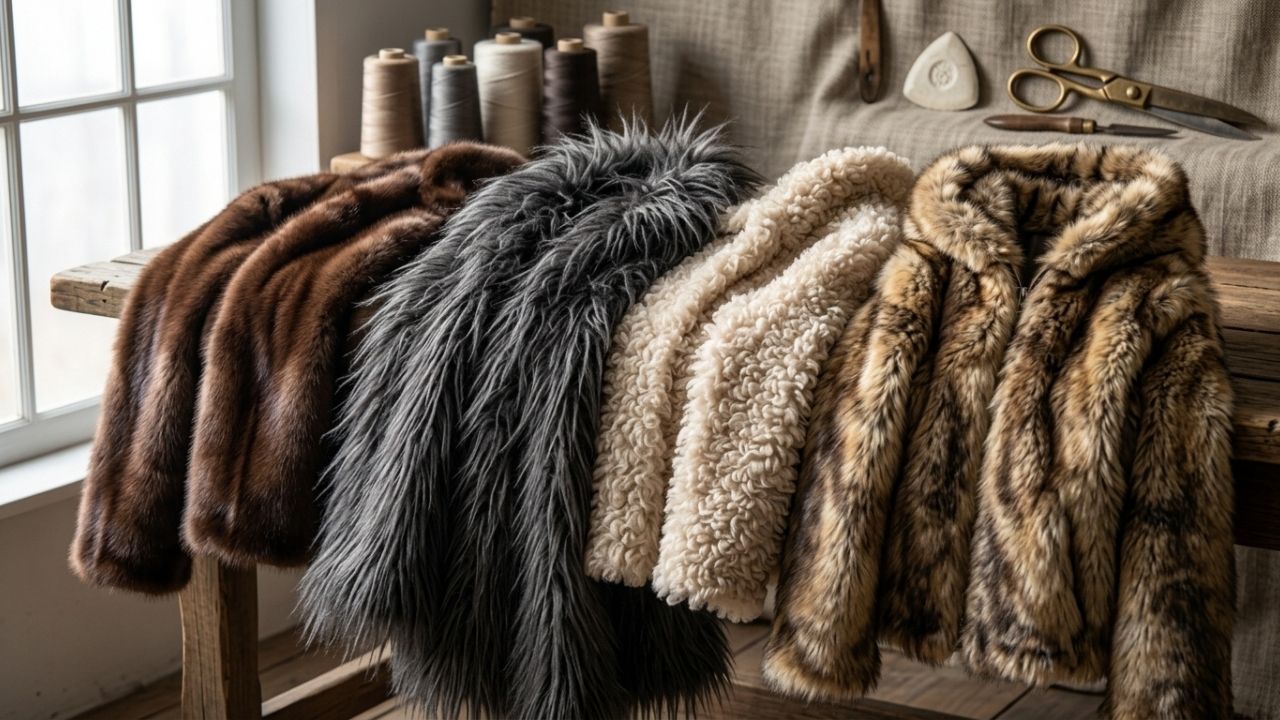
A faux fur jacket can look intimidating if you’re used to simple winter coats, but styling one is easier than it seems.
The simplest approach is to let the jacket become the statement piece and keep the rest of the outfit relatively clean.
Casual Everyday Outfit
Pair a neutral faux fur jacket with:
- Straight-leg or skinny jeans
- A simple sweater
- Ankle boots
- A small shoulder bag
For a cropped faux fur jacket, high-waisted jeans can help create balanced proportions.
Evening Outfit
For dinner, parties, or winter events, wear a faux fur jacket over:
- A slip dress
- A fitted midi dress
- A tailored jumpsuit
- A simple black dress
A white, cream, black, or burgundy faux fur jacket can work particularly well for evening styling.
Street-Style Look
For a more fashion-forward outfit, combine a shaggy faux fur jacket with relaxed jeans, boots, sunglasses, and minimalist accessories.
The trick is proportion. If the jacket has a lot of volume, avoid adding too many oversized pieces underneath.
Office-Friendly Styling
Faux fur does not have to look overly glamorous.
A shorter, structured faux fur jacket can work with tailored trousers, a knit top, loafers, or ankle boots.
For more practical outfit formulas, visit: How to Wear Faux Fur Jacket?
How to Wash a Faux Fur Jacket
One of the easiest ways to damage faux fur is to treat it like an ordinary cotton jacket.
Always start by checking the manufacturer’s care label.
Some faux fur garments may require gentle washing, while others may recommend professional cleaning.
Avoid automatically putting a faux fur coat through a high-heat dryer. Excessive heat can affect synthetic fibers and may change the texture or appearance of the pile.
For a detailed cleaning routine, see: How to Wash Faux Fur Jacket?
The general principle is simple: follow the garment-specific care instructions instead of assuming every faux fur jacket can be washed in exactly the same way.
How to Clean Faux Fur Without Damaging It
Not every dirty faux fur coat needs a full wash.
For light surface dirt, you may be able to start with gentle brushing or spot cleaning, depending on the care instructions.
Be particularly careful around:
- Makeup
- Food stains
- Oils
- Mud
- Salt from winter streets
- Perfume or cosmetic residue
Avoid aggressive scrubbing because friction can tangle or flatten the fibers.
For the complete process, read: How to Clean Faux Fur Jacket?
The goal is to remove the problem without creating a second one, such as matting, tangling, or distortion.
How Do I Make My Faux Fur Coat Fluffy Again?
If your faux fur coat has become flat, tangled, or less soft than it was when new, don’t immediately assume it is ruined.
The first step is to identify why the pile has changed.
Common causes include:
- Compression from storage
- Friction
- Moisture
- Incorrect washing
- Heat exposure
- Heavy objects pressing against the fur
Gentle brushing can help separate fibers in some garments, but the appropriate method depends on the construction and care instructions.
For a detailed step-by-step restoration routine, see: How Do I Make My Faux Fur Coat Fluffy Again?
Storage also matters. Avoid compressing faux fur under heavy clothing for long periods. Give the garment enough space to retain its shape.
Can You Dye a Faux Fur Jacket?
Technically, some synthetic fibers can be colored using appropriate textile dyes, but that does not mean every faux fur jacket can be safely or successfully dyed at home.
The fiber composition matters.
A dye designed for one type of synthetic fiber may not work effectively on another. The backing, stitching, lining, and other components can also react differently.
Before attempting any color change, check the garment’s fiber content and care instructions.
Read the full guide: Can I Dye a Faux Fur Jacket?
If your goal is simply to find a different color, buying a jacket manufactured in the desired shade is usually more predictable than attempting a major color transformation yourself.
How to Color Fake Fur
Coloring fake fur is not the same as painting ordinary fabric.
Because faux fur contains a pile, the color has to interact with both the fibers and the underlying construction. Results can vary depending on fiber type, existing color, density, and the coloring method.
If you’re researching artificial fur material because you want to customize an old jacket, understand the material first.
Our dedicated guide explains the options and considerations: How to Color Fake Fur
For most shoppers, however, selecting the right color at the time of purchase is the easiest route to a consistent finish.
Common Faux Fur Mistakes to Avoid
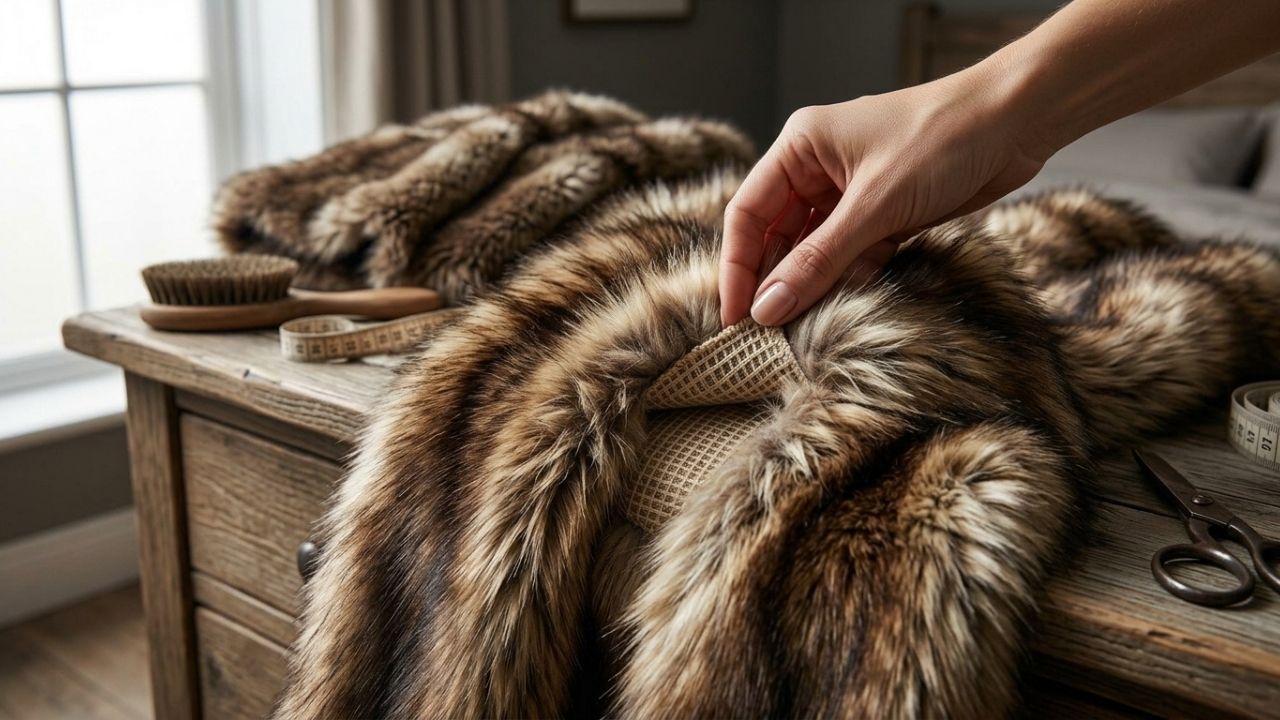
Even an expensive-looking faux fur jacket can lose its appearance if it is treated incorrectly.
Using Too Much Heat
High heat can affect synthetic fibers. Avoid assuming that a dryer, radiator, hair dryer, or other heat source is safe simply because the garment is washable.
Ignoring the Care Label
Care instructions exist for a reason. Follow the manufacturer’s instructions before choosing a cleaning method.
Aggressive Brushing
Brushing too hard can pull, tangle, or distort fibers.
Storing It Compressed
Long-term compression can flatten the pile and make the coat look less full.
Buying Based Only on Appearance
A product photograph cannot tell you everything.
Check fiber information, sizing, construction, care instructions, and seller information before purchasing.
How to Build a Faux Fur Wardrobe
You don’t need ten coats to create a versatile faux fur wardrobe.
Start with one neutral jacket.
A black, brown, cream, beige, or grey faux fur jacket can work with many existing outfits.
Then consider adding a statement piece such as:
- Leopard print faux fur
- Burgundy faux fur
- Pink faux fur
- Shaggy faux fur
- White faux fur
- Animal print faux fur
A cropped jacket is useful for casual styling, while a longer coat can provide a more dramatic winter look.
For shoppers who prefer inclusive sizing, also look for plus size faux fur jackets and coats designed with enough room for comfortable winter layering.
The goal is to choose pieces that match your actual lifestyle rather than buying a style simply because it is trending.
Faux Fur Care: A Simple Long-Term Routine
A basic maintenance routine can help keep your faux fur looking better between major cleanings.
Before wearing: Check for flattened or tangled areas.
After wearing: Allow the garment to air out rather than immediately compressing it into a crowded closet.
During storage: Use enough space to prevent the pile from being crushed.
After spills: Address stains according to the care instructions rather than waiting indefinitely.
Before cleaning: Always check the garment label.
After washing: Follow the recommended drying method and avoid unnecessary heat.
Is Faux Fur a Good Choice for Winter?
Faux fur can be an excellent winter outerwear option, but warmth depends on the individual garment rather than the word “faux fur” alone.
Factors that can influence warmth include:
- Coat length
- Fabric density
- Lining
- Construction
- Fit
- Wind exposure
- What you wear underneath
A thick-looking faux fur jacket may feel very different from a lightweight fashion jacket.
For colder conditions, consider a longer coat, comfortable layering, and a design that provides adequate coverage.
For milder winter weather, a cropped faux fur jacket can provide a fashionable outer layer without the bulk of a heavy full-length coat.
What Should You Look for When Buying Faux Fur?
Before clicking “buy,” use this quick checklist:
Material
Check what the garment is made from.
Fit
Consider your normal winter layers.
Length
Choose cropped, mid-length, knee-length, or long depending on your wardrobe and climate.
Color
Select a versatile neutral or a statement color.
Texture
Decide whether you prefer smooth, short-pile, teddy, or shaggy faux fur.
Construction
Check closures, seams, pockets, collar, hood, and lining.
Care
Know whether the garment requires special cleaning.
Seller information
Look for clear product information and policies.
This approach is more reliable than choosing a coat based solely on a beautiful product photograph.
Why Choose Faux Fur World?
At Faux Fur World, faux fur is at the center of what we offer, not an occasional seasonal category.
Our focus is helping shoppers find fashionable faux fur jackets, coats, and winter outerwear in styles that can work for everyday outfits, special occasions, and statement winter looks.
We also believe premium-looking faux fur should be accessible. Our goal is to be among the most affordable options in the premium faux fur market, giving shoppers an alternative to paying designer-level prices simply to get a luxurious faux fur aesthetic.
Whether you’re looking for a classic neutral jacket, a bold animal print, a cropped style, or a longer winter coat, start by choosing the silhouette, texture, and color that fit your wardrobe. Shop Faux Fur Jackets
Final Takeaway
Faux fur is much more than a fashion trend. The right faux fur jacket or coat can become a versatile part of a winter wardrobe, but getting the best results requires understanding the material, choosing the right construction, styling it according to your proportions, and caring for it correctly.
If you’re researching faux fur before buying, start with the basics: understand what fake fur is made of, learn how to evaluate quality, and choose a silhouette that fits your lifestyle.
Once you own a piece, proper care becomes just as important. Learn how to wash faux fur, how to clean individual stains, and how to restore flattened fibers before assuming a worn-looking coat needs to be replaced.
And if you’re ready to shop, choose a seller that provides clear product information and styles that fit your needs.
For shoppers looking for premium-looking faux fur without unnecessary designer pricing, Faux Fur World aims to make fashionable faux fur outerwear more accessible and affordable.
Start with the question that matters most: what kind of faux fur piece will you actually wear?
Frequently Asked Questions About Faux Fur
Q. Is faux fur made from real animals?
Faux fur is designed to imitate animal fur using textile materials rather than animal fur. Always check the product’s fiber information and labeling when buying.
Q. Is faux fur toxic to humans?
Faux fur itself is not automatically toxic simply because it is synthetic. However, individual textile materials, dyes, finishes, or other components can cause irritation in sensitive people. Clothing-related contact dermatitis is recognized by dermatologists, so check materials and wash new garments before wearing them if you are prone to irritation.
Q. Can faux fur be washed?
Some faux fur garments can be washed, but the correct method depends on the garment. Always follow the manufacturer’s care label rather than applying one cleaning method to every faux fur item.
Q. How do you make faux fur fluffy again?
Flattened faux fur may sometimes be improved through gentle brushing and appropriate drying or storage techniques, but the correct approach depends on the material and care instructions. Avoid excessive heat and aggressive brushing.
Q. Can you dye faux fur?
Some synthetic fibers can be dyed, but results depend heavily on the fiber type and construction. A dye suitable for one synthetic material may not work on another.
Q. How can you tell fake fur from real fur?
Check the product labeling and fiber information first. You can also examine the construction and backing, but visual inspection alone is not always reliable. U.S. regulations provide specific labeling requirements for genuine fur products.
Q. Does faux fur shed?
Some shedding can occur with textile fibers, especially when a garment is new or experiences friction. Careful handling and appropriate washing can help reduce unnecessary wear.
Synthetic clothing can also release microfibers during washing. The U.S. EPA notes that synthetic clothing can shed tiny plastic fragments during laundering and recommends measures such as washing less frequently, using shorter/cooler cycles, and considering microfiber-catching technologies.
Q. Does faux fur shed?
Store faux fur in a way that avoids prolonged compression. Give the garment enough room to maintain its shape and avoid placing heavy items on top of the pile.



[…] If you want a broader overview of materials, styling, care, and shopping considerations, you can also explore our The Complete Guide to Faux Fur Jackets & Coats: Materials, Styling, Care & Buying. […]
[…] For a broader explanation of materials, construction, styling and maintenance, see The Complete Guide to Faux Fur Jackets & Coats: Materials, Styling, Care & Buying. […]
Comments are closed.